Coffee Yard, York · since 2019
The house
per fumum
Two people, one back room, four perfumes. Everything is mixed, rested, filtered and filled behind the shop.
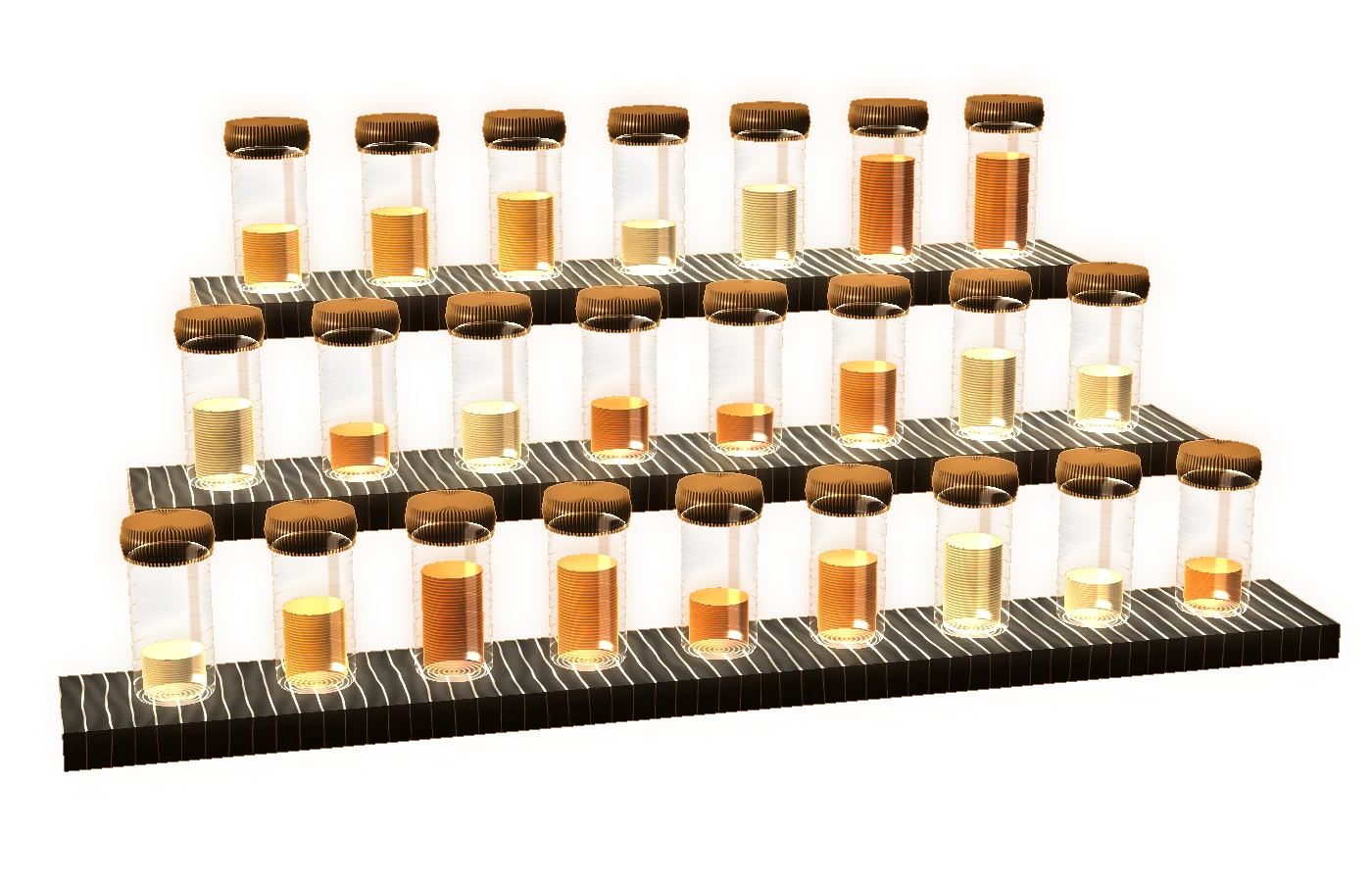
The organ: Agnes’s bench of materials, in tiers within arm’s reach.
Agnes Wray, perfumer
Agnes trained the old way, as an apprentice: three years blending formulas for another perfumer before she was allowed to compose her own. She came back to York in 2019 and opened Tinctura in a room off Coffee Yard.
She works from an organ of about two hundred materials and keeps four perfumes, not forty. Each one took her more than a year. A new batch is made only when the last one is nearly sold.
Sunil Varma, boutique
Sunil runs the shop and the fittings. He will put all four on blotters, then send you out for an hour with two on your wrists, because the heart notes take that long to arrive.
A batch of 300six weeks
- 01
Weigh
The concentrate is weighed out material by material from Agnes’s formula, on a scale reading to a hundredth of a gram.
- 02
Dilute and rest
It goes into perfumer’s alcohol at eau de parfum strength and rests in the dark for six weeks while the materials settle together.
- 03
Chill and filter
Chilled so anything waxy drops out, then filtered clear. This is why the juice is bright and never cloudy.
- 04
Fill and number
Filled, crimped and labelled at the bench, each bottle with its batch number. Batch books go back to 2019.
Why Tinctura
A tincture is what you get when a dry material, a resin or a bean, sits in ethanol until the alcohol has taken its scent. Tincture of benzoin, from one of our nine materials, is still made that way. The word perfume itself comes from the Latin per fumum, through smoke.