
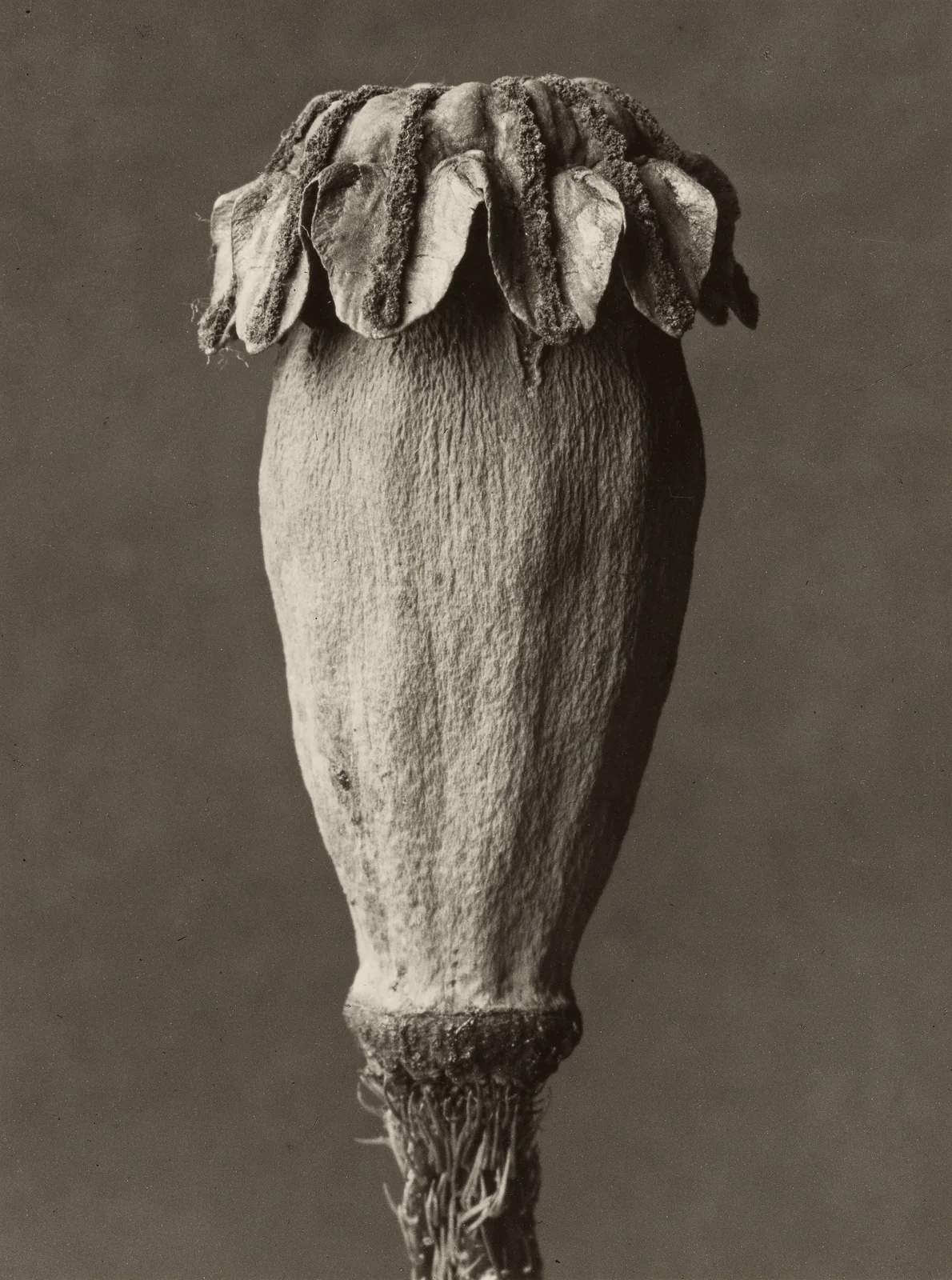
The book, 1928
Urformen der Kunst
Ernst Wasmuth, Berlin. 120 plates in rotogravure, each on a loose sheet 31.2 × 24.2 cm with its number printed bottom right. Scroll to leaf through 22 of them.
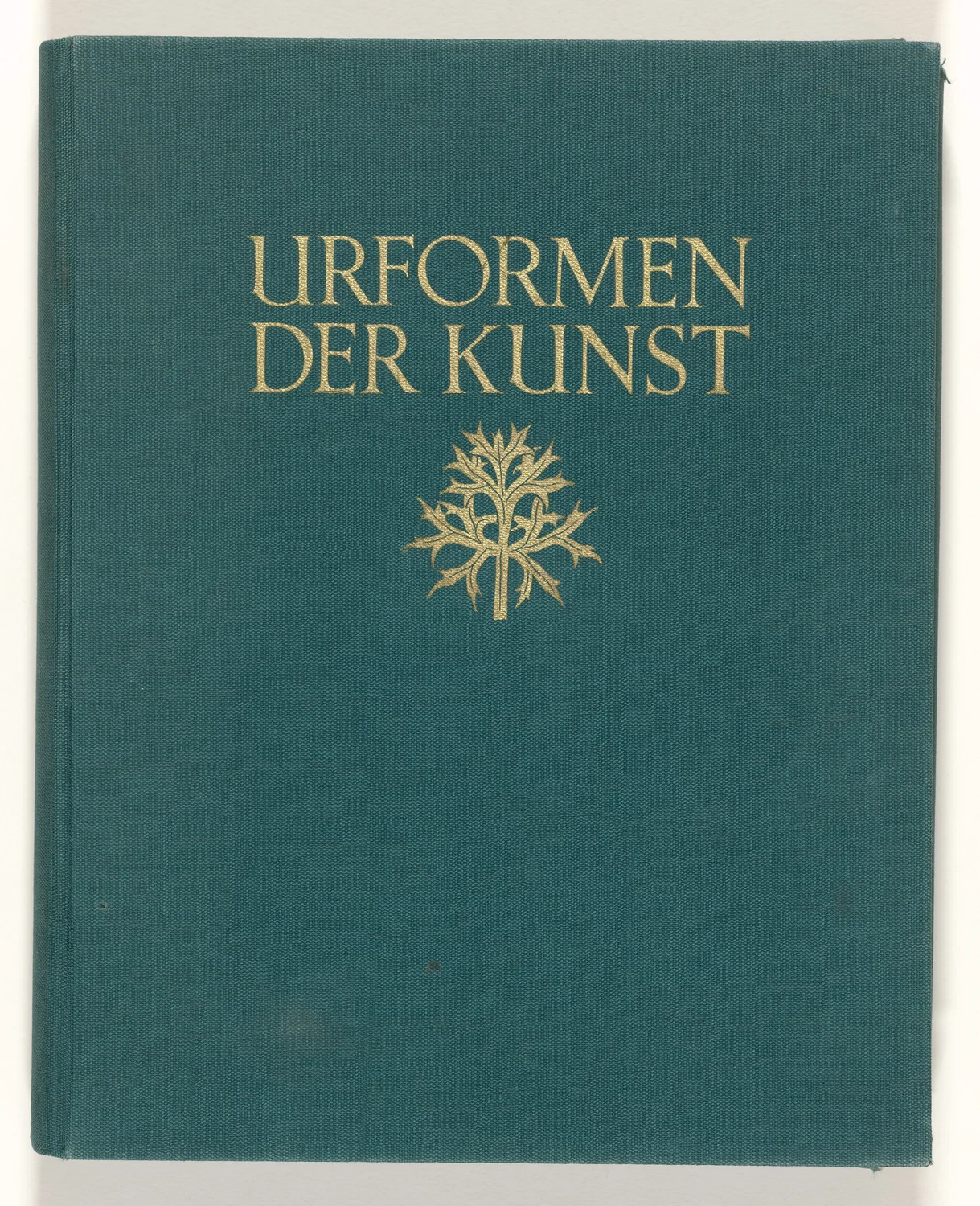
Cover 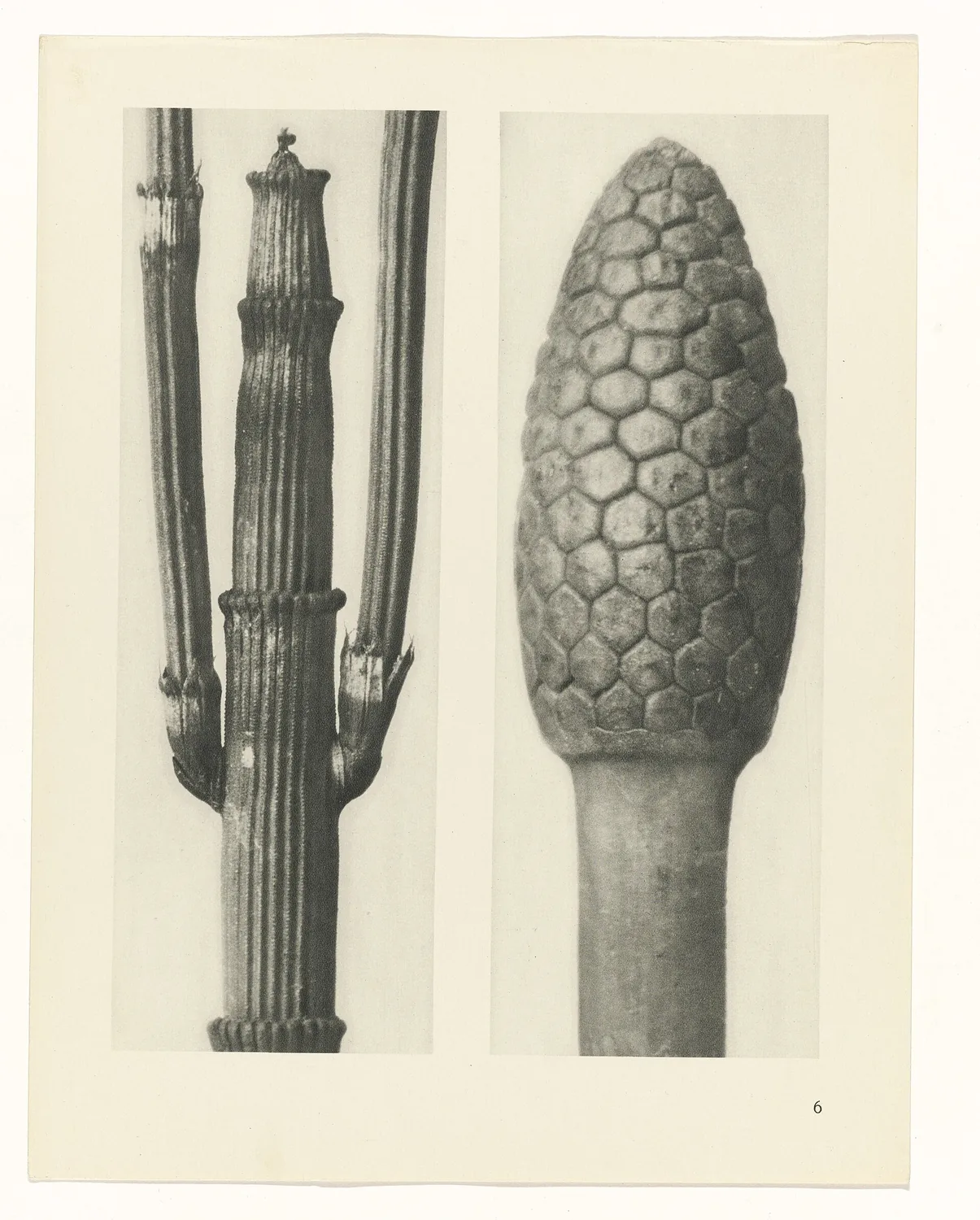
Plate 6 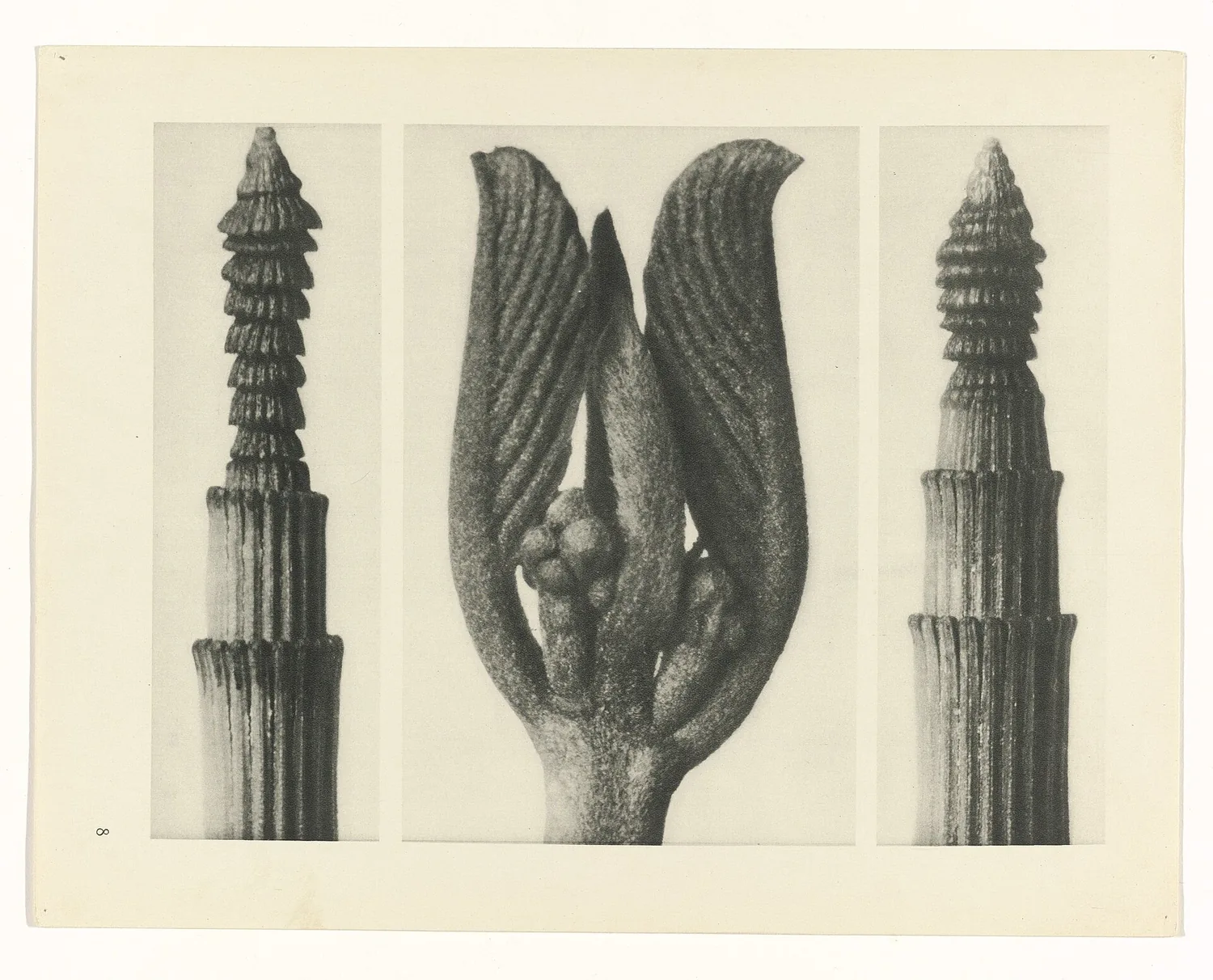
Plate 8 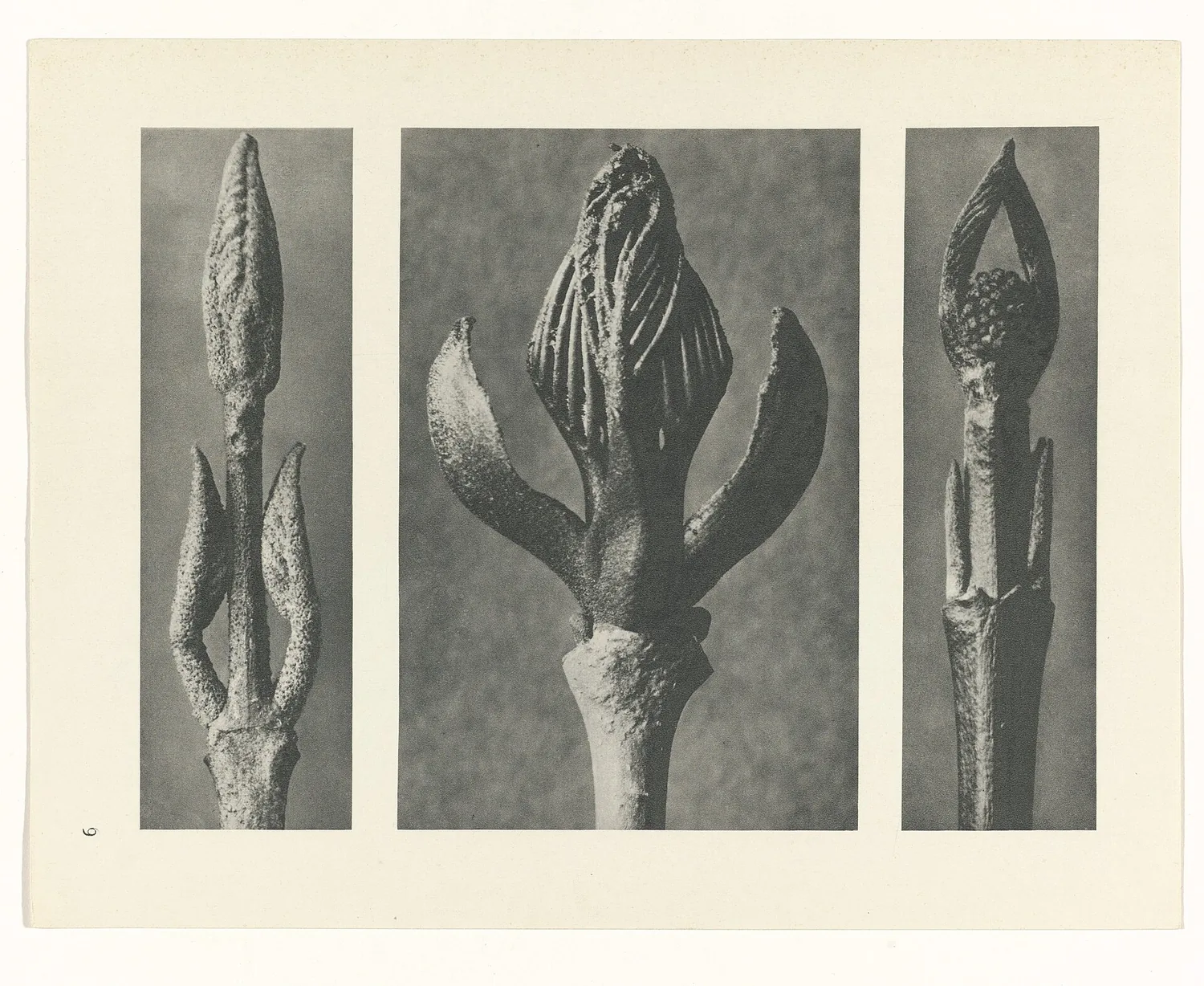
Plate 9 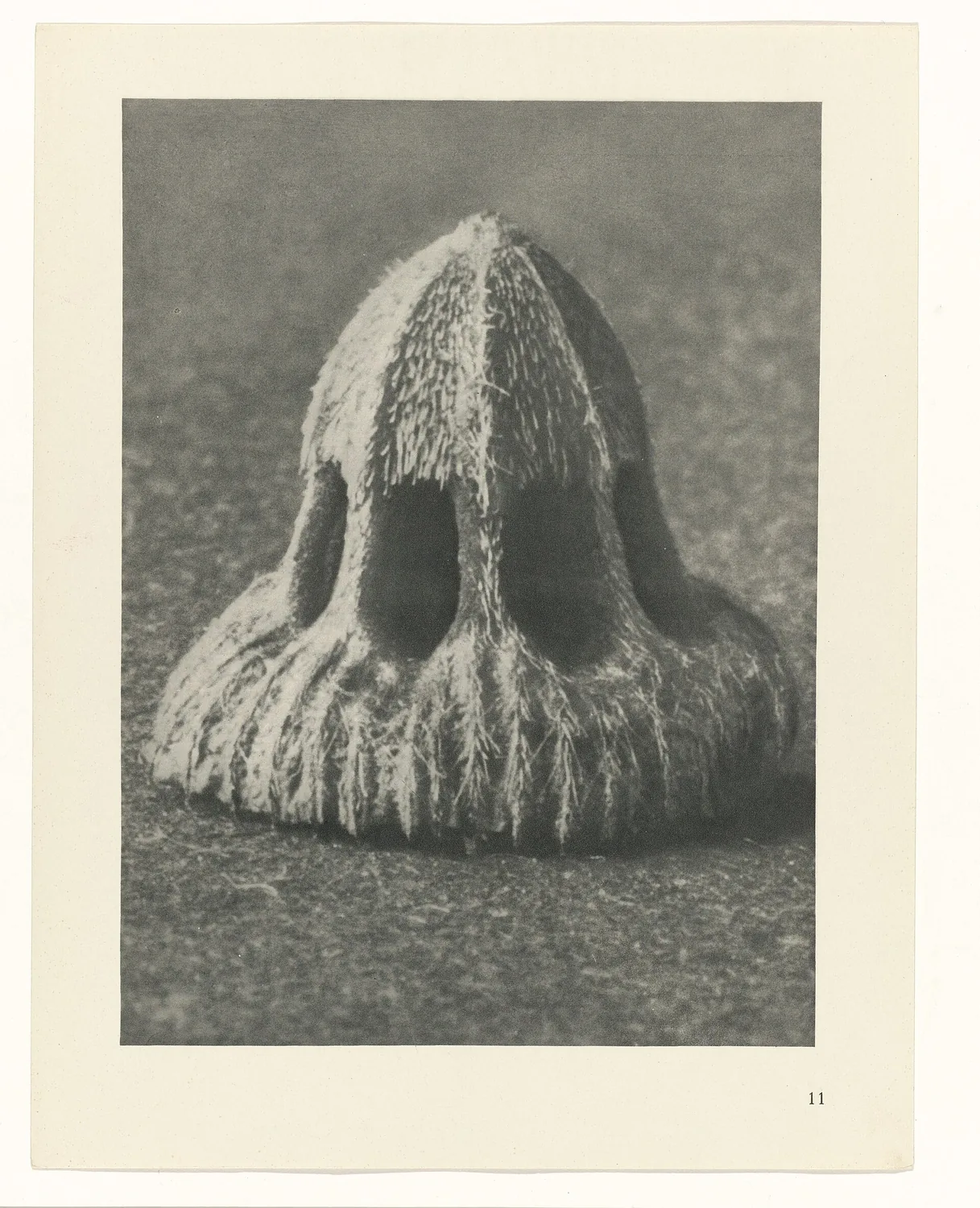
Plate 11 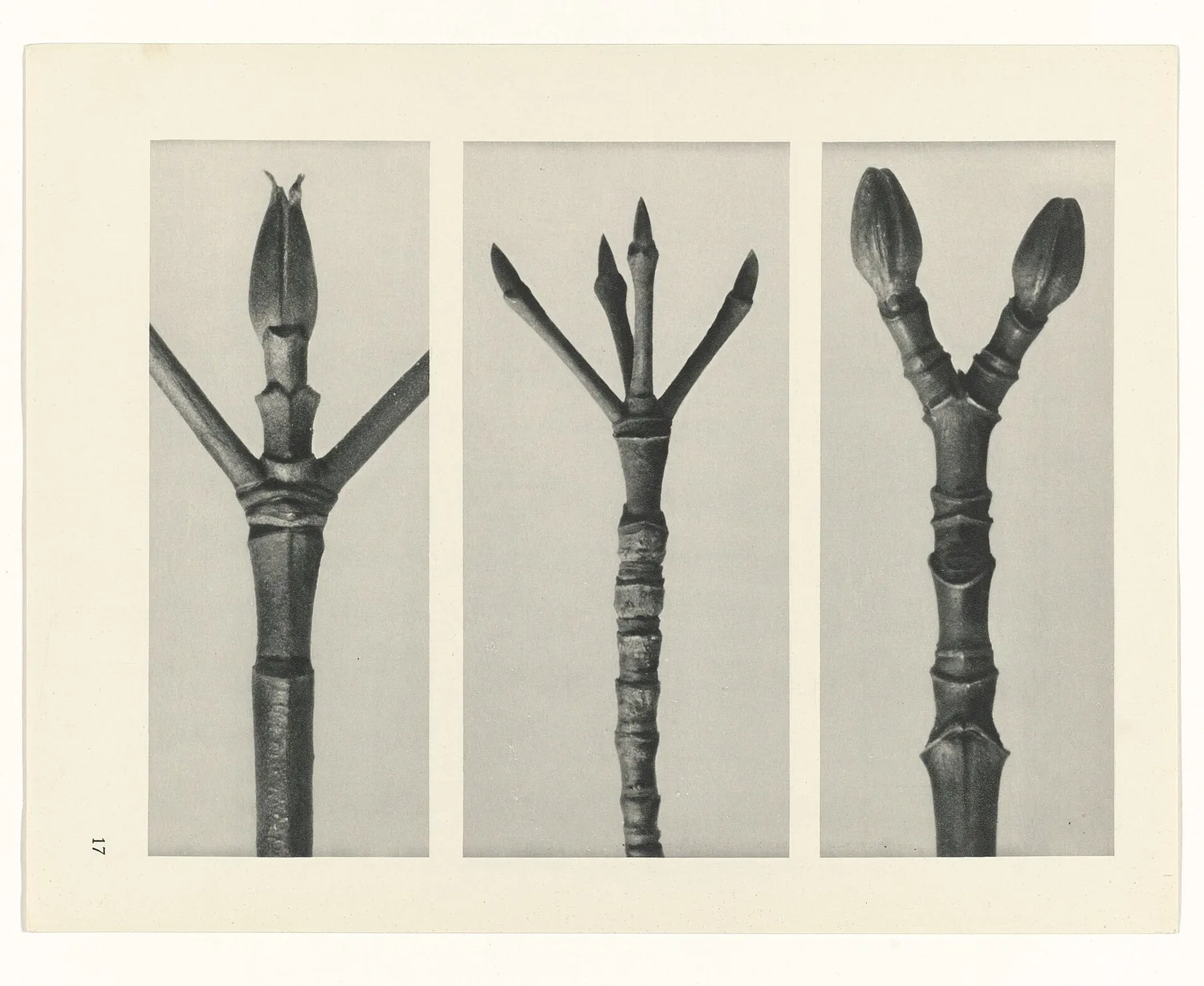
Plate 17 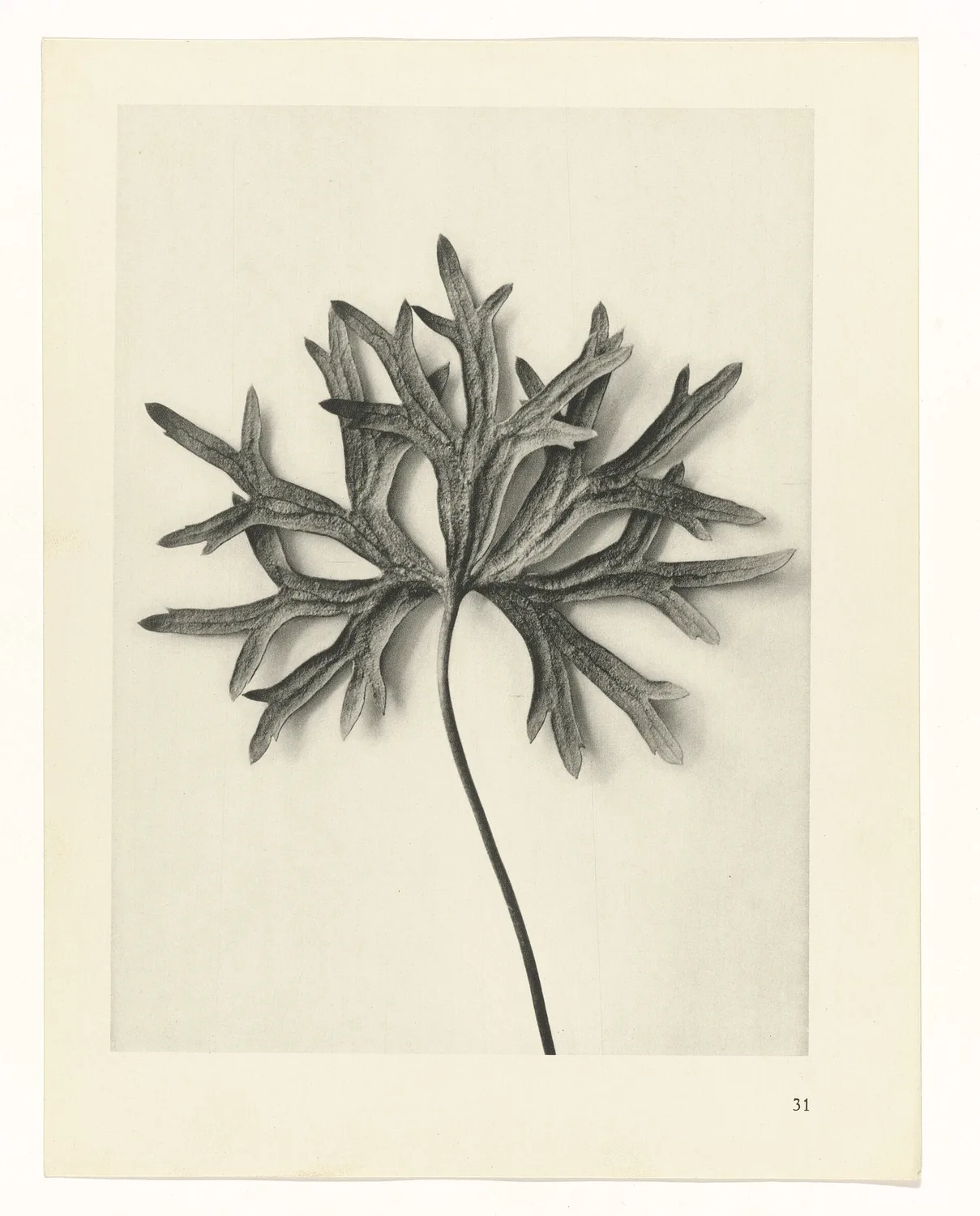
Plate 31 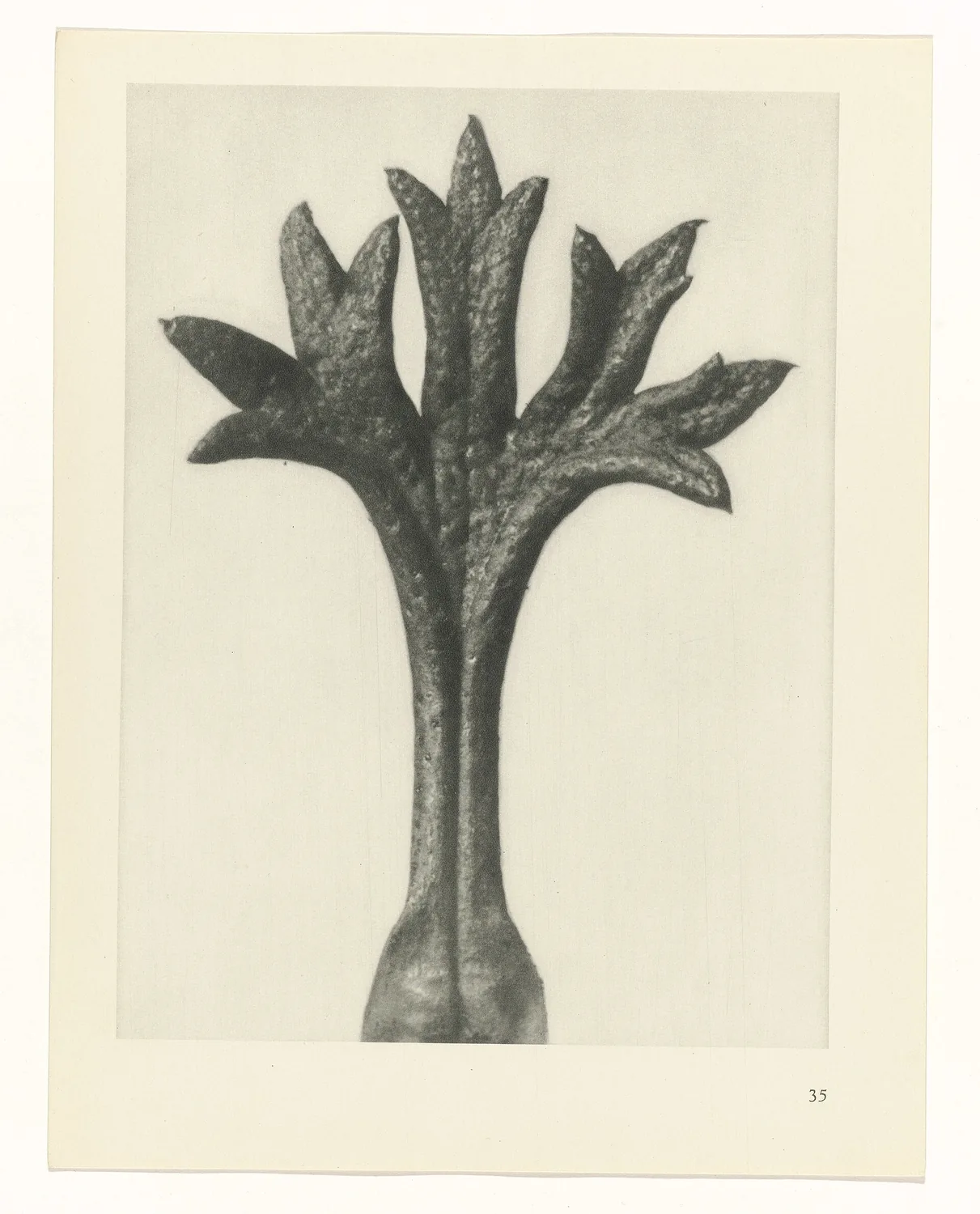
Plate 35 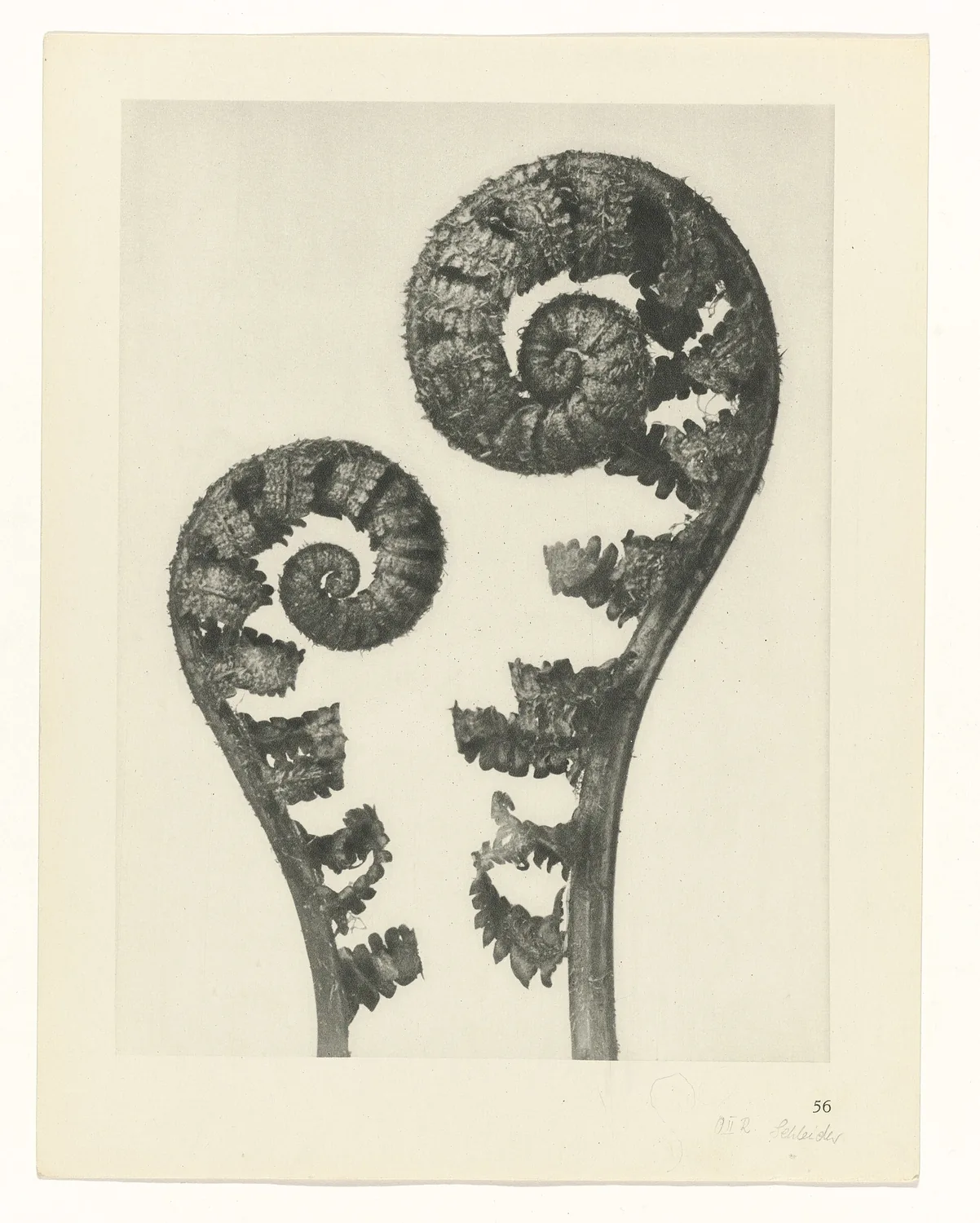
Plate 56 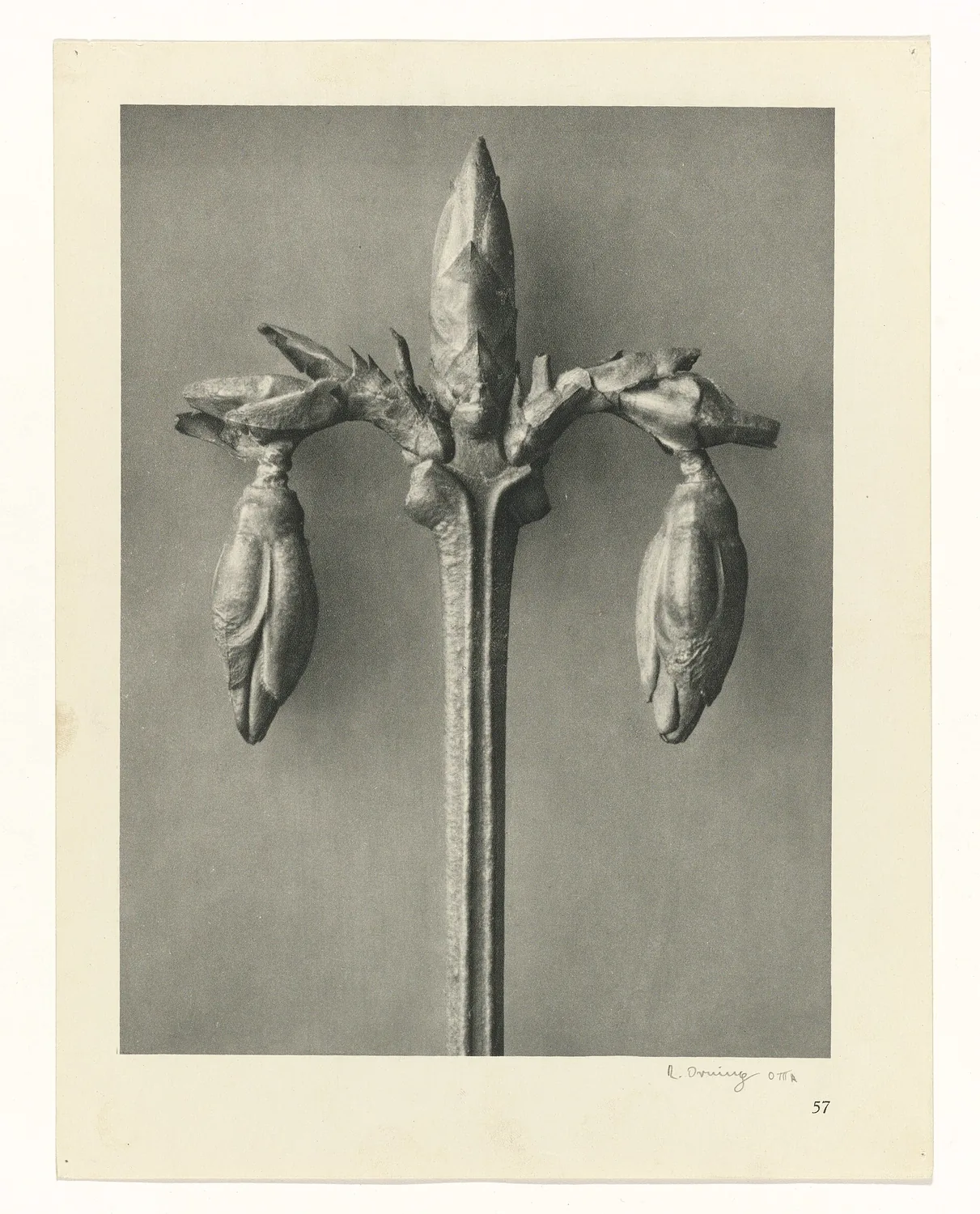
Plate 57 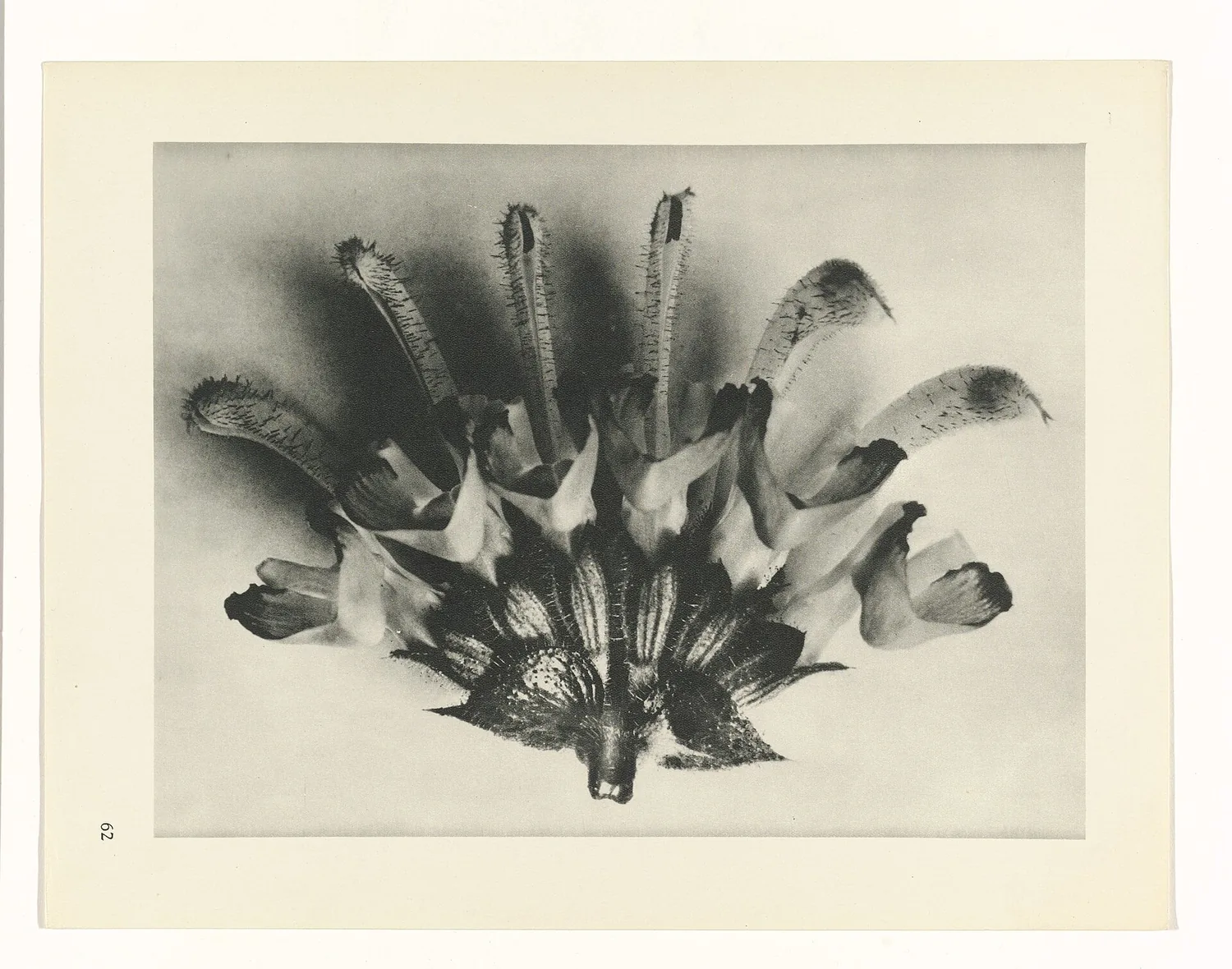
Plate 62 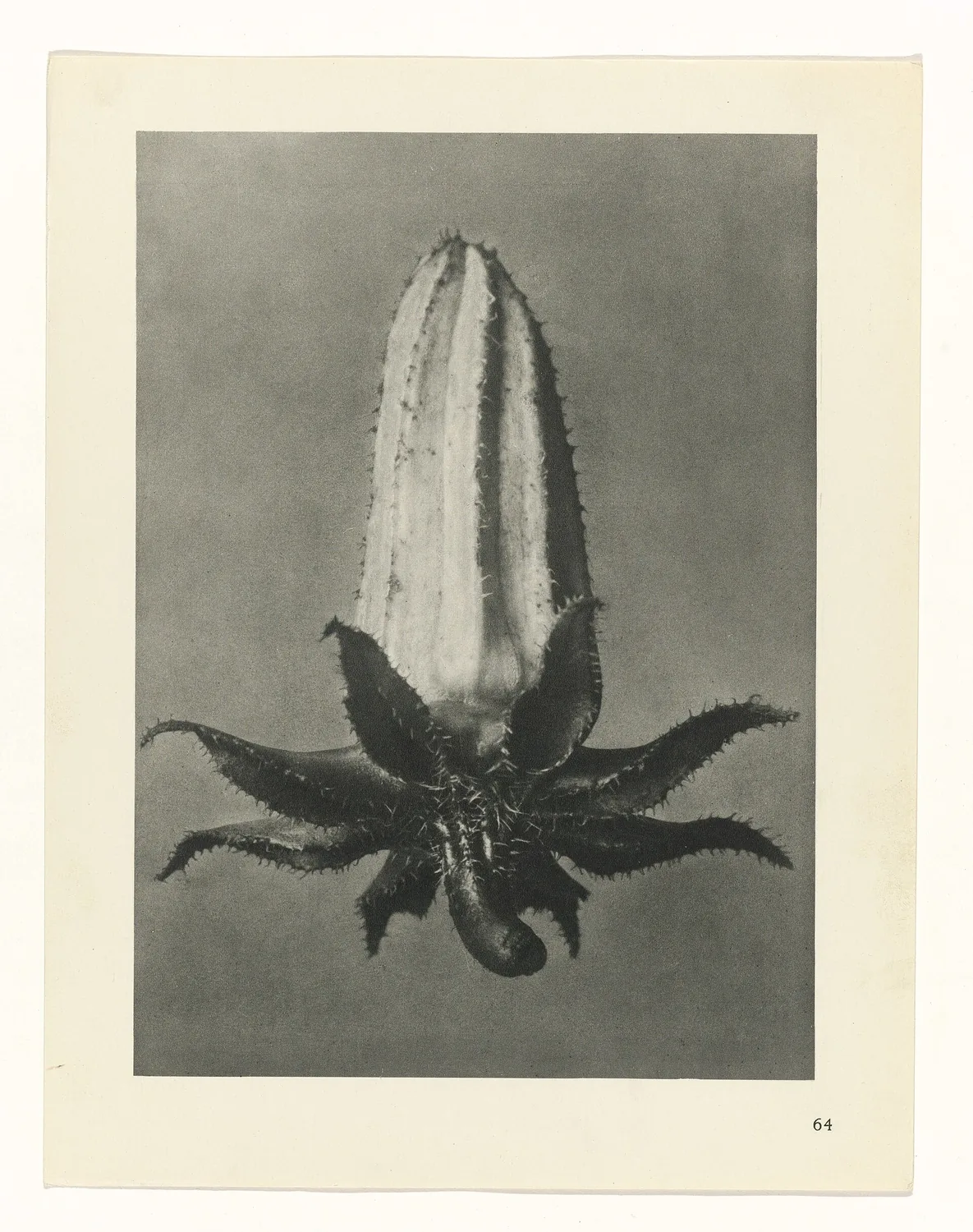
Plate 64 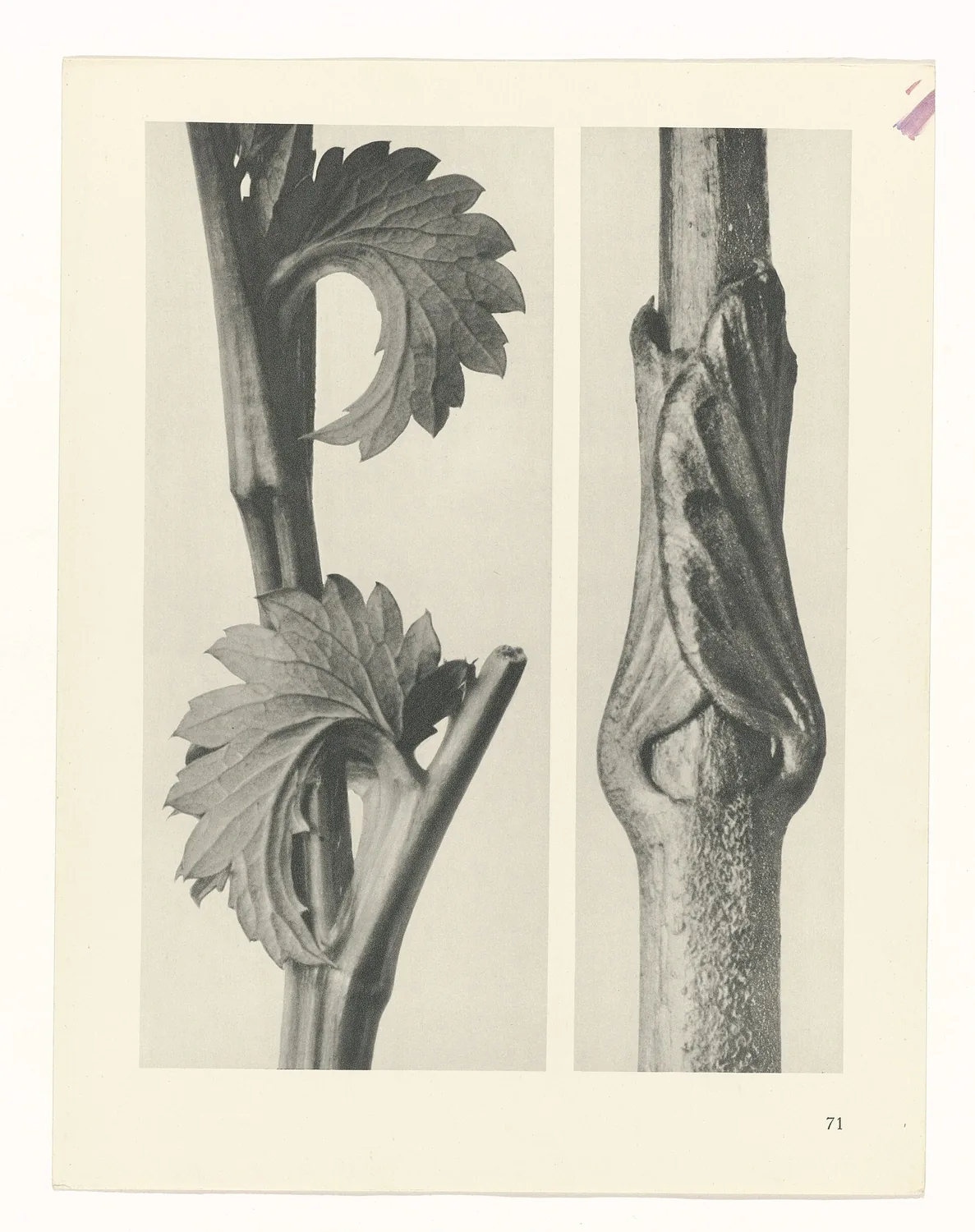
Plate 71 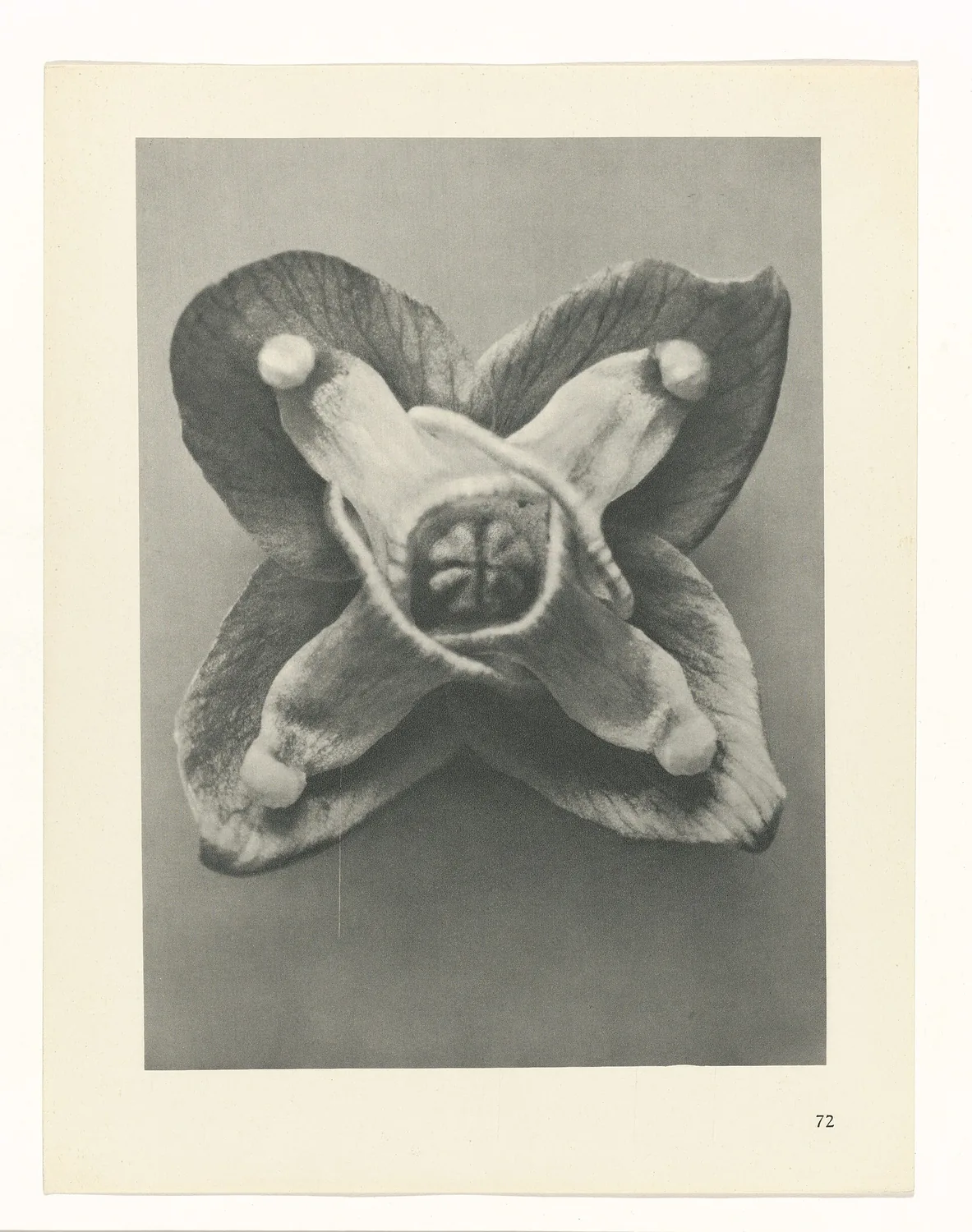
Plate 72 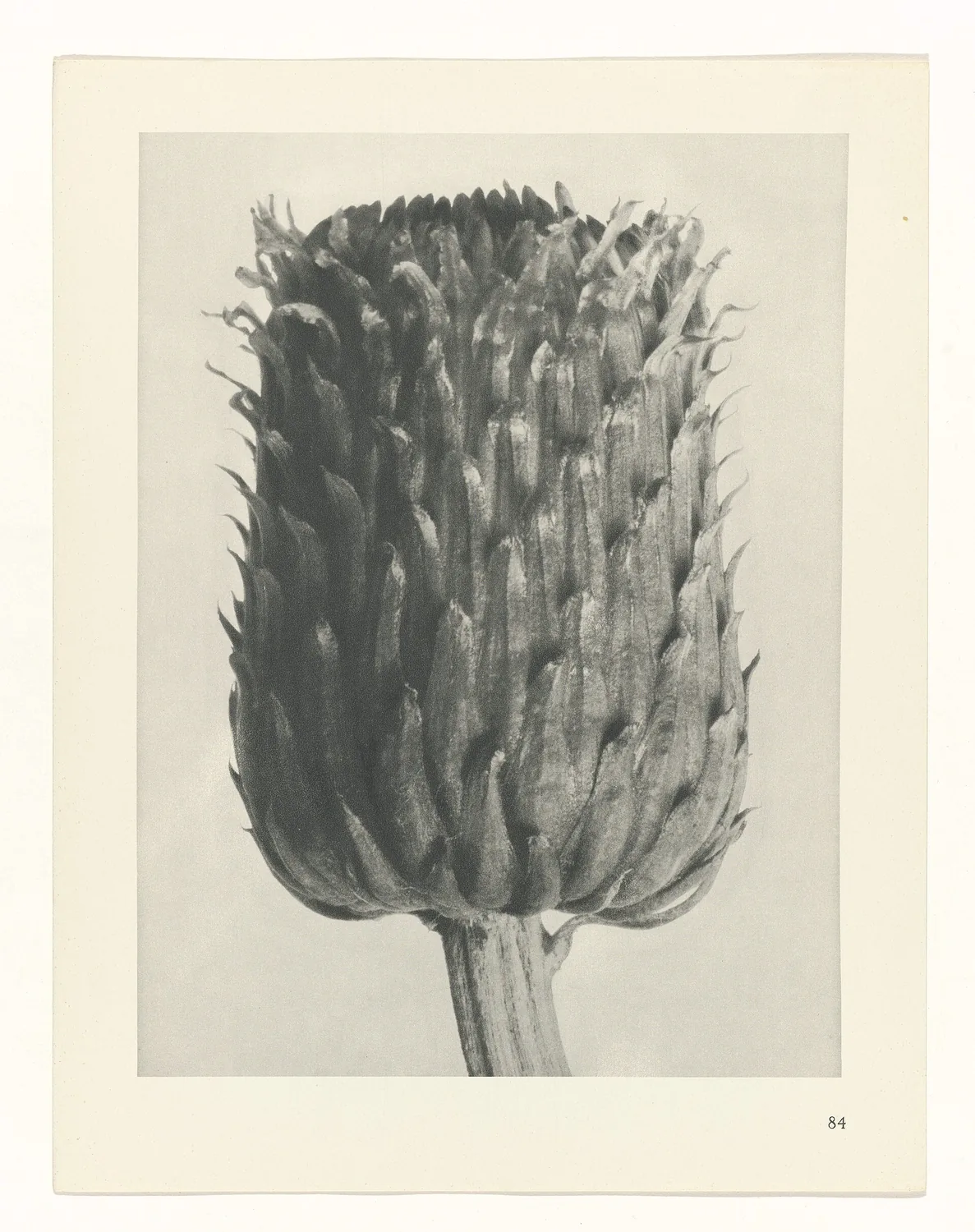
Plate 84 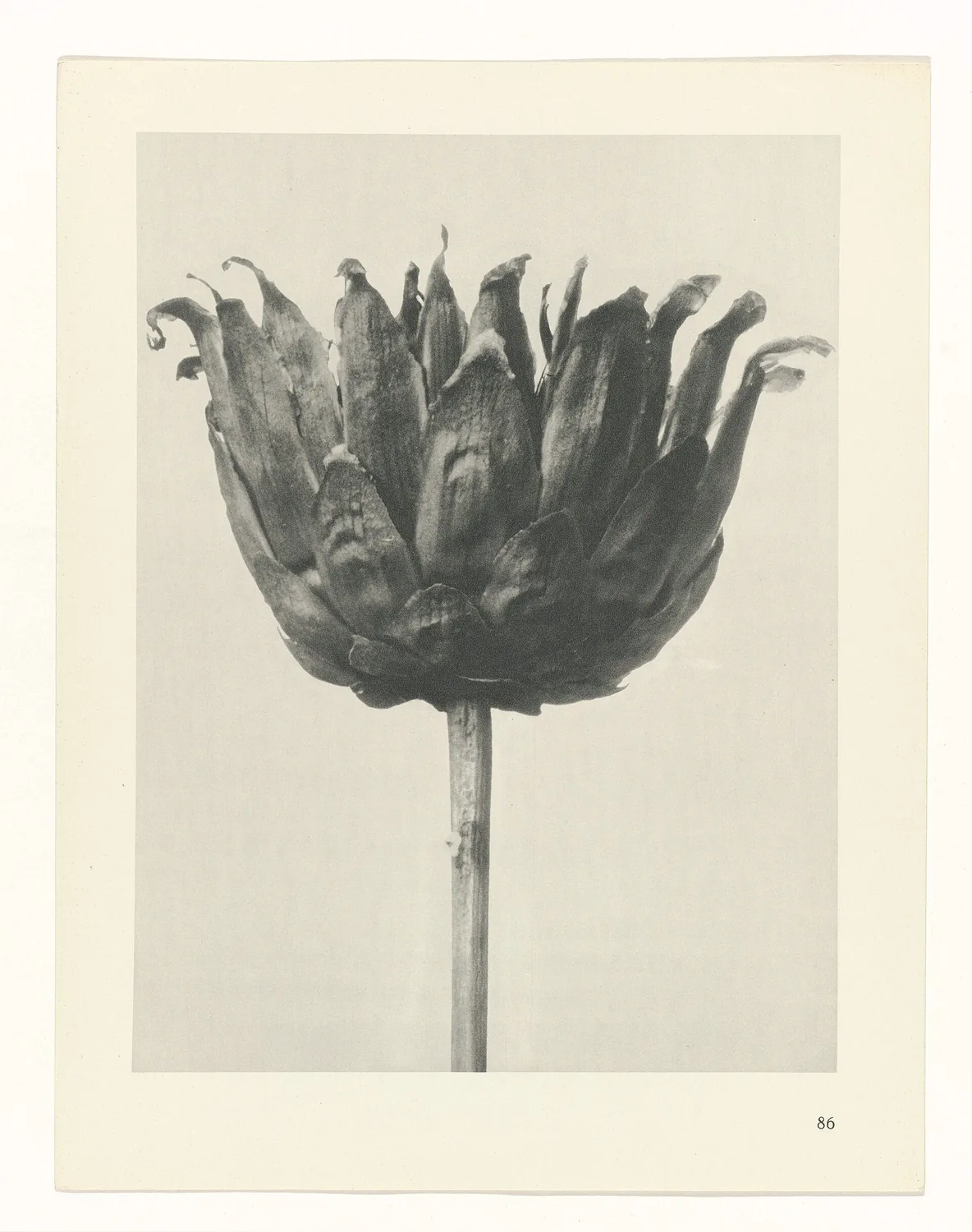
Plate 86 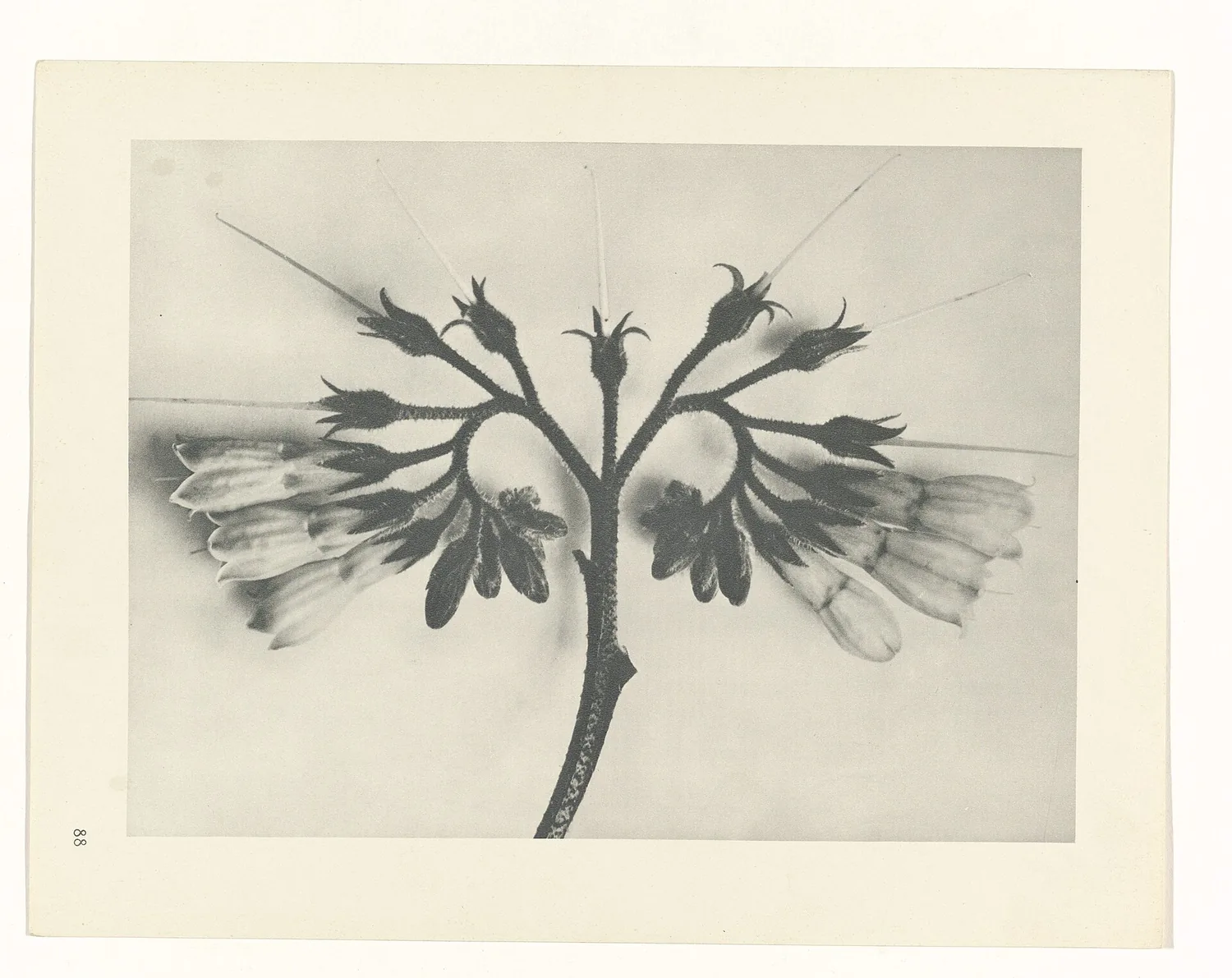
Plate 88 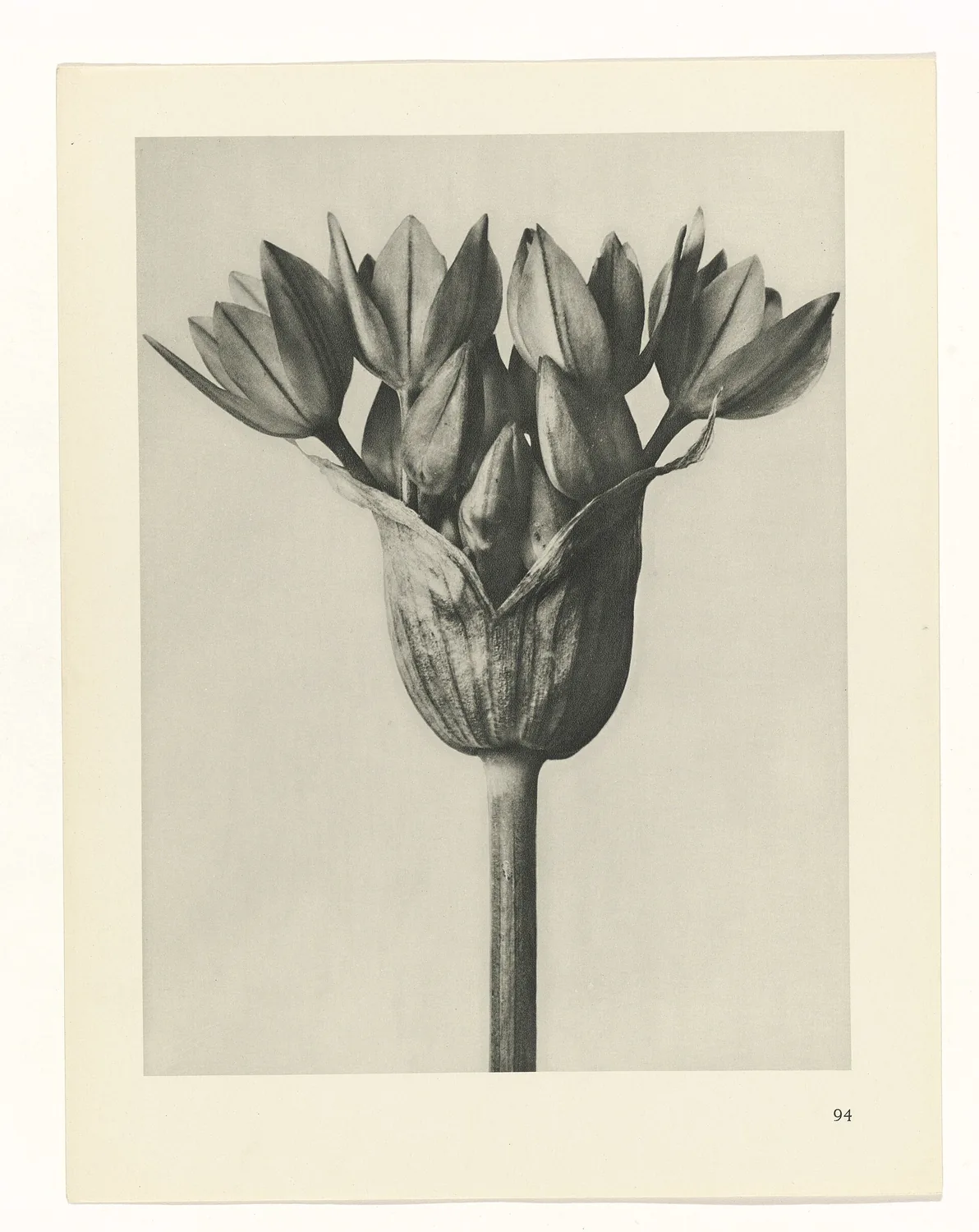
Plate 94 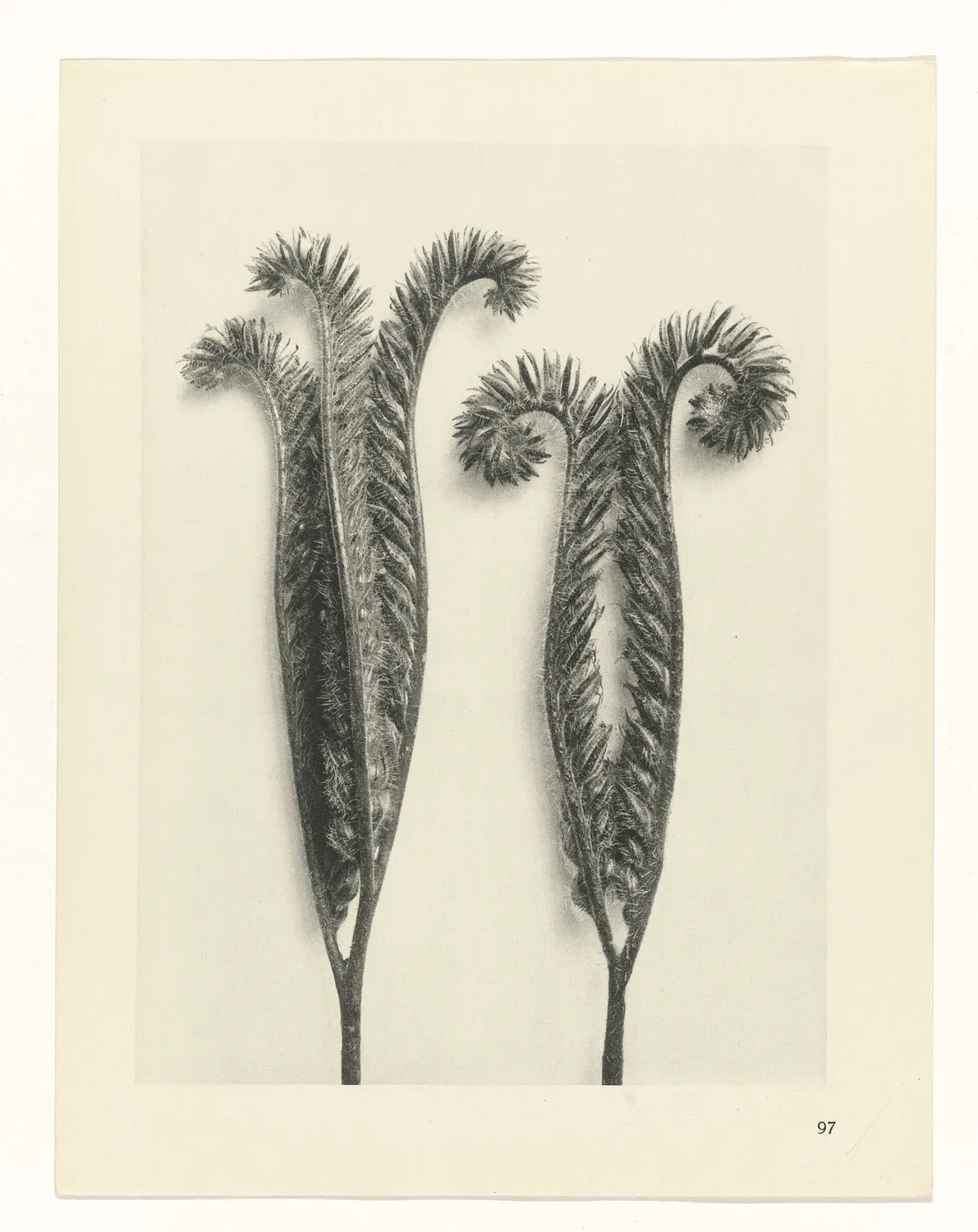
Plate 97 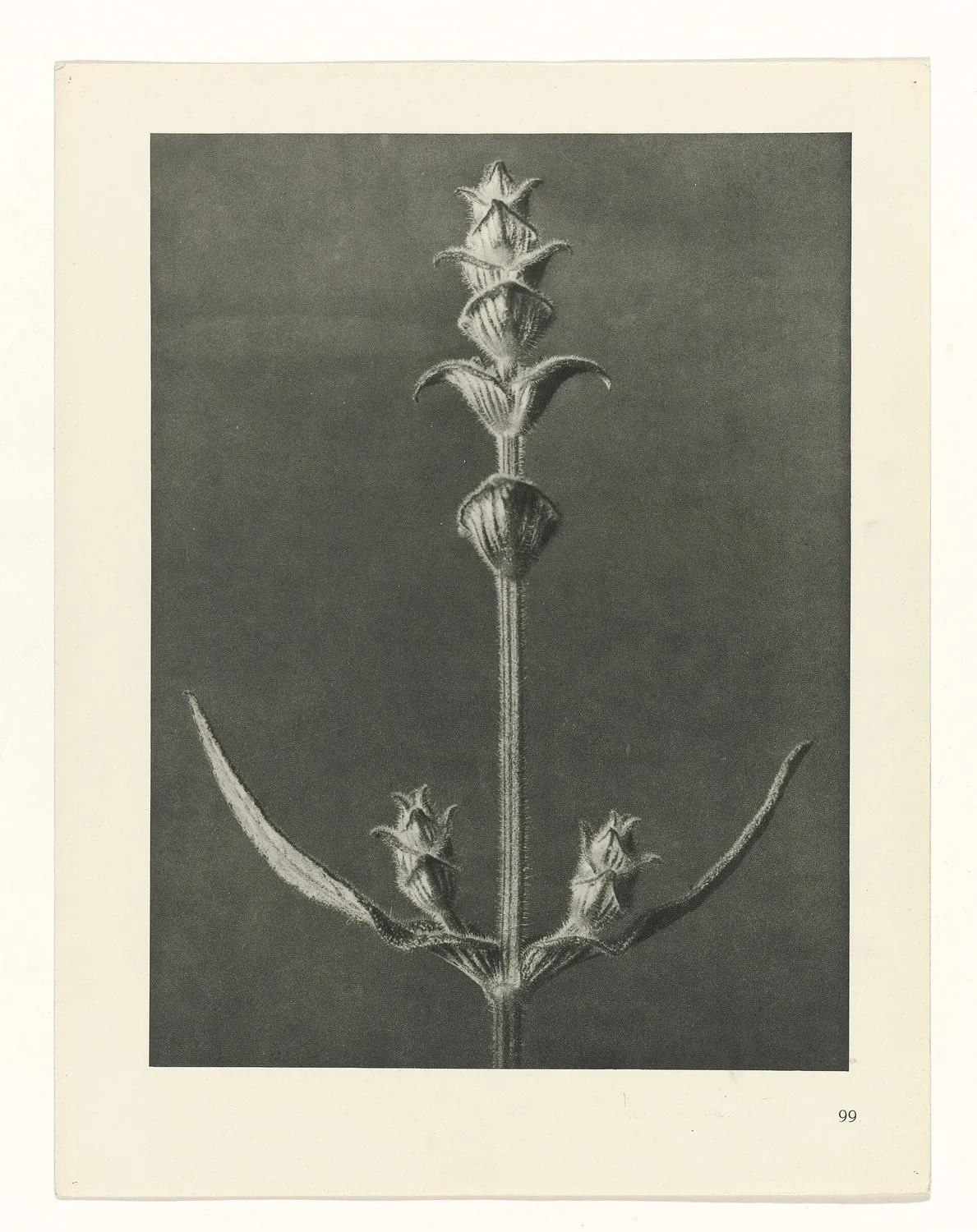
Plate 99 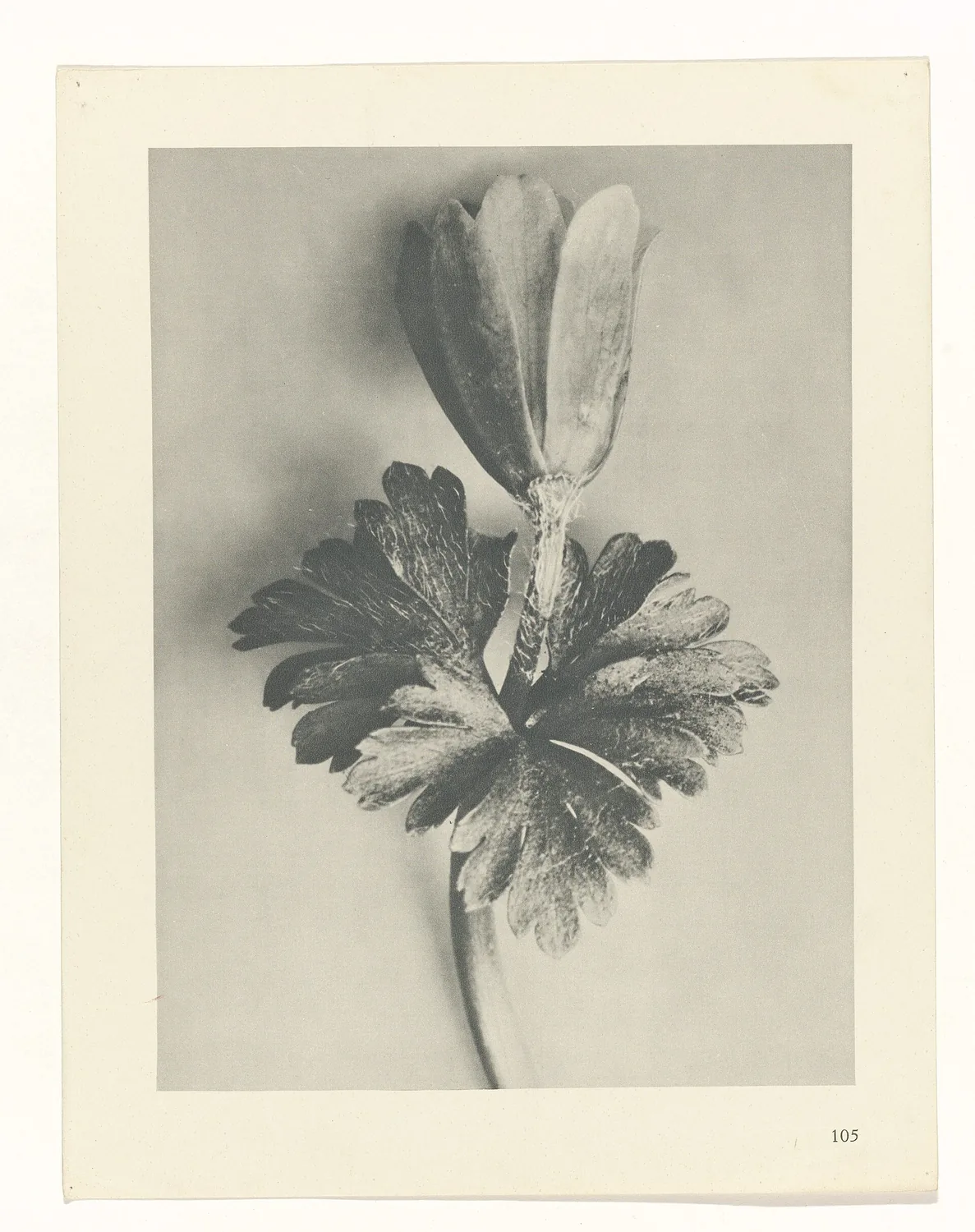
Plate 105 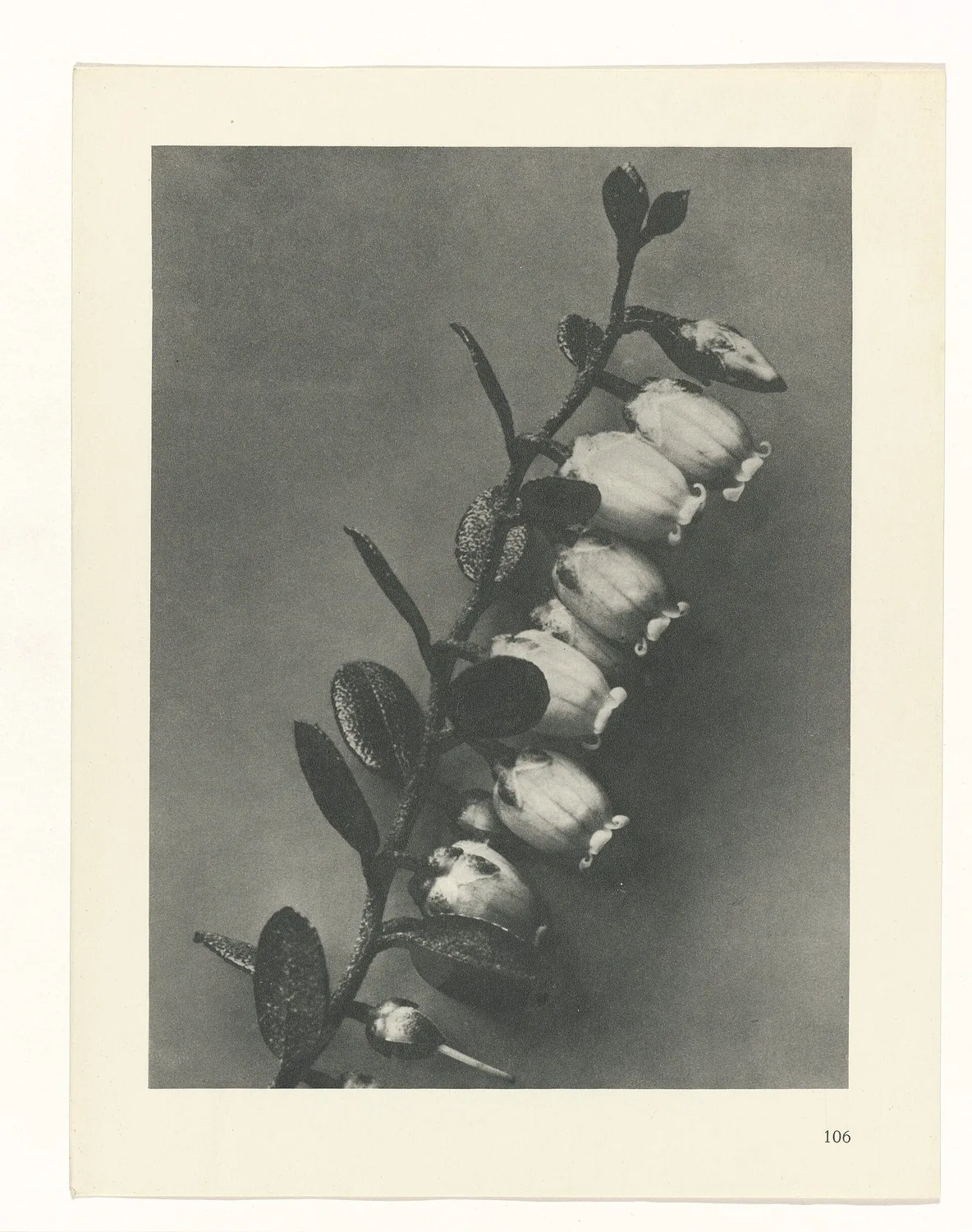
Plate 106 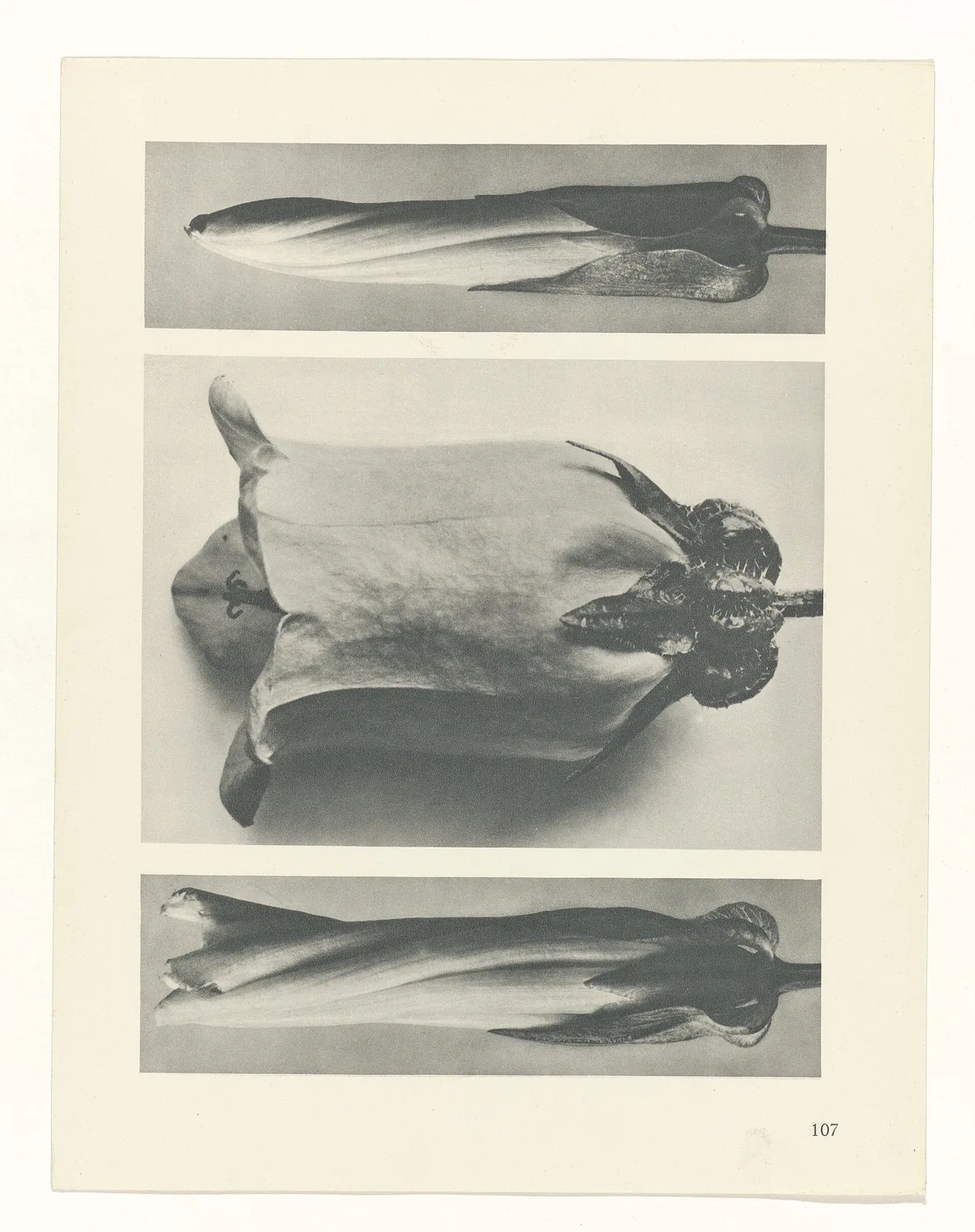
Plate 107
How it was printed
Rotogravure: the picture is engraved into a copper cylinder and printed on a rotary press, the process newspapers used for their photo supplements. It gives the deep, even blacks you see in the plates.
What the numbers mean
The plate numbers are the book’s own. The Rijksmuseum’s records give the sheet size and the process but not the plant, so we show these by number only. The named prints are on the grid.
After the book
It made Blossfeldt famous almost overnight. Wundergarten der Natur followed in 1932, and Wunder in der Natur after his death, in 1942. Walter Benjamin reviewed the first one as “News about flowers”.