
Name
Karl Blossfeldt
1865–1932. Sculptor, teacher of modelling, photographer.
Information
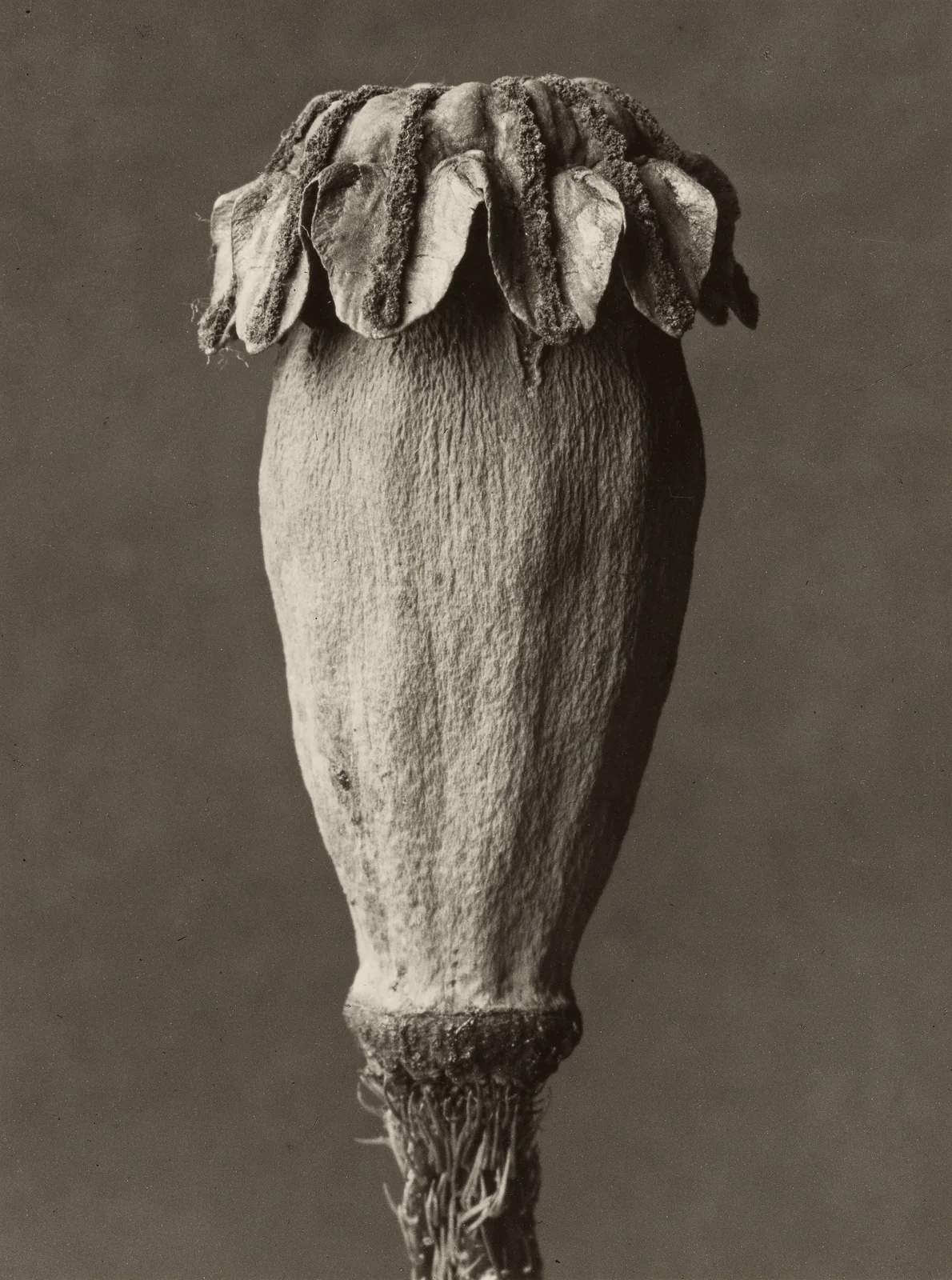
He trained as a modeller in an iron foundry and spent 31 years teaching students to model ornament from living plants. He took about 6,000 photographs for that teaching and labelled every plant with its Latin and common name.
Camera
A plate camera, probably built by himself. Glass negatives 6 × 9 to 13 × 18 cm, mostly orthochromatic. Plain black, grey or white grounds, soft raking daylight, everything sharp from front to back.
The book
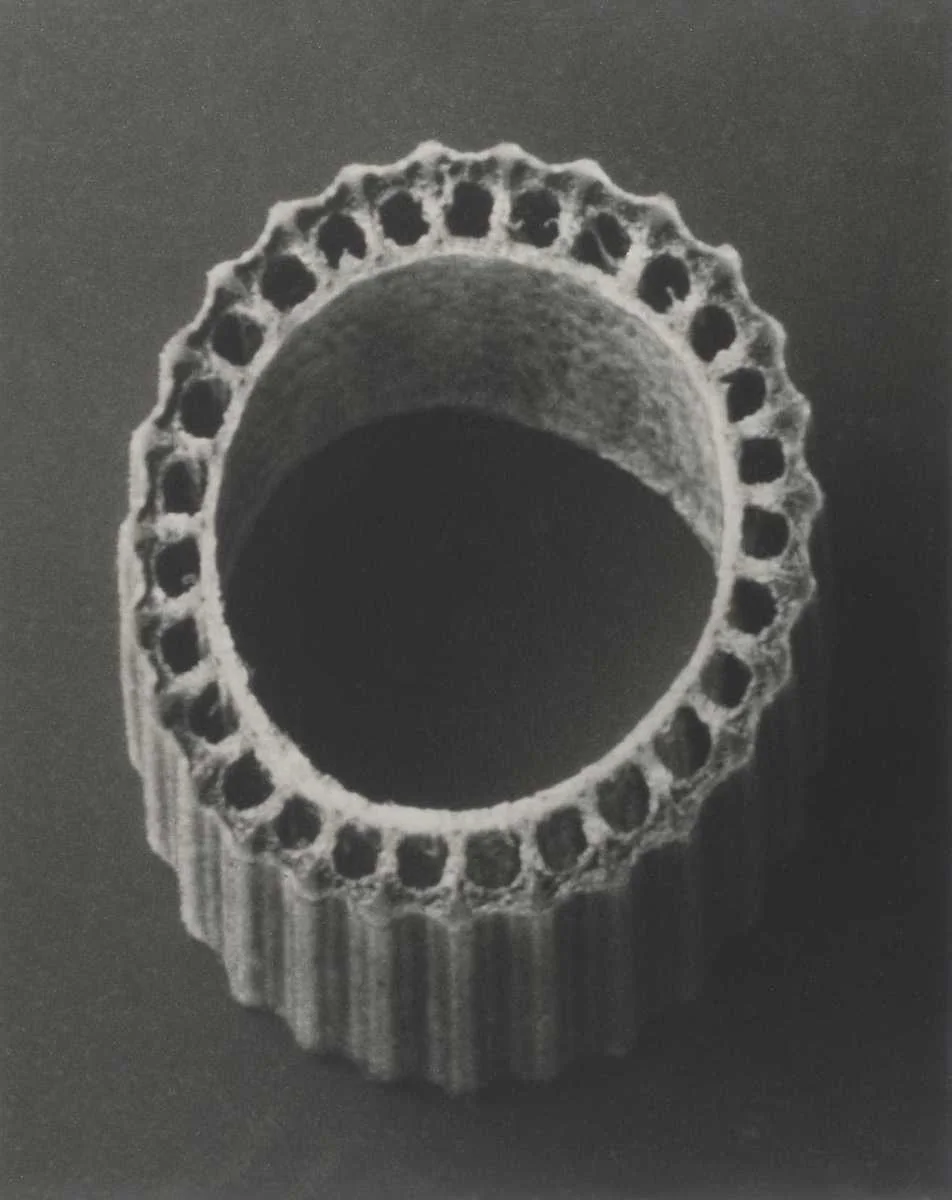
Urformen der Kunst, 1928, 120 plates. Walter Benjamin reviewed it as “News about flowers” and wrote about seeing a plant’s form “in forty-fold magnification”.
Year by year
- 1865
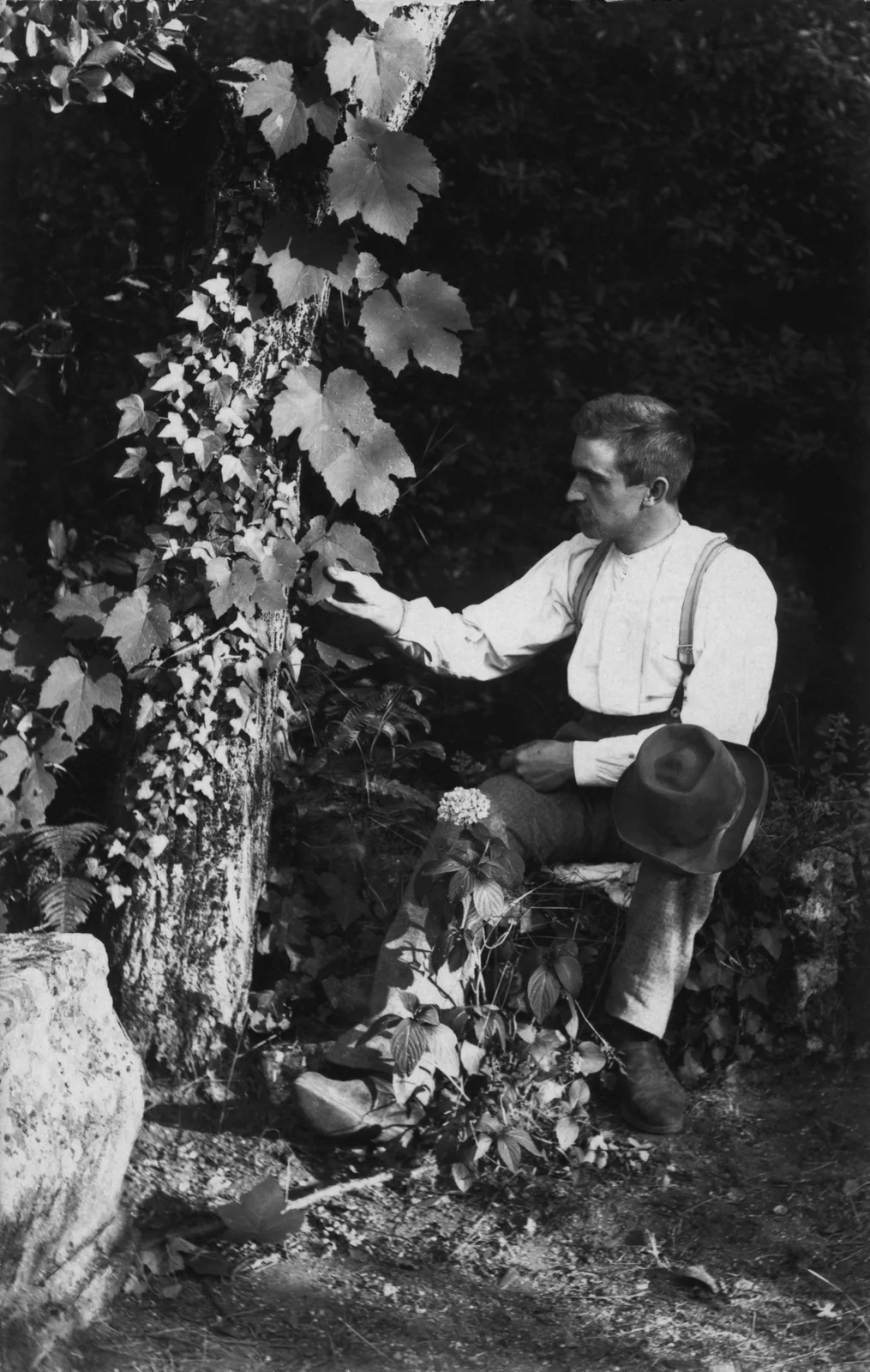
Born on 13 June in Schielo, in the Harz.
- 1881
Apprentice modeller at the art foundry in Mägdesprung. He already used leaves as models for iron gates.
- 1884
Starts drawing studies at the Kunstgewerbemuseum school in Berlin, on a scholarship.
- 1890
Six years with Moritz Meurer, collecting plants in Italy, Greece and North Africa for teaching material.
- 1899
Begins teaching “modelling from living plants” in Berlin. He teaches it for 31 years.
- 1921
Made full professor.
- 1928
Urformen der Kunst is published by Ernst Wasmuth with 120 plates. He is 63.
- 1932
Wundergarten der Natur appears. He dies in Berlin on 9 December.
How he held a plant still
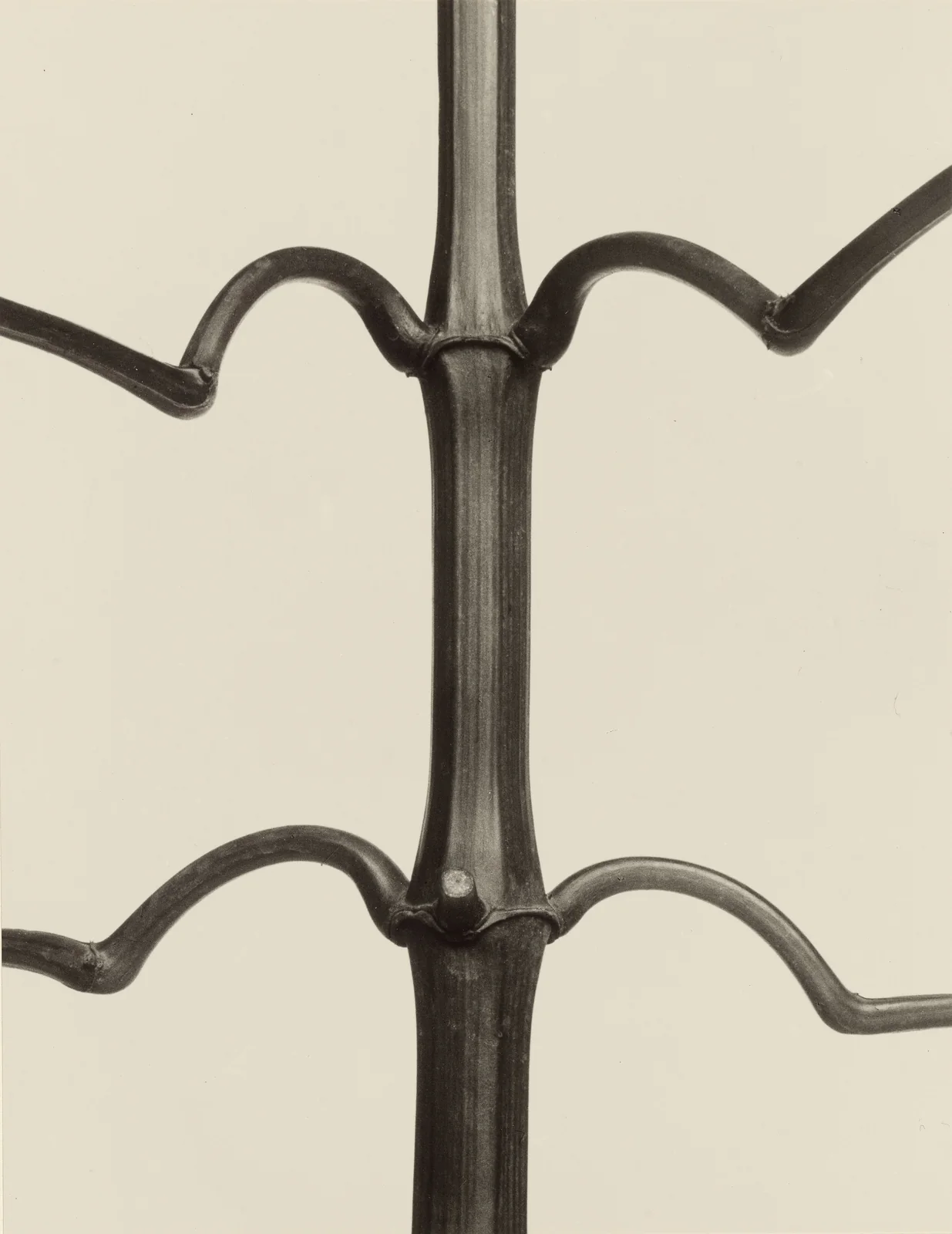
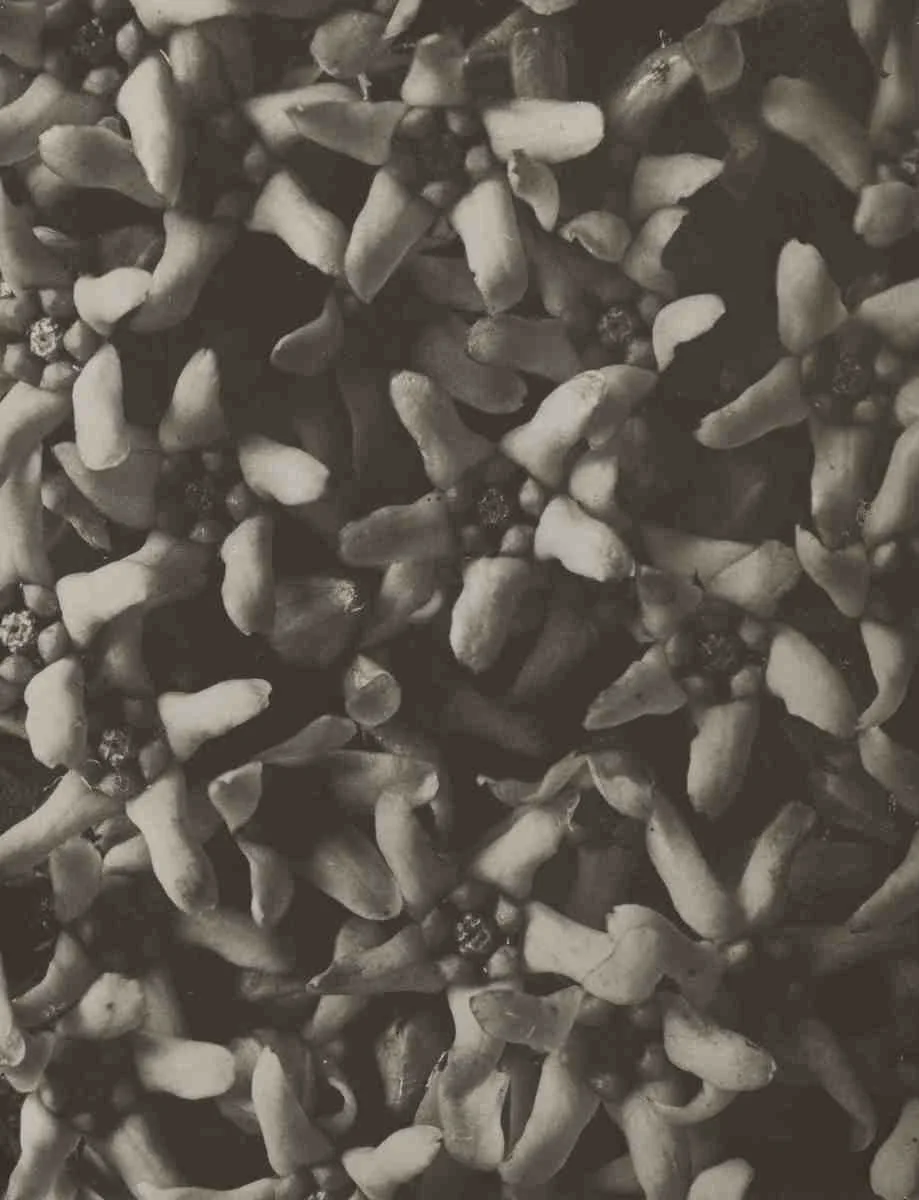
The negative was taken at 1:1, so the plant had to lie perfectly still. He laid it on a sheet of glass so the ground went out of focus, stuck dried stems upright in plasticine, or hung them from wire. Reflections from the glass were retouched before printing.
The enlargement happened afterwards, from a section of the plate: 12 to 45 times. Clothes pegs and wire that showed on the negatives were cropped away. For class he made 9 × 12 cm lantern slides and projected them large.