
Thirteensteps
00
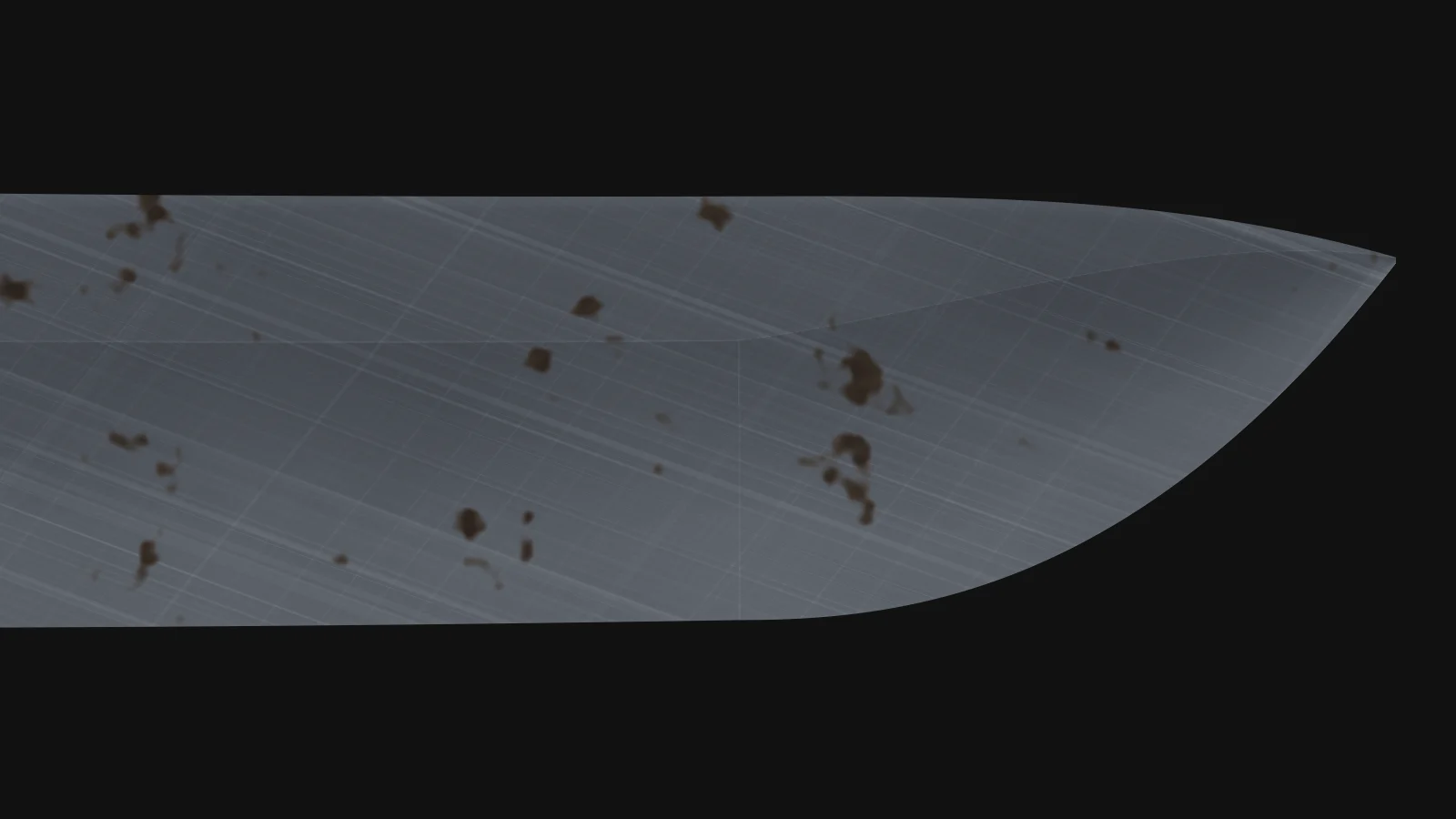
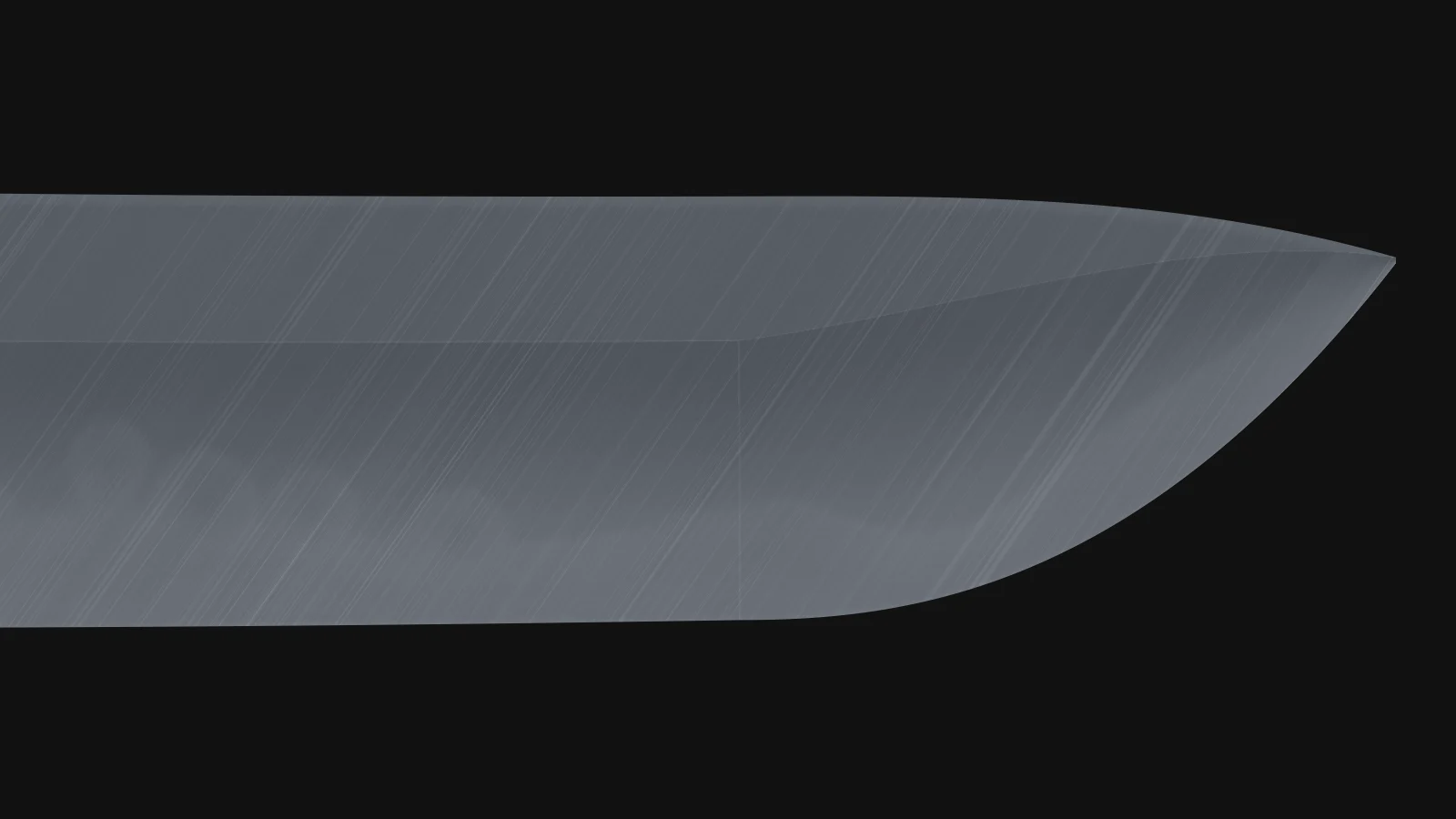
As received
Old polish, rust and handling marks. We photograph and measure before anything touches the steel.
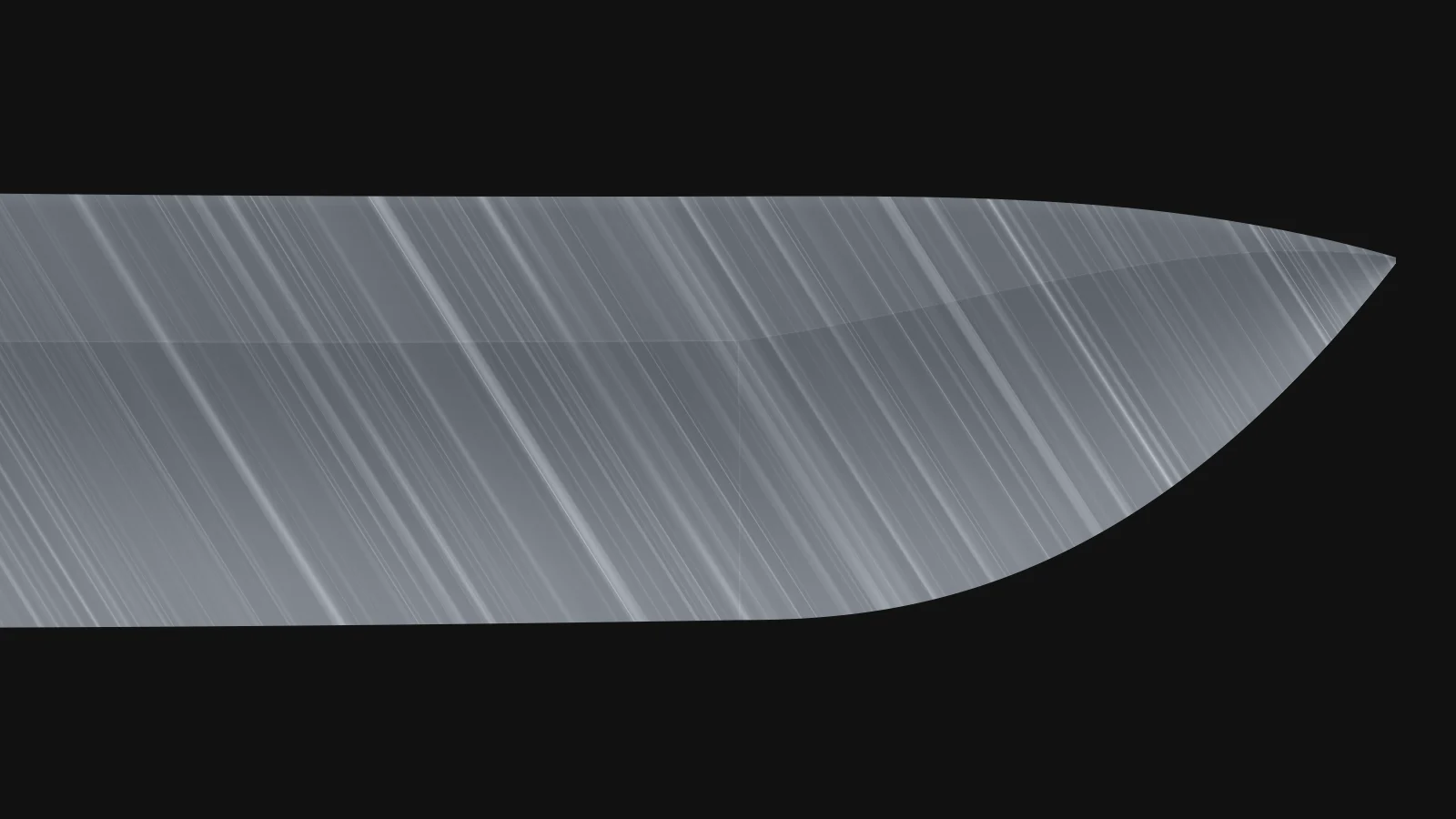
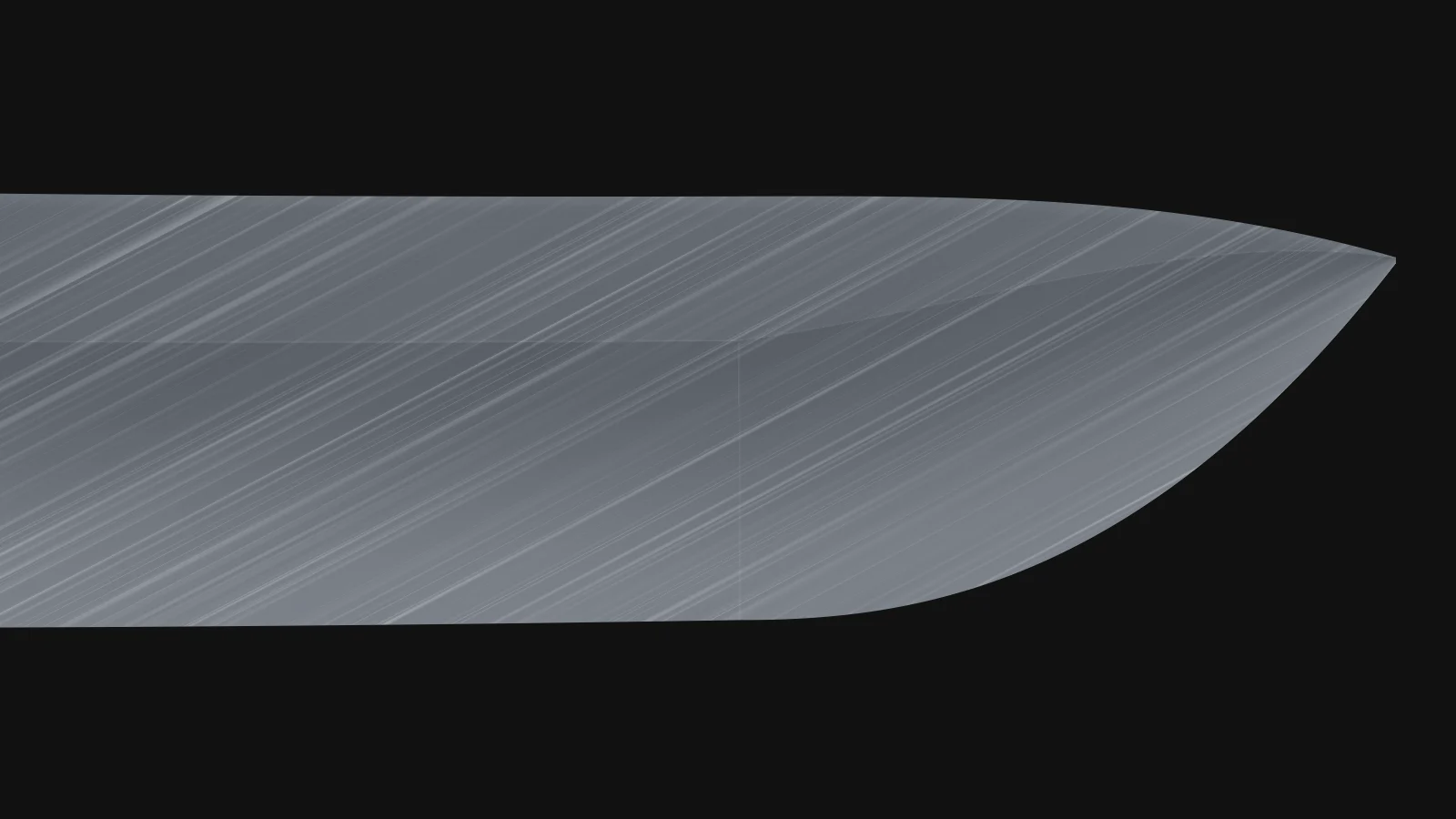
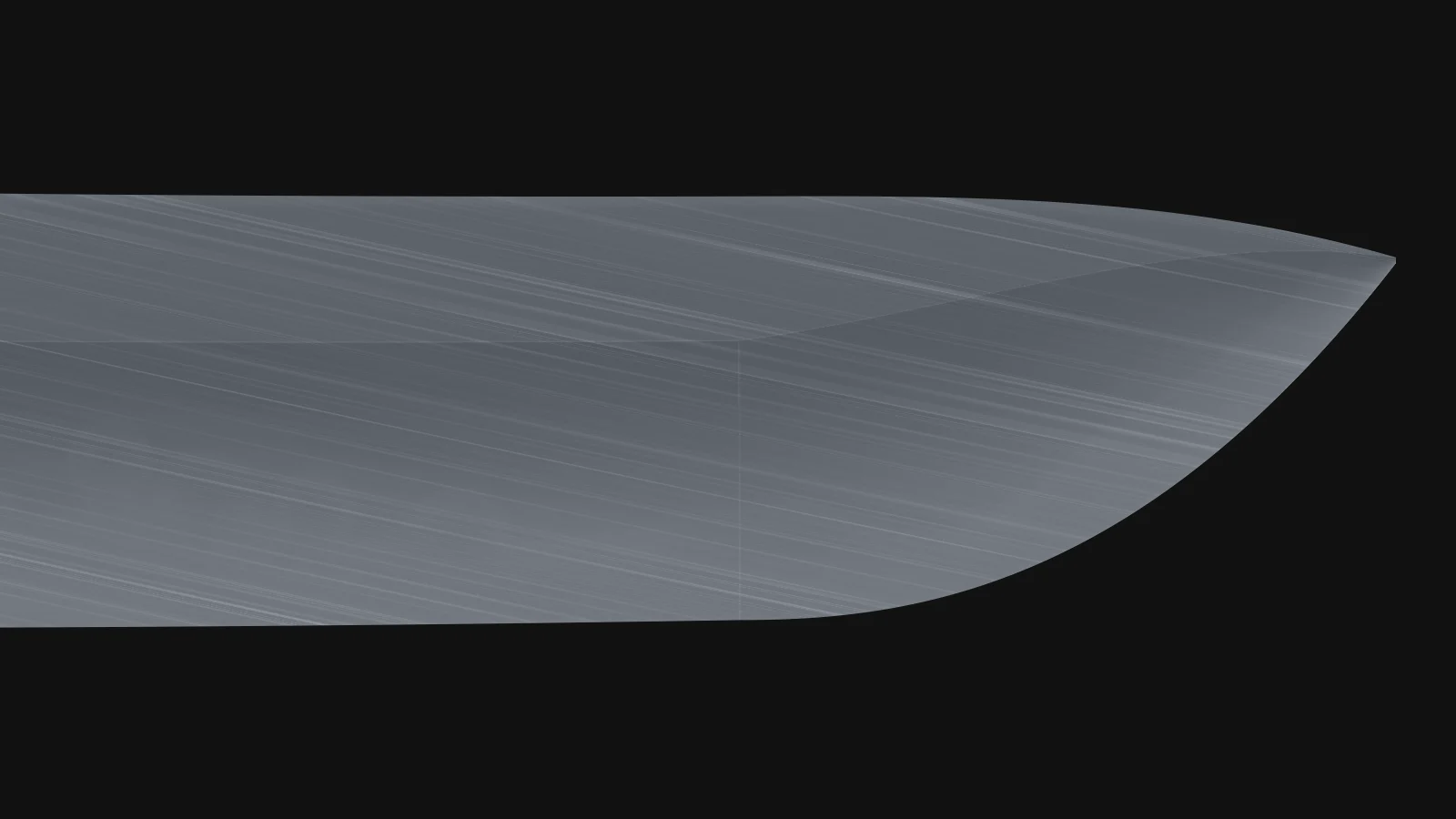
(b.)The finish
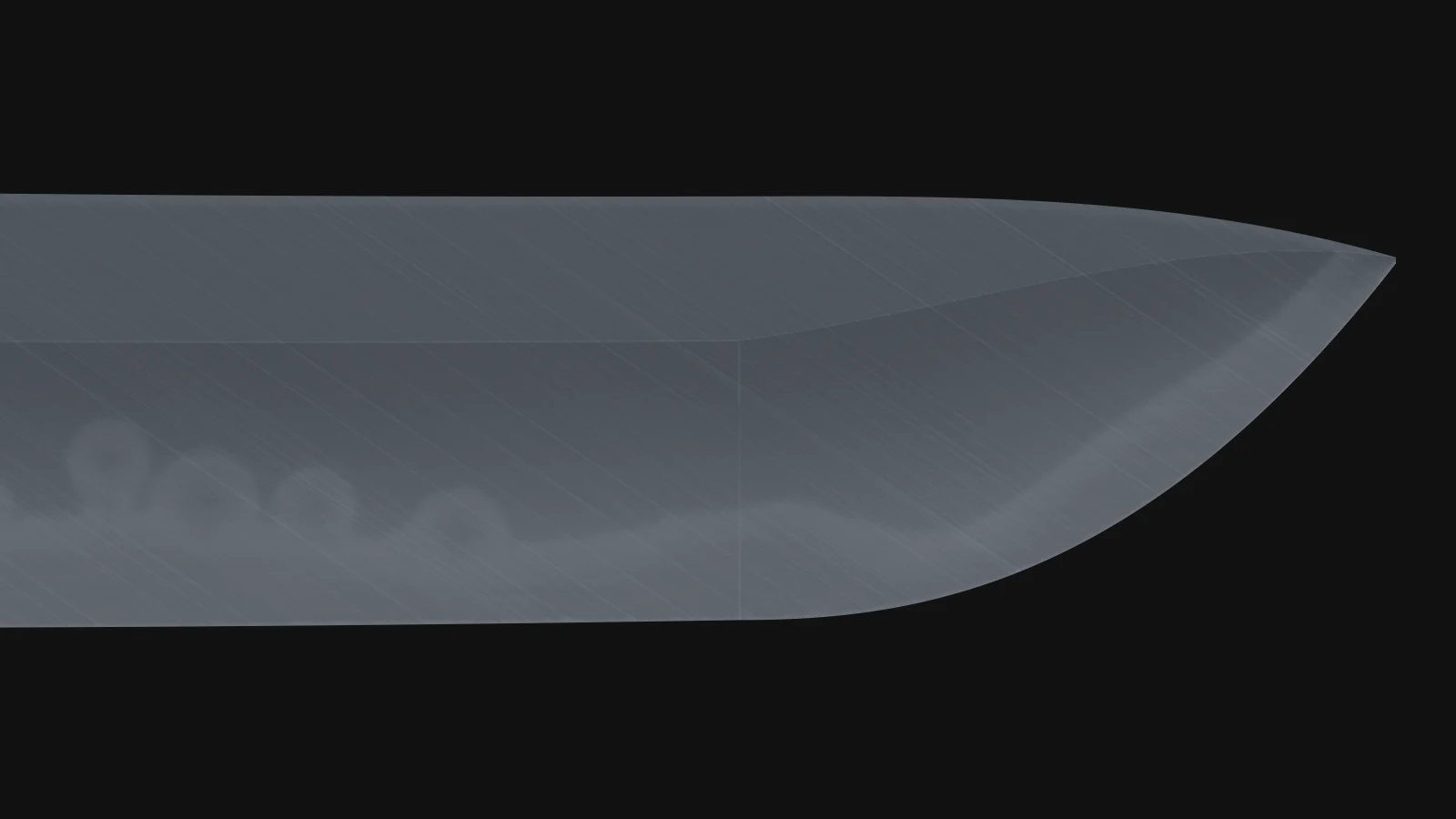
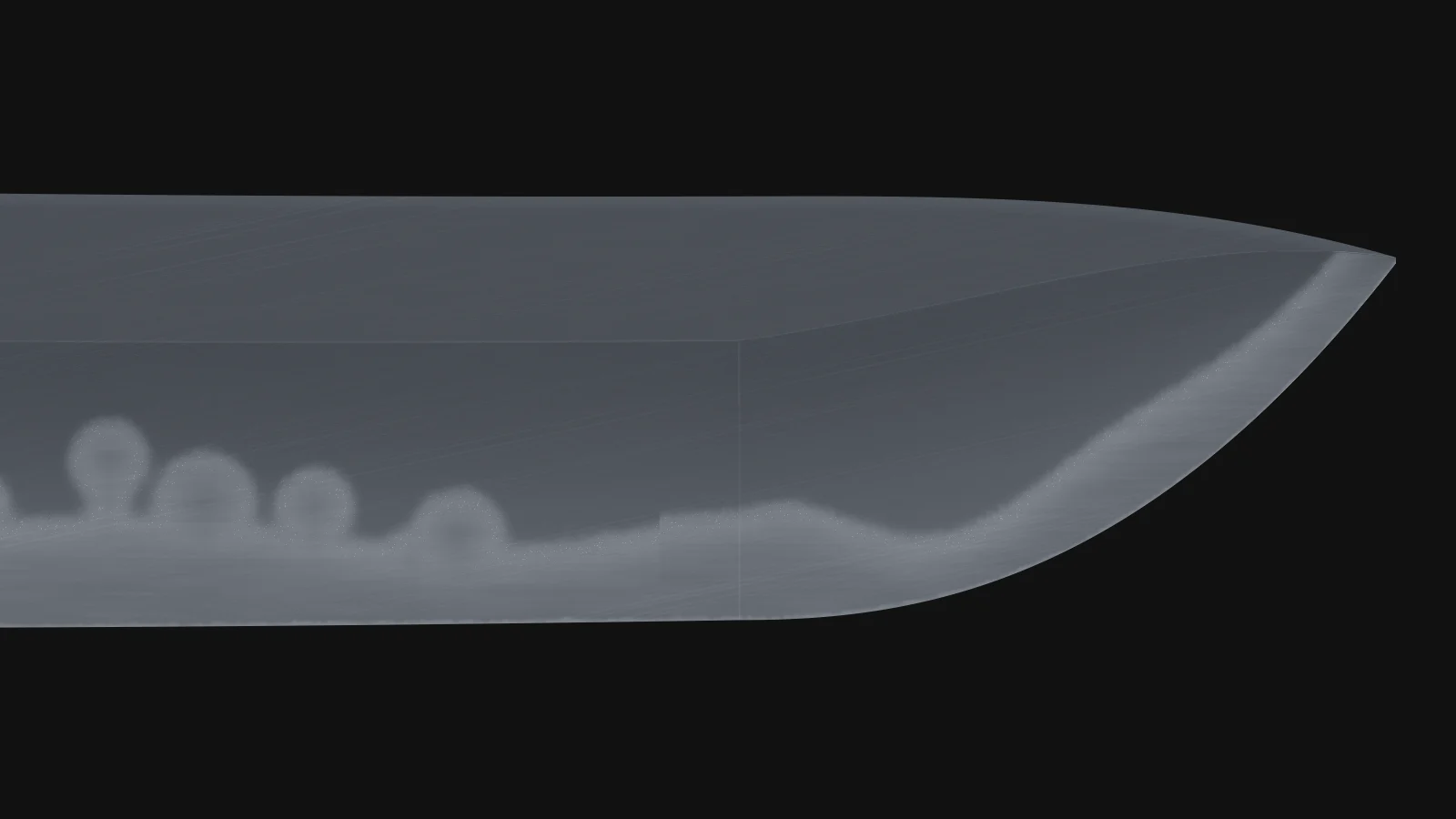
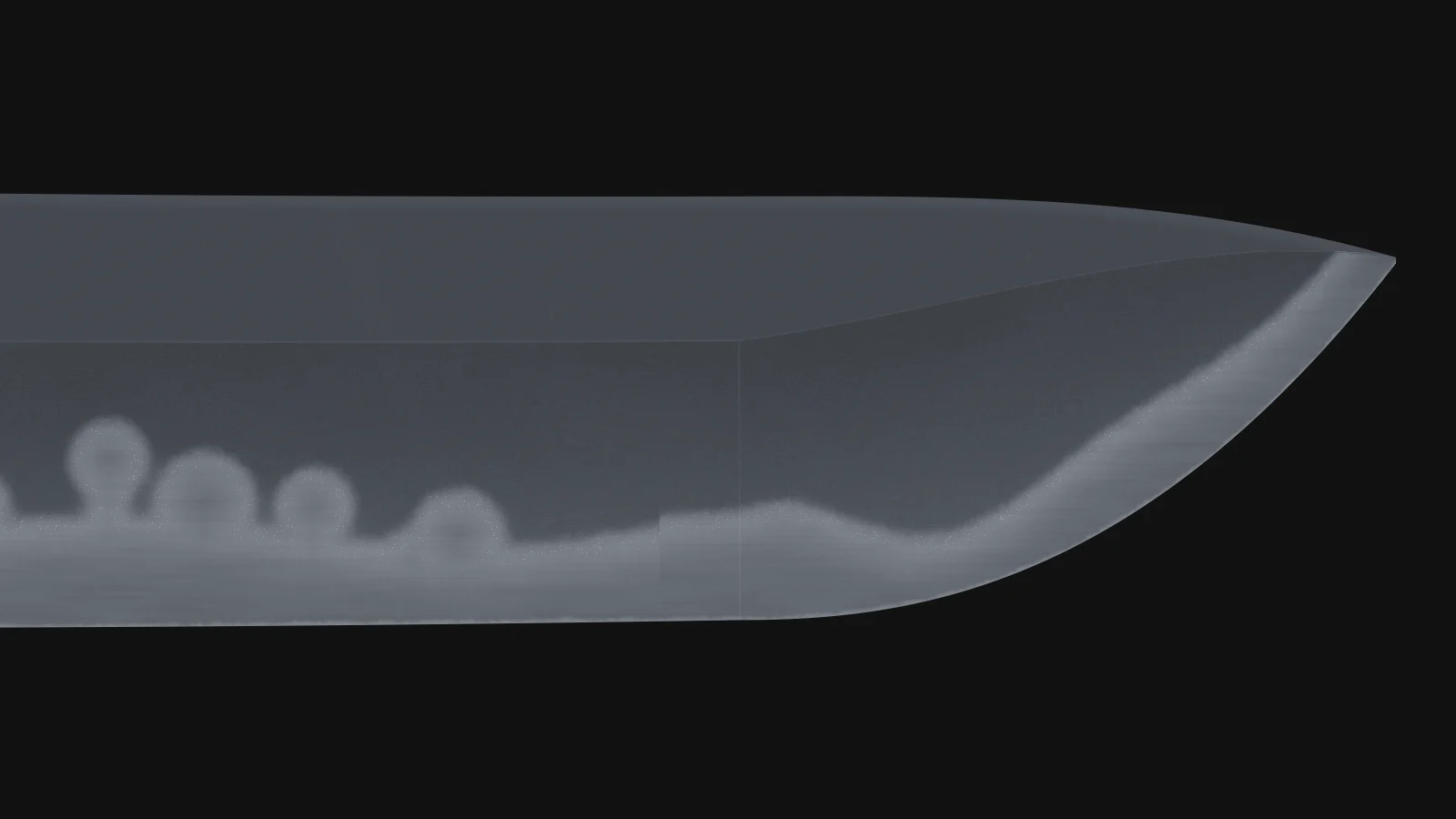
Hadori orsashikomi
The last choice is yours, and it changes how the hamon reads.
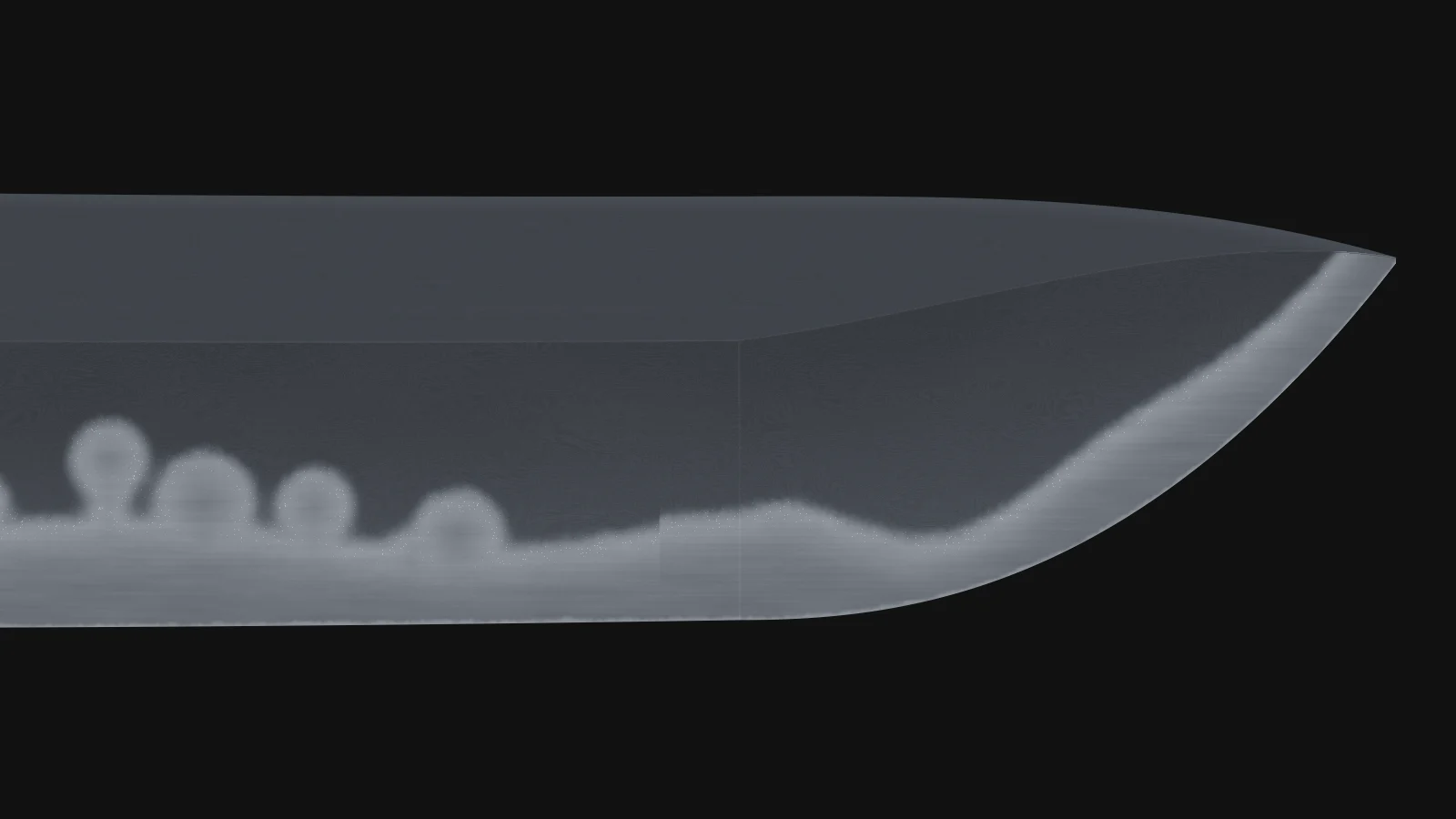
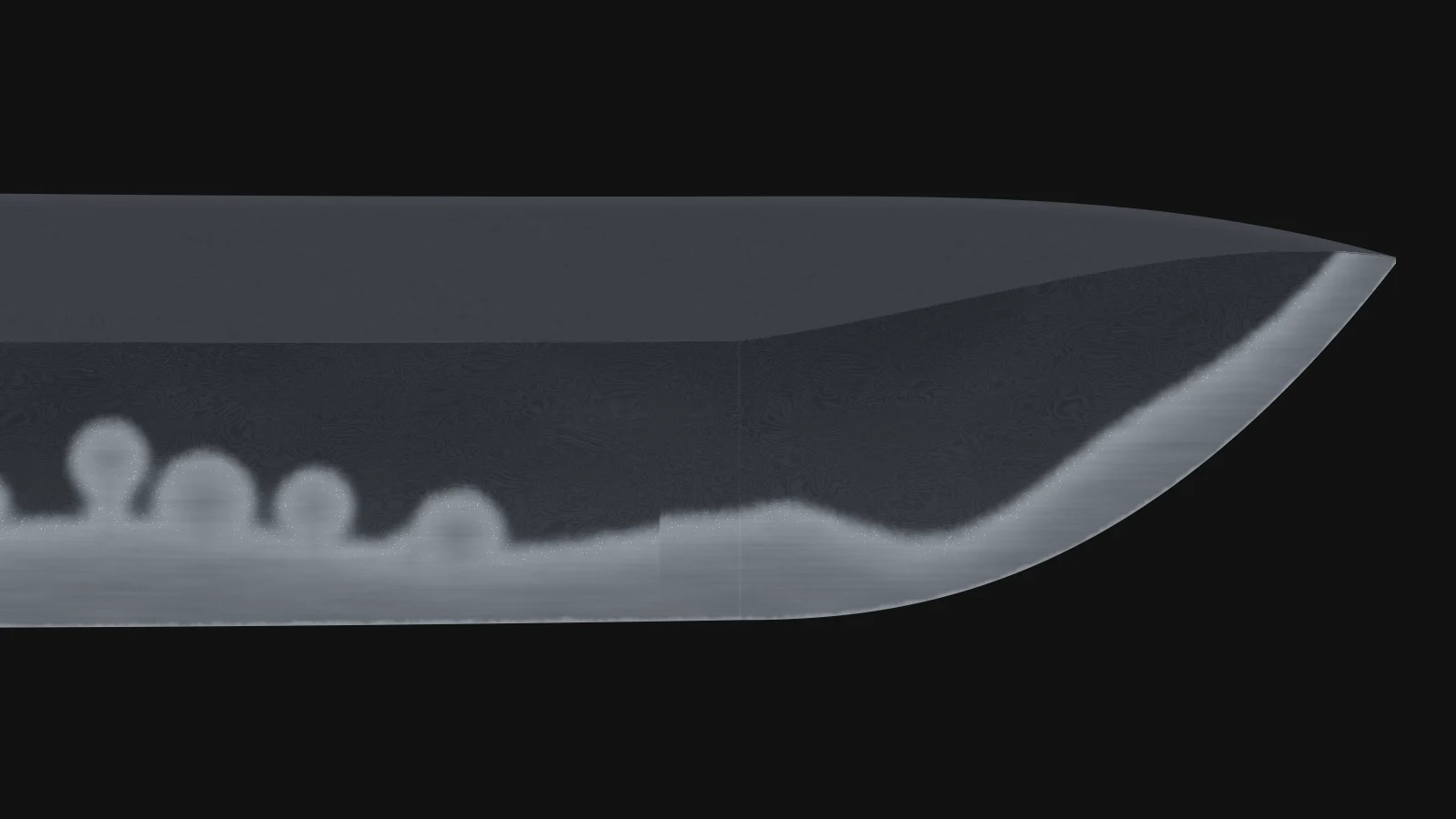
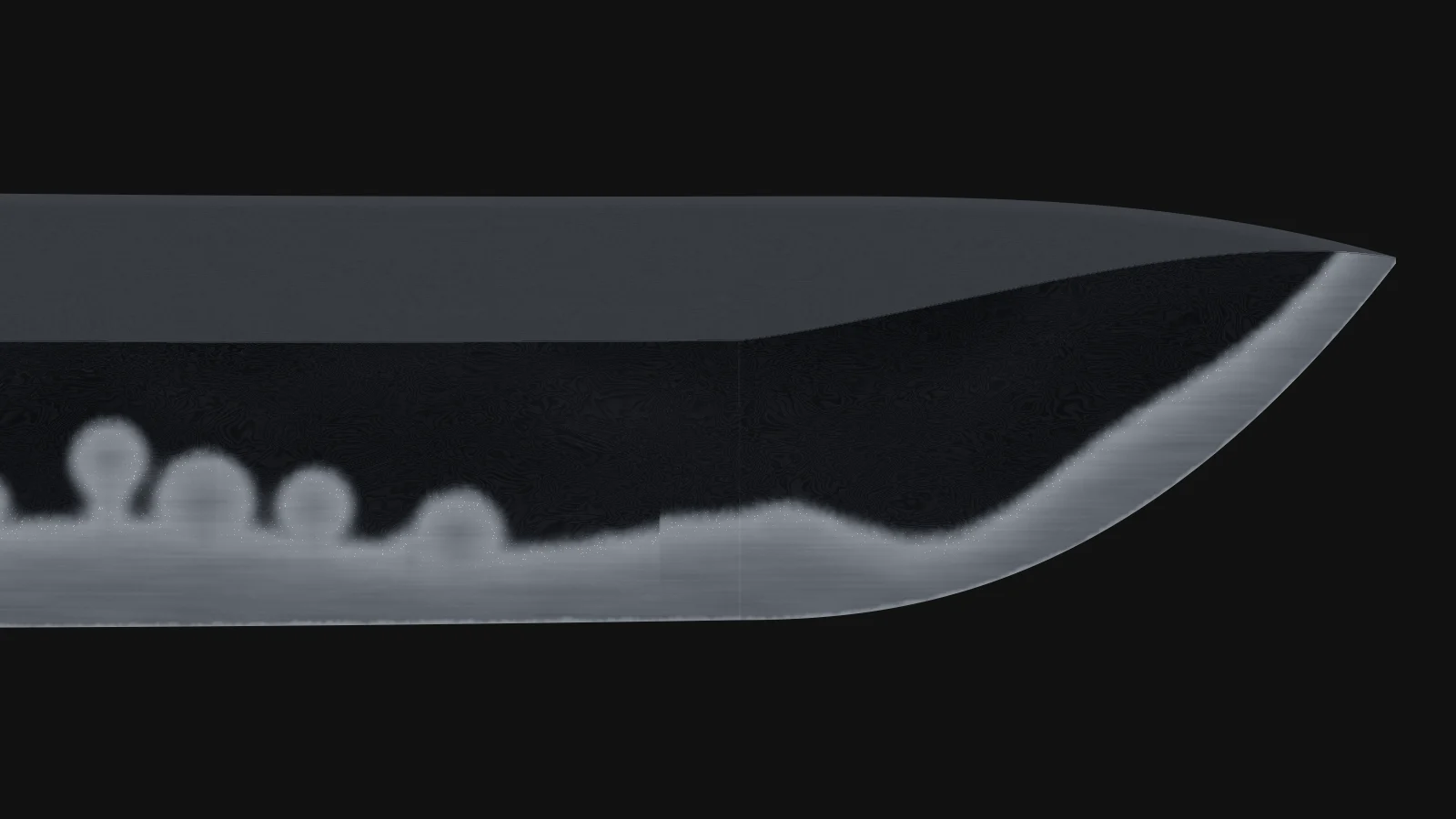
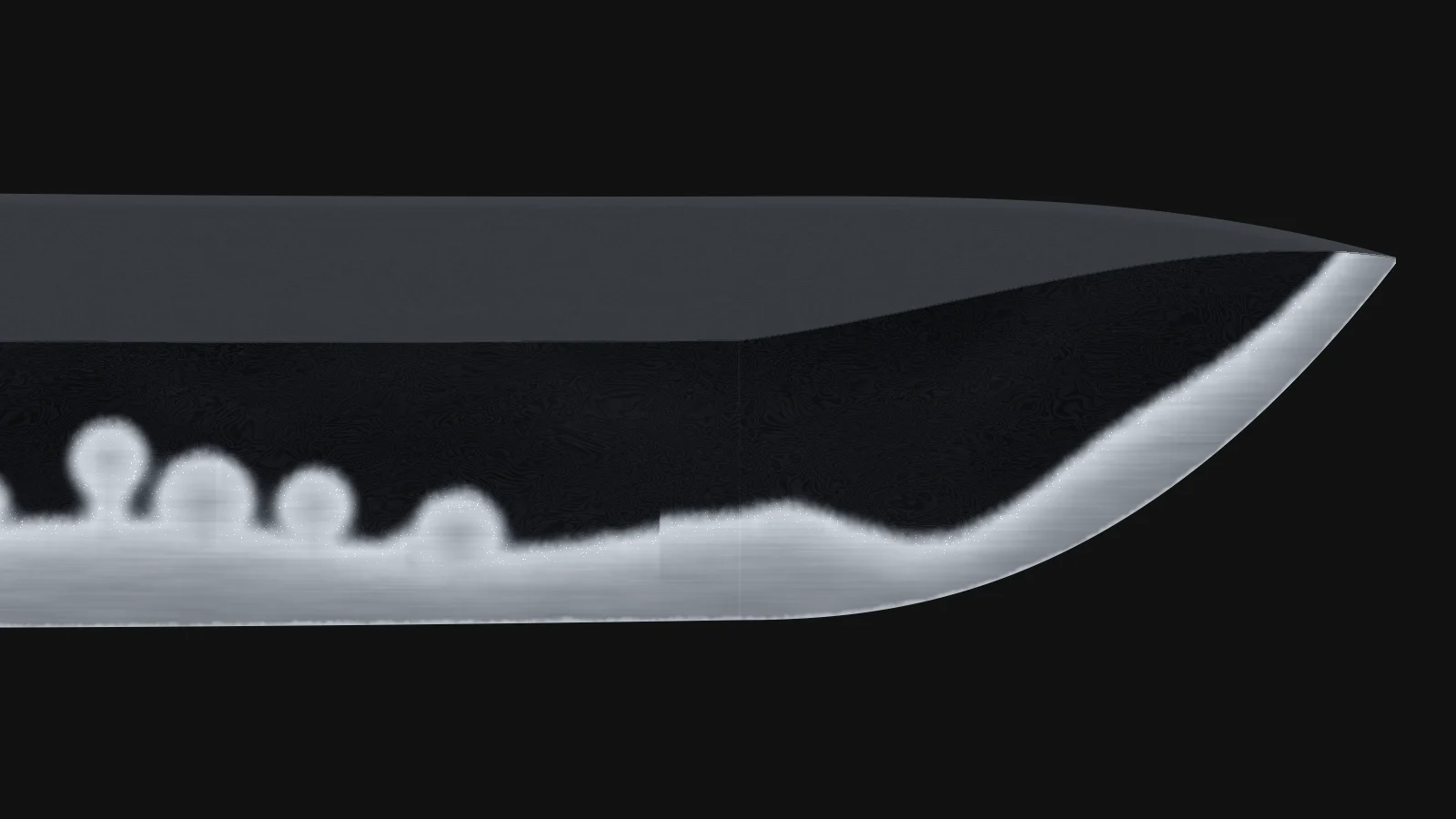
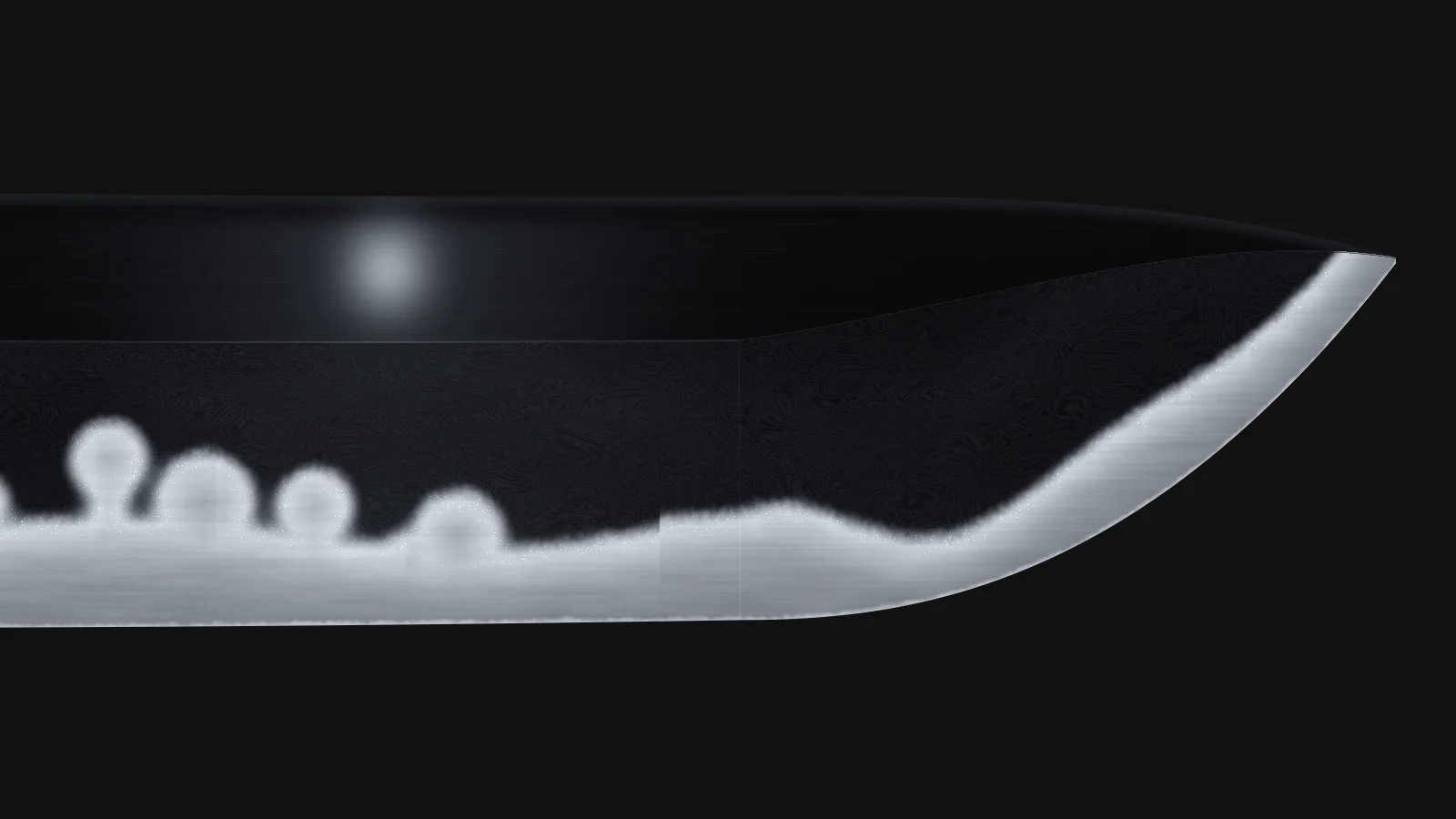
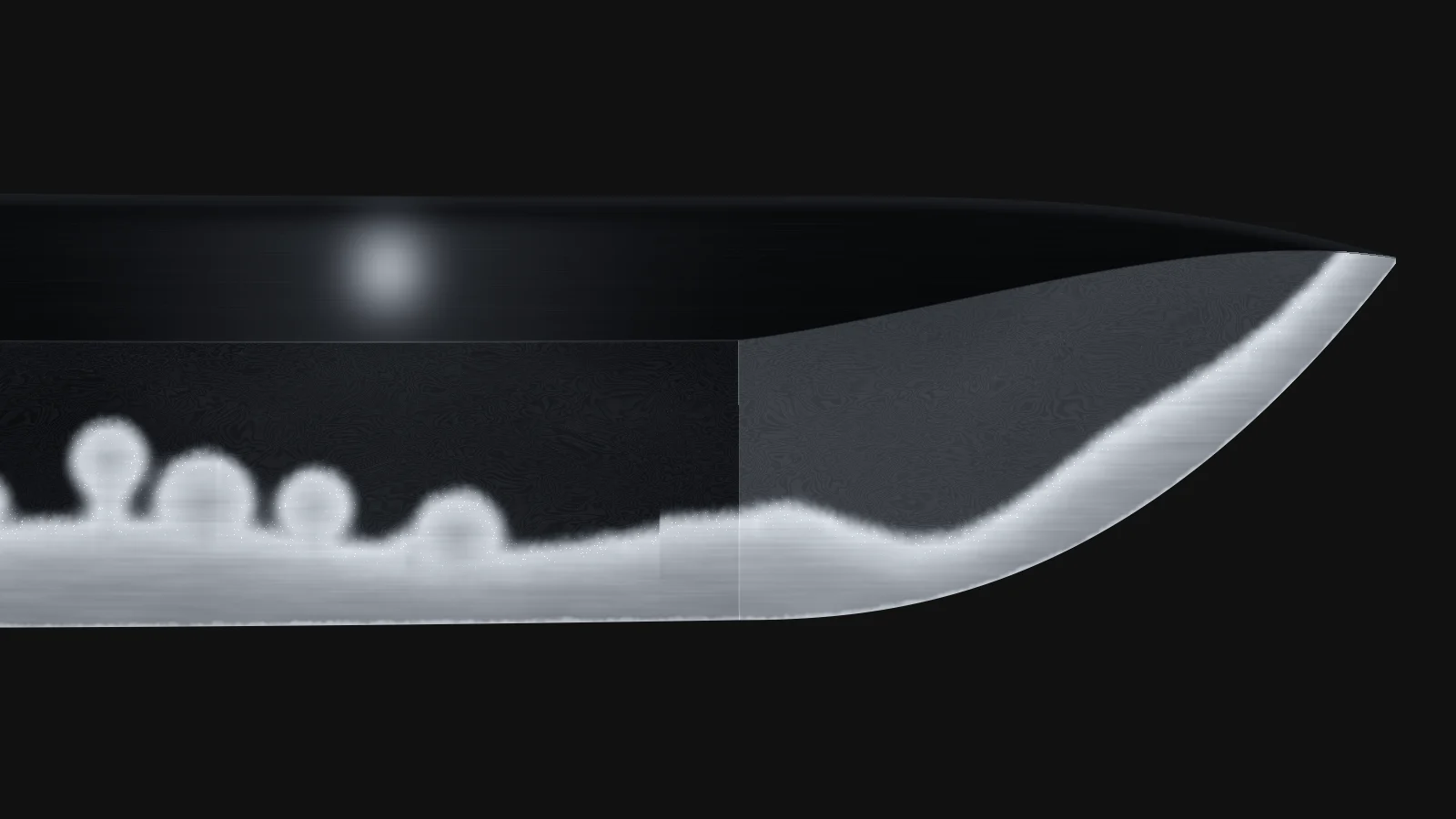
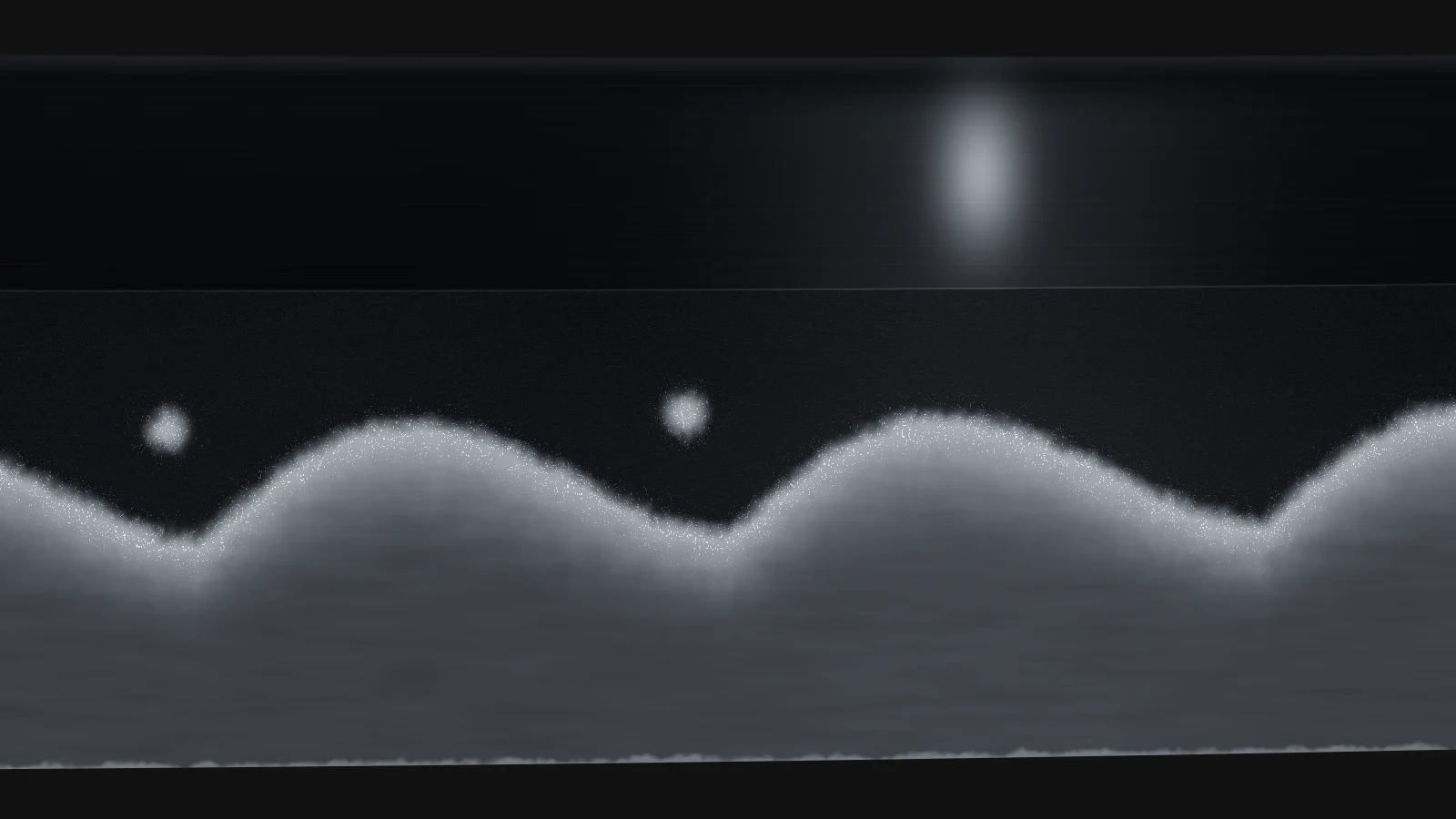
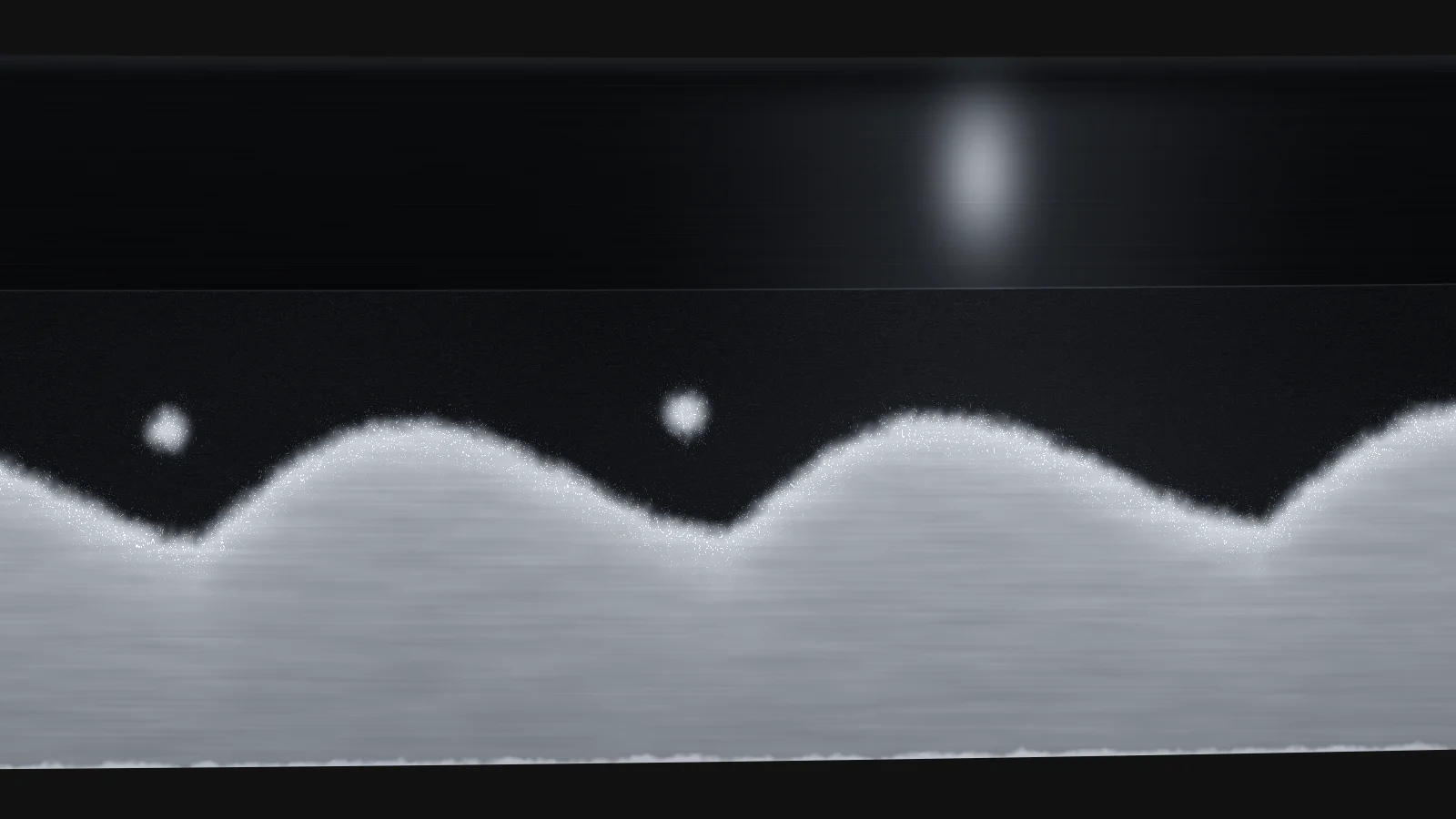
Hadori whitens the hardened zone with a slightly coarser stone, so the hamon stands out as a white shape against the dark steel. It traces the real line closely but not exactly. The style is about a hundred years old.
Sashikomi leaves the hamon as the smith made it: a nugui paste darkens the steel and the hardened line itself shows, softer and exact. It suits blades with a clear hamon and grain.
Same blade, both finishes. Drag the line.
 SashikomiHadori
‹ ›
(c.)What we will not do
Some steelstays as it is
- (i.)We never polish the tang. Its patina and file marks date the blade and carry the signature. Cleaning it destroys both.
- (ii.)We take off only what the condition needs. Every polish thins a blade. A sword can take a limited number in its life, so a window or a light finish is often the better answer.
- (iii.)We don't reshape a blade to look like another school. If an old repair or a shortening changed the lines, we say so in the record instead of hiding it.
- (iv.)We don't polish factory-made swords. Only blades forged and hardened the traditional way have a hamon and grain for the stones to reveal.

(d.) Next
What would your blade cost?
A full polish is priced by length: €150 per sun (3.03 cm). The studio page works it out for you.