
TEGAI SCHOOL
(a.)The record
Measuredand noted
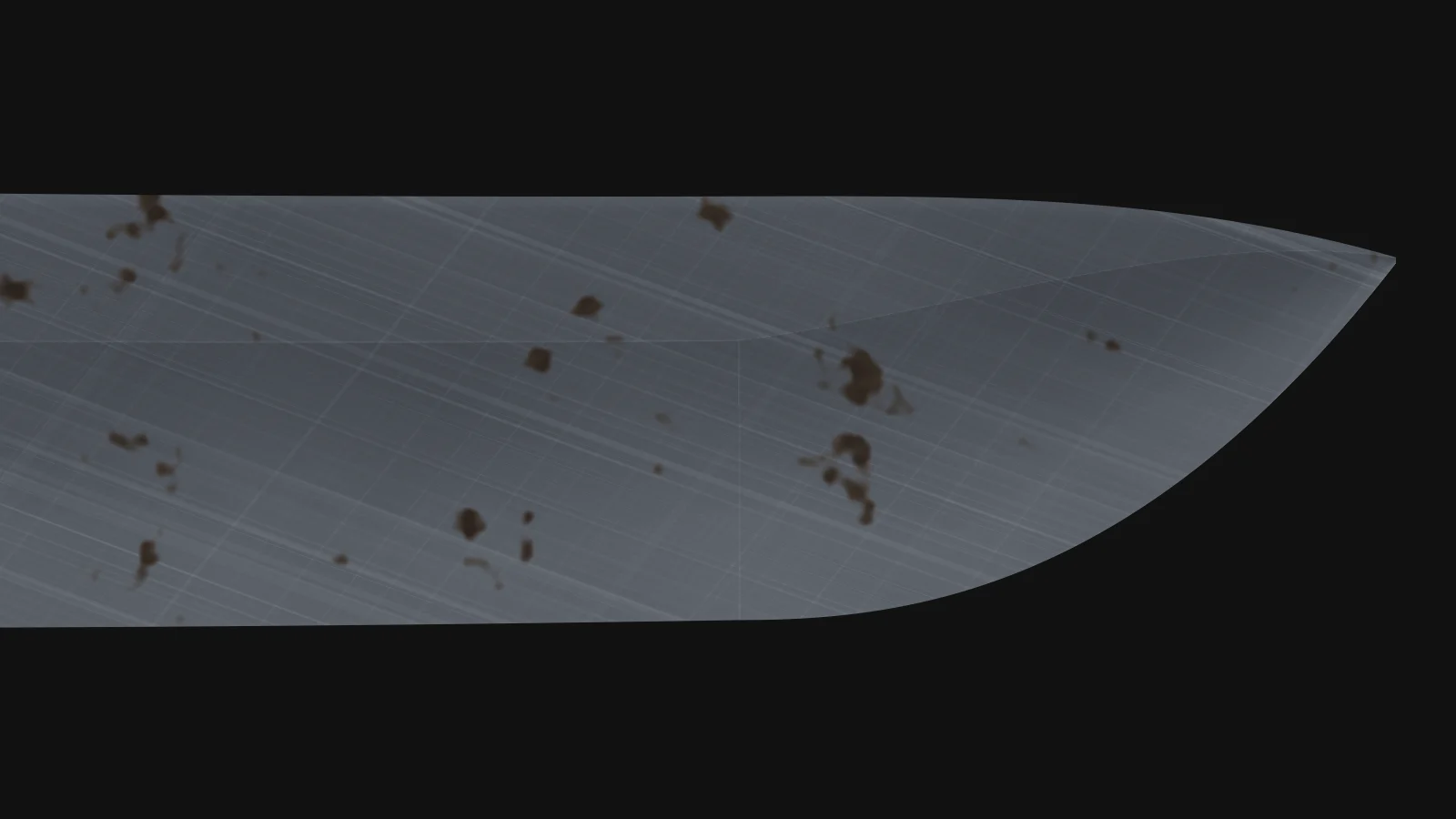
Received: Heavy rust, blade dark all over.
9 weeks on the bench, Sashikomi finish. Before the first stone we photographed both sides, measured the blade and noted every flaw, so the owner can see exactly what changed.
- (a.)MeiUnsigned
- (b.)SchoolYamato
- (c.)PeriodNanbokuchō, 14th century
- (d.)TypeKatana
- (e.)Nagasa69.4 cm (22.9 sun)
- (f.)Sori2.2 cm
- (g.)Motohaba3.00 cm
- (h.)Sakihaba2.05 cm
- (i.)Kasane0.78 cm
- (j.)HadaMasame throughout, ji-nie
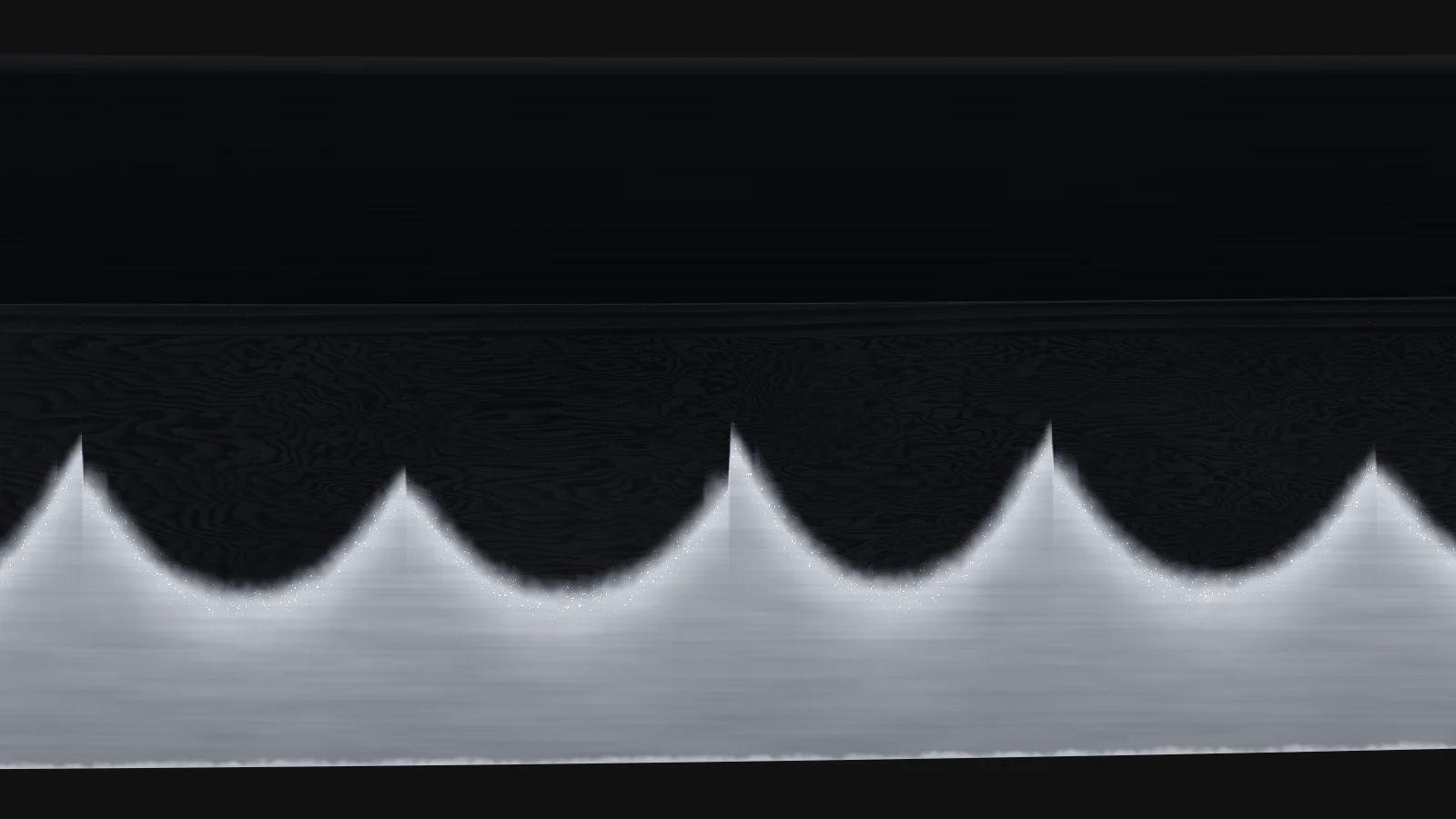
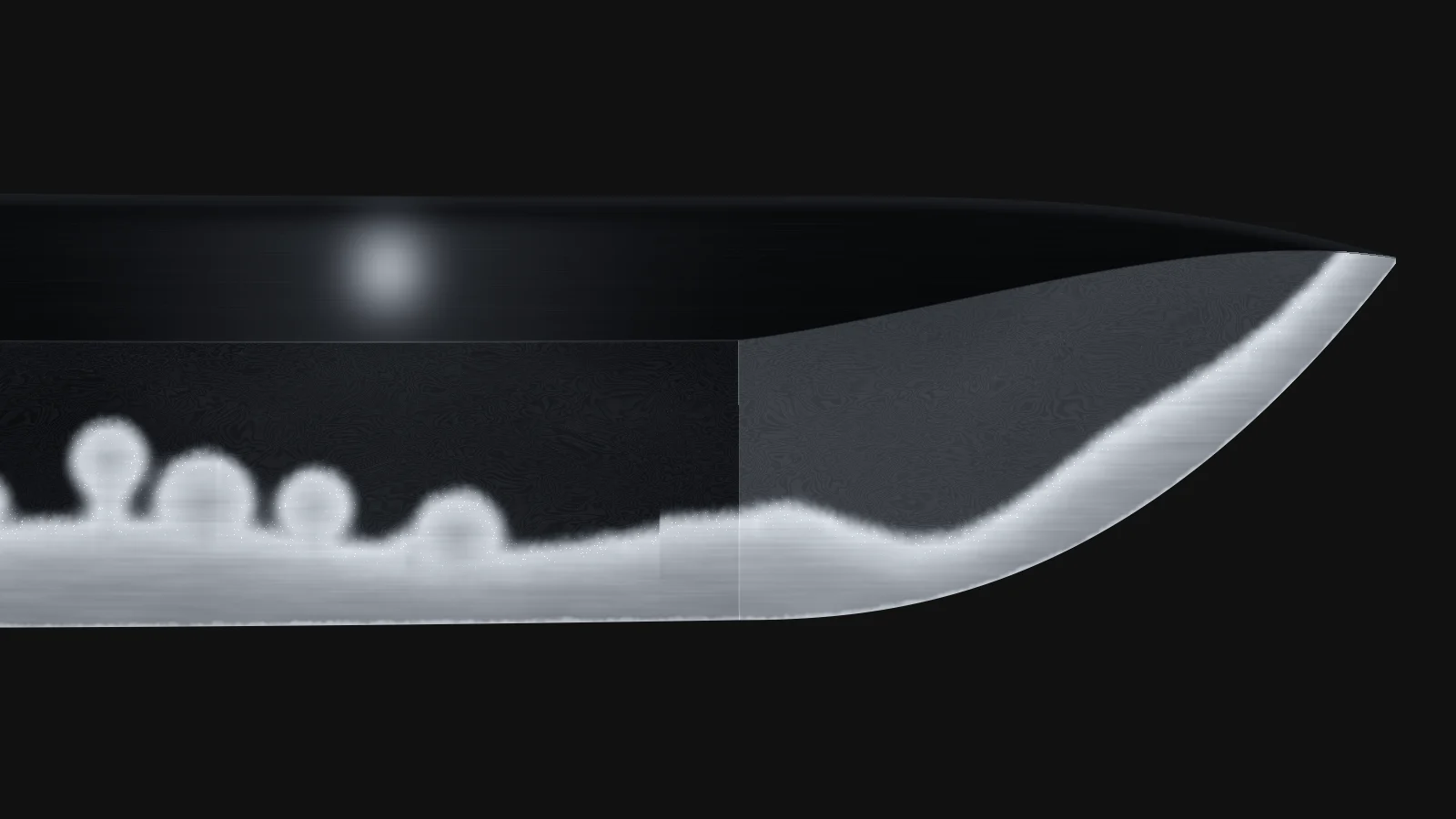
- (k.)HamonSuguha with hotsure and nijūba
- (l.)BōshiYakizume (no return)
- (m.)Nakago18.4 cm, higaki file marks, 2 holes
- (n.)ReceivedHeavy rust, blade dark all over
- (o.)FinishSashikomi, 9 weeks on the bench

(b.)Before and after
The samefew centimetres
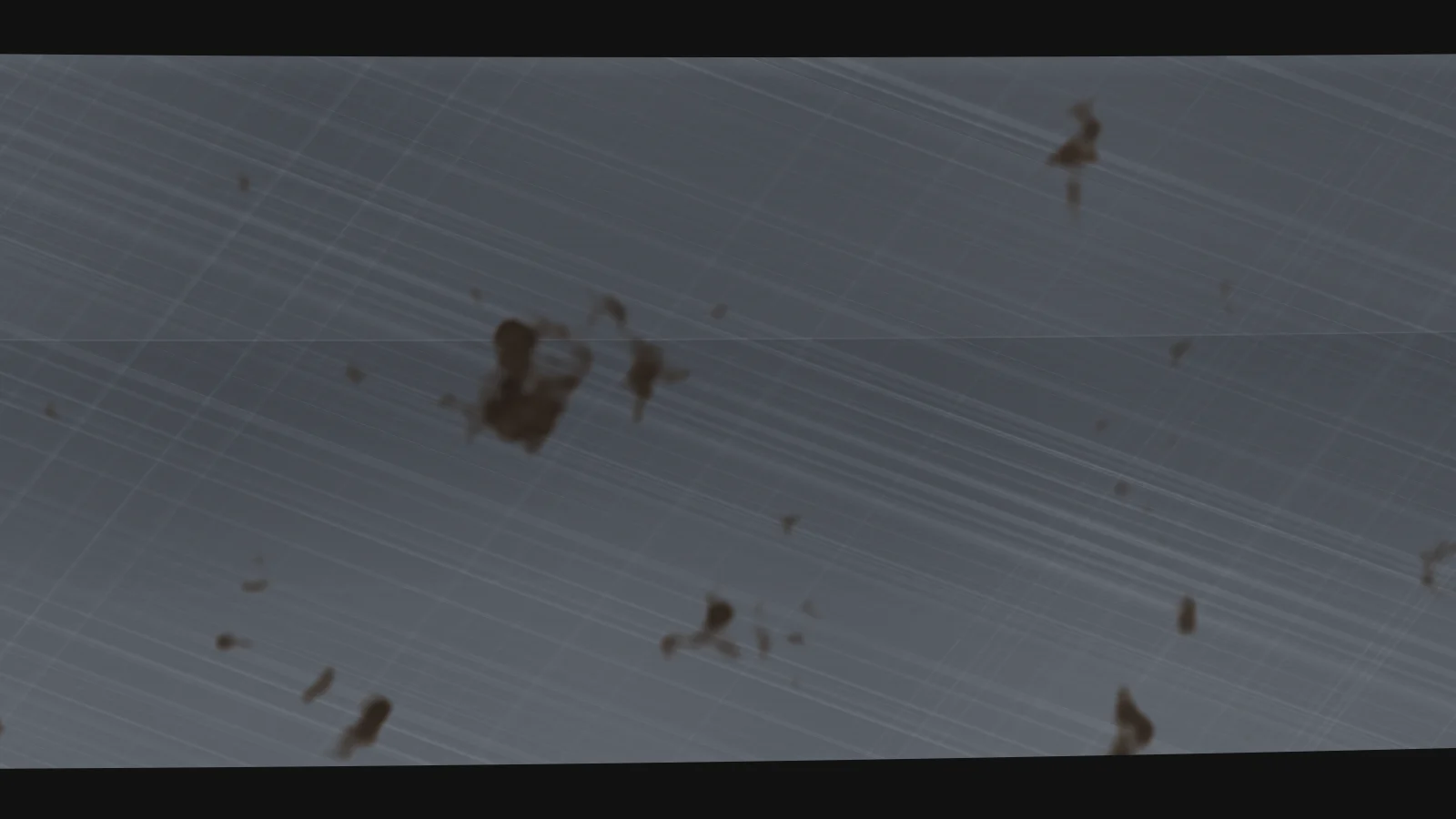
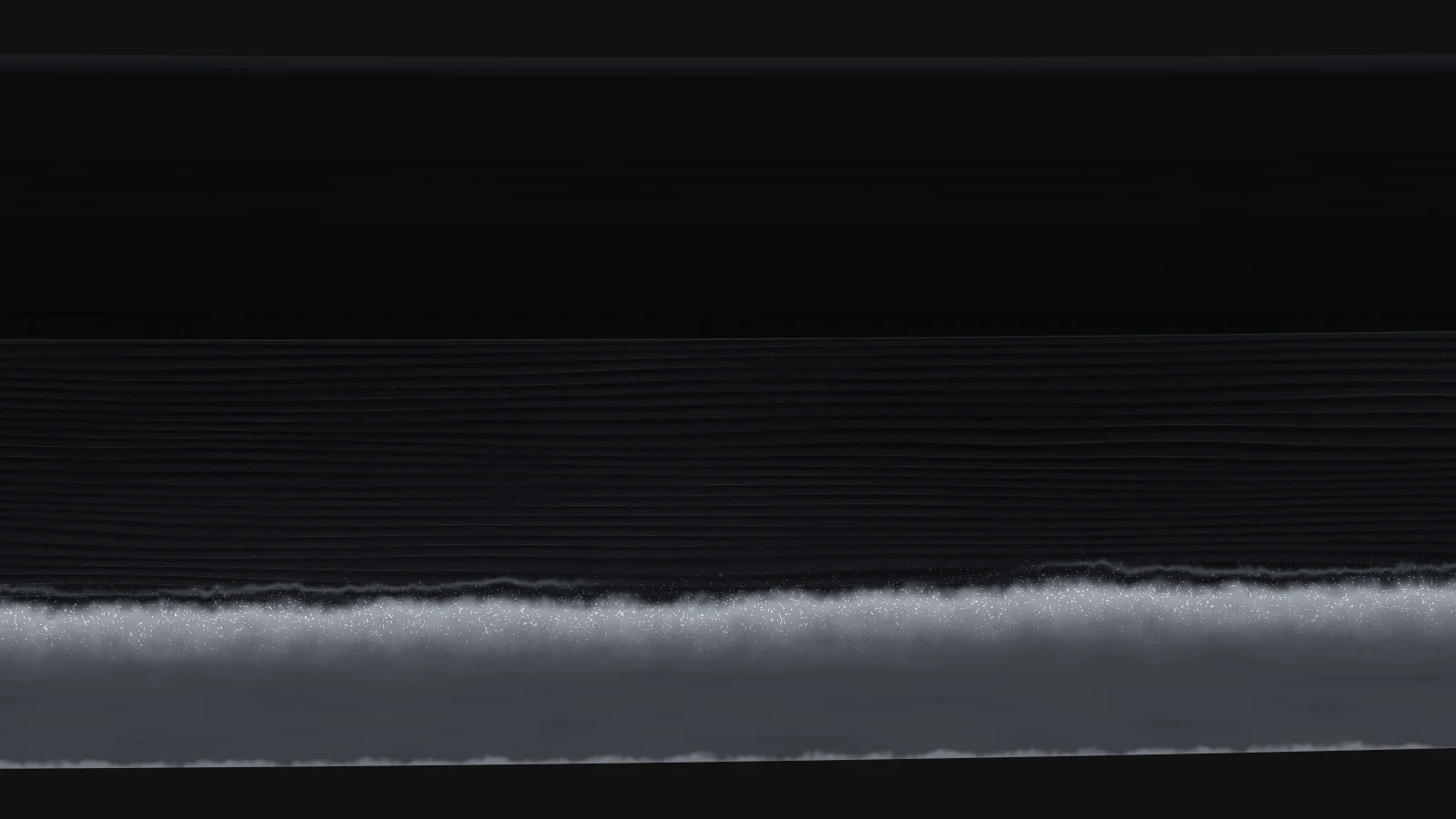 As receivedAfter polish
‹ ›
(c.)Oshigata
The rubbing
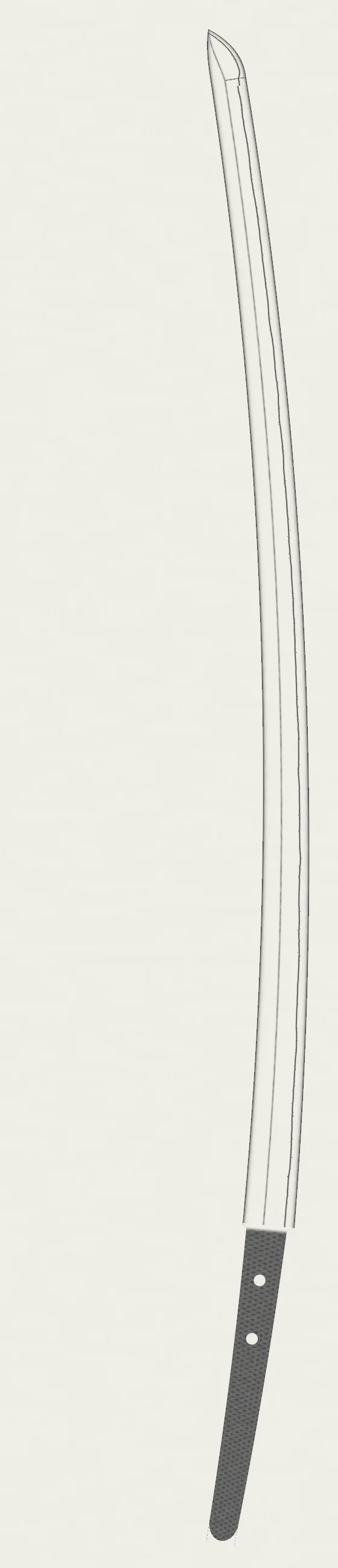
(i.)Hamon. Suguha with hotsure and nijūba.
(ii.)Bōshi. Yakizume (no return).
(iii.)Grain. Masame throughout, ji-nie. The grain is not drawn on an oshigata; it is in the written record.
(iv.)Tang. The tang carries no signature. The attribution rests on the shape, the steel and the hamon.
Rubbing on washi, graphite and pencil, 1:1