24°
The Weather Sun

III · Displays

Five displays

Some days the sky fills with arcs at once. These are five that people wrote down or painted, from Stockholm in 1535 to the Canadian Arctic in 1820. Chinese records are older still: a section of the Chin Shu, from 637, gives technical terms for 26 solar halos.

1535

Stockholm

20 April 1535

Recorded in Vädersolstavlan, commissioned by Olaus Petri

For two hours in the morning the sky filled with white circles and arcs, and extra suns appeared round the Sun. The painting of it is the oldest picture of Stockholm in colour.
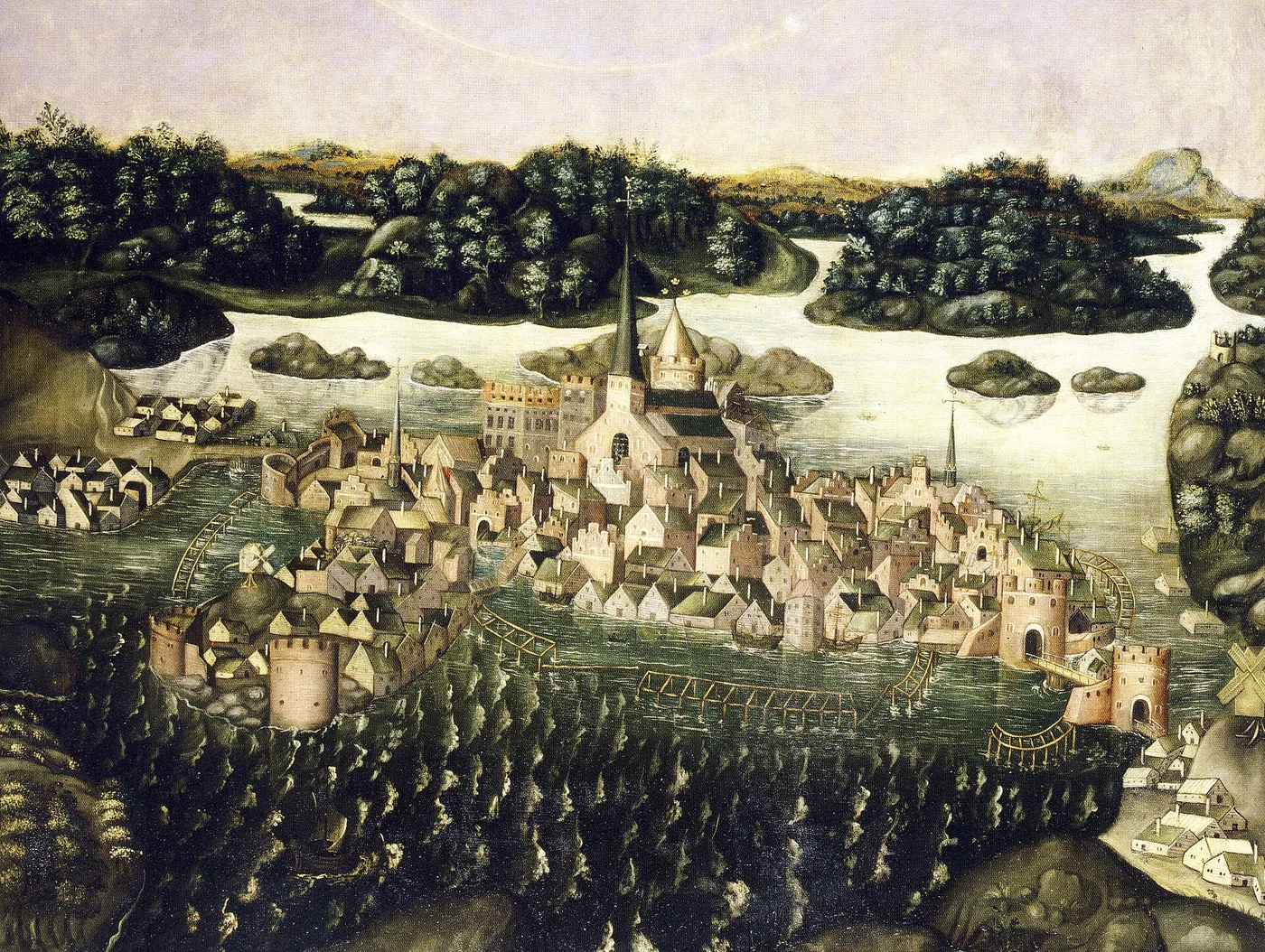
Detail of Vädersolstavlan: Stockholm on its islands, with the lower edge of the circles in the sky above

c. 1630

Rome

About 1630

Described by Christoph Scheiner, Jesuit astronomer

One of the first European descriptions of a complex display: several arcs at once, written down by an astronomer who knew what he was looking at.

No picture survives that we can show. The description is the record.

1661

Danzig (Gdańsk)

20 February 1661

Described by Johannes Hevelius in Mercurius in Sole visus Gedani, 1662

A complex display watched by many in the city. Hevelius, a brewer and astronomer, published it the following year.

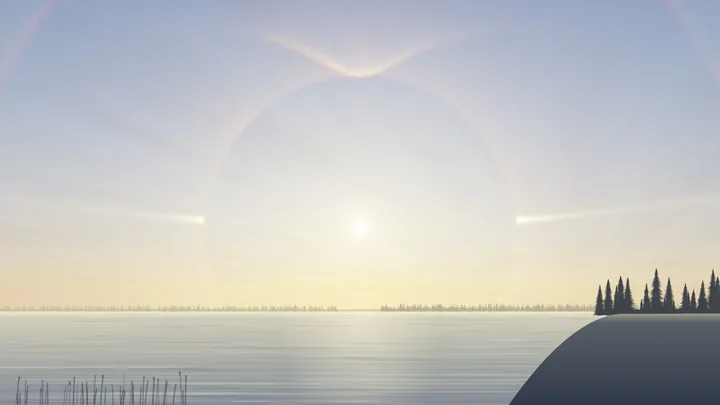
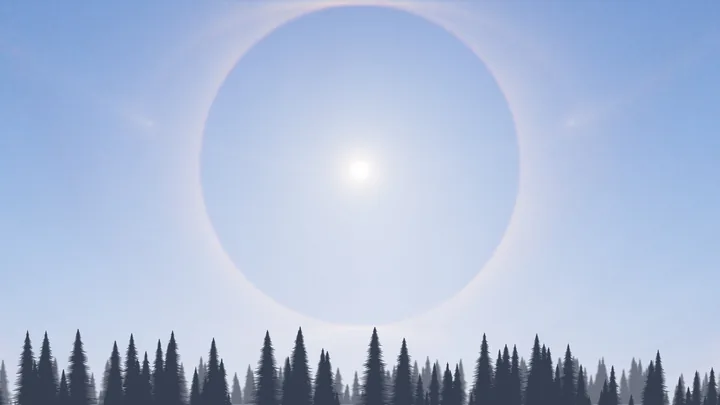
The engineDrawn by the engine with the Sun at 24°, a winter noon at that latitude, with plates, columns and random crystals together.

1790

St Petersburg

18 June 1790

Seen by Tobias Lowitz, apothecary and chemist

He noted short coloured arcs running from the sun dogs and curving below the Sun, and reported them to the Academy of Sciences on 18 October with a drawing. The arcs now carry his name.

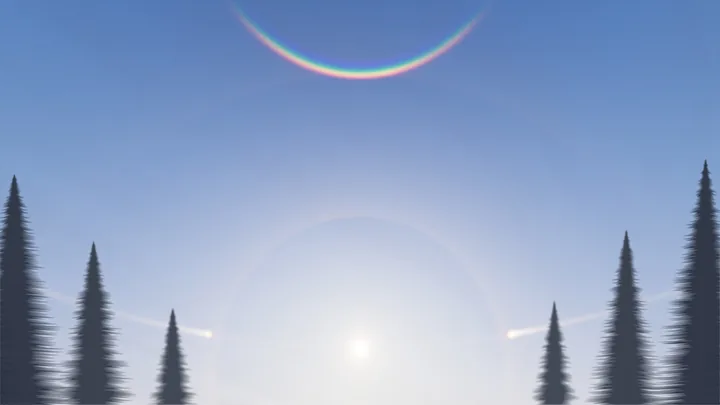
The engineDrawn by the engine with plates spinning about a long diagonal, the orientation usually put forward for his arcs.

1820

Melville Island, Arctic Canada

8 April 1820

Drawn by William Edward Parry, his ships frozen in for the winter

His drawing shows a parhelic circle, the 22° halo, a pair of sun dogs, a lower tangent arc, the 46° halo and the circumzenithal arc, and the arc now named after him.

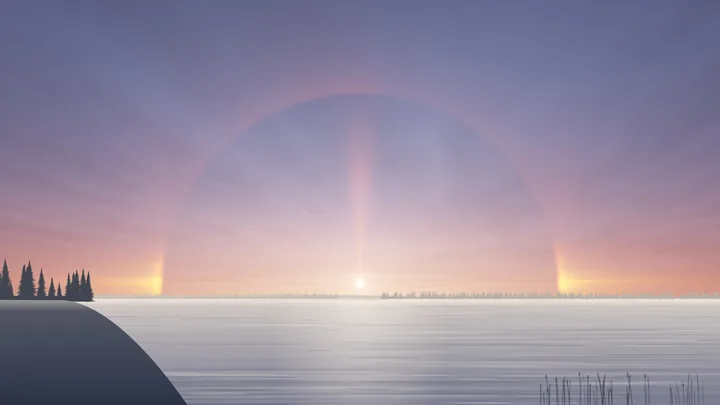
The engineDrawn by the engine with the Sun at 22°, where every arc in his drawing can appear at once.

Sources

Credits

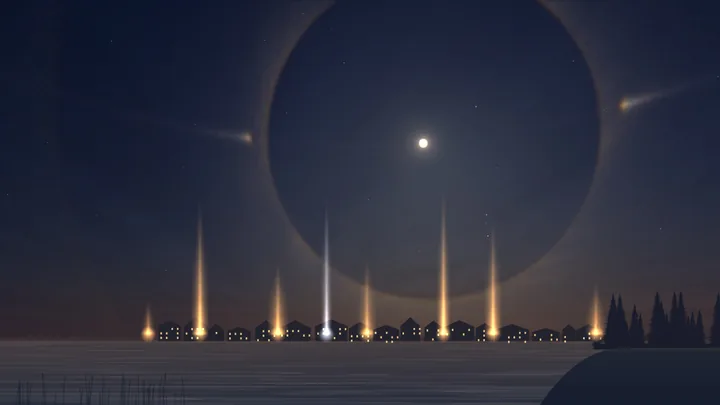
Every sky without a credit below is drawn by our engine: sunlight ray-traced through hexagonal ice crystals, refracted and reflected face by face, over a computed sky and land.