selwood

[ Frome, Somerset · since 2021 ]

Selwood is three people, two indigo vats and a room with a sink, a long table and a washing line. We fold, bind and stitch cloth, dip it, air it, and dip it again.
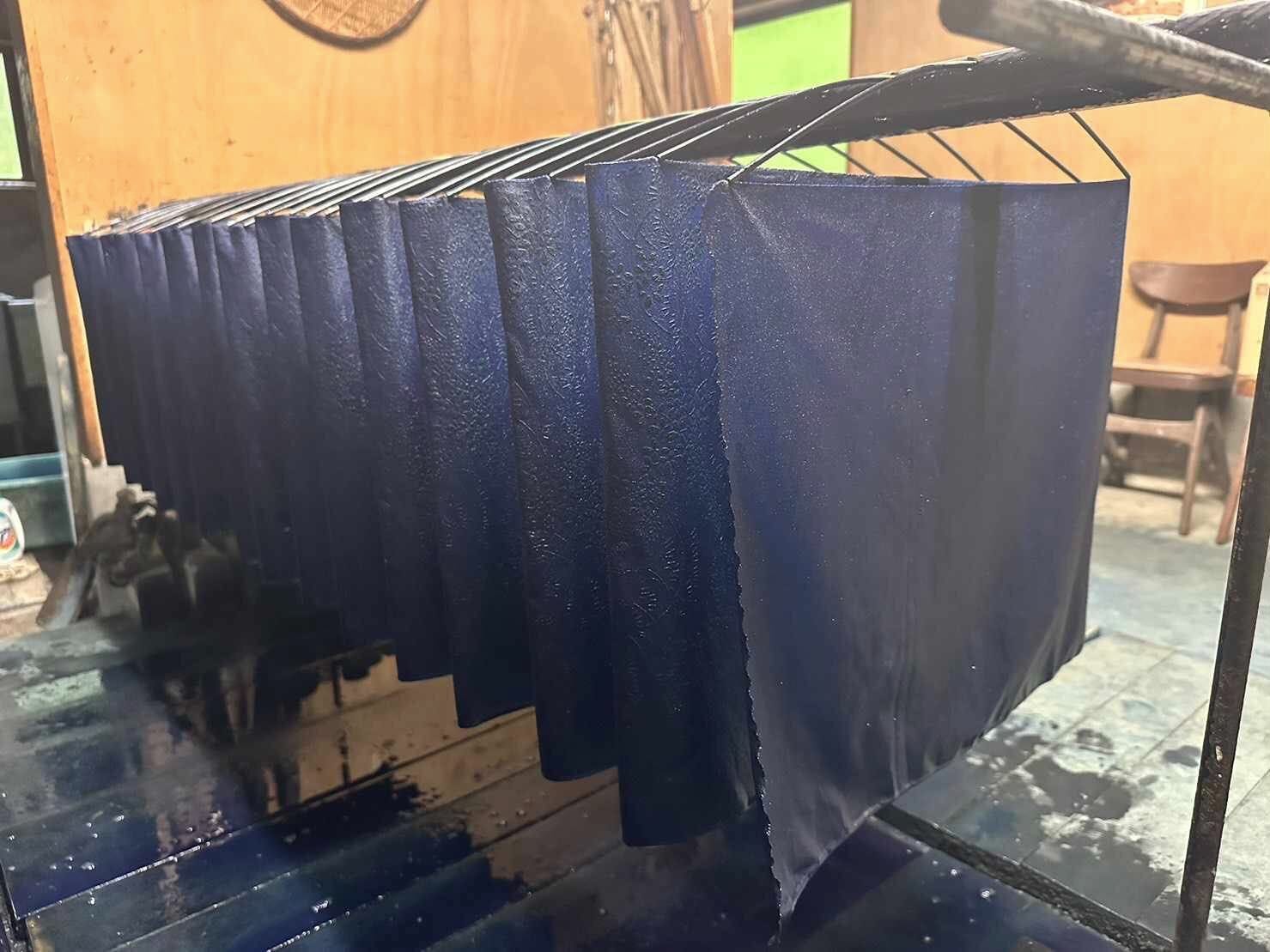
Indigo-dyed fabric raised out of the vat
Cloth lifted out of the vat. Photo: Markmcnbowe97, CC BY-SA 4.0
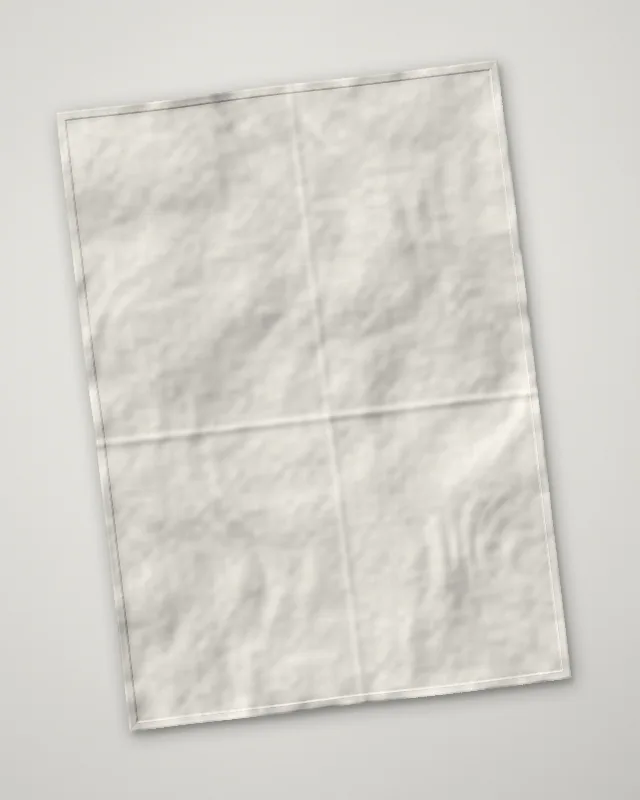
An itajime tea towel, folded open, before its first dip

[ Shown opened out at every dip ]

[ One tea towel, sixteen dips ]

Dip 00 / 16

[ Folded, clamped, not yet dipped ]

  1. In. The packet goes into the vat for a few minutes. In the bath the dye is yellow, and it doesn’t stay in the cloth until the air gets to it.
  2. Out and air. Lifted out, the cloth is yellow-green, then green, then blue, while it hangs. We leave it twenty minutes before the next dip.
  3. Pale, at four. Four dips gives the washed blue we call Pale.
  4. Mid, at eight. Eight is our Mid, the shade most people pick.
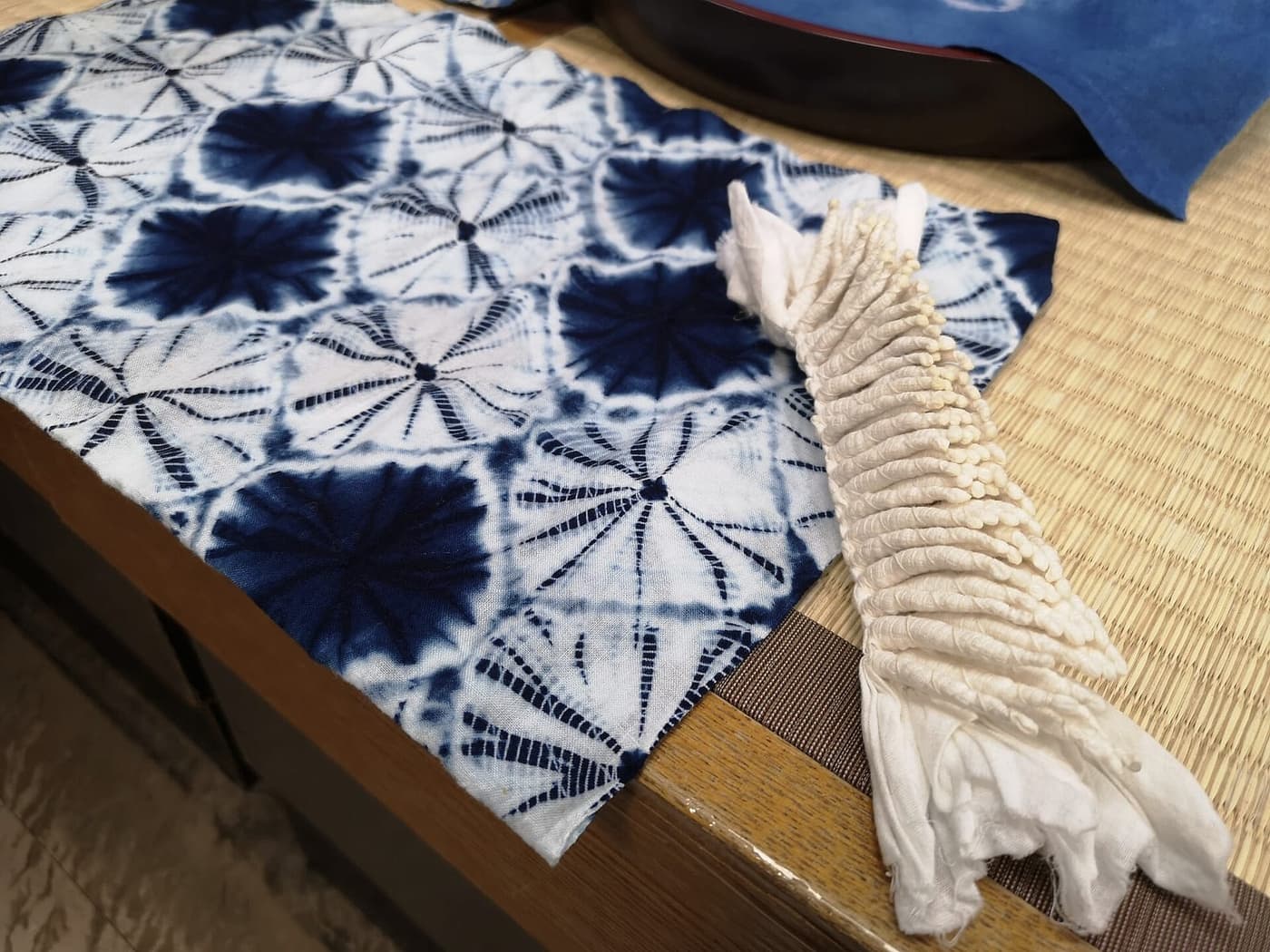
  5. Deep, at sixteen. Sixteen dips and two days later, it’s nearly navy. Then the clamps come off and the squares appear.

The colour model behind this picture is the one that renders every product photo on the site.

[ From cloth to parcel ]

  1. 1.0

    Cut and hem

    Kit cuts the linen and turns the hems before anything is dyed, so the hems take the blue with the rest.

  2. 2.0

    Fold, bind or stitch

    Itajime pieces are folded and clamped; arashi goes on the pole; kumo and kanoko are bound with thread; nui pieces are stitched and pulled tight.

  3. 3.0

    Dip and air

    In and out of the vat 4, 8 or 16 times, airing in between. A Deep batch takes two days.

  4. 4.0

    Open and rinse

    The clamps and threads come off, which is the best part of the week, and every piece is rinsed until the water runs clear.

  5. 5.0

    Wash, press, pack

    Washed, line dried, pressed, folded in paper with a card that says its batch and number of dips.
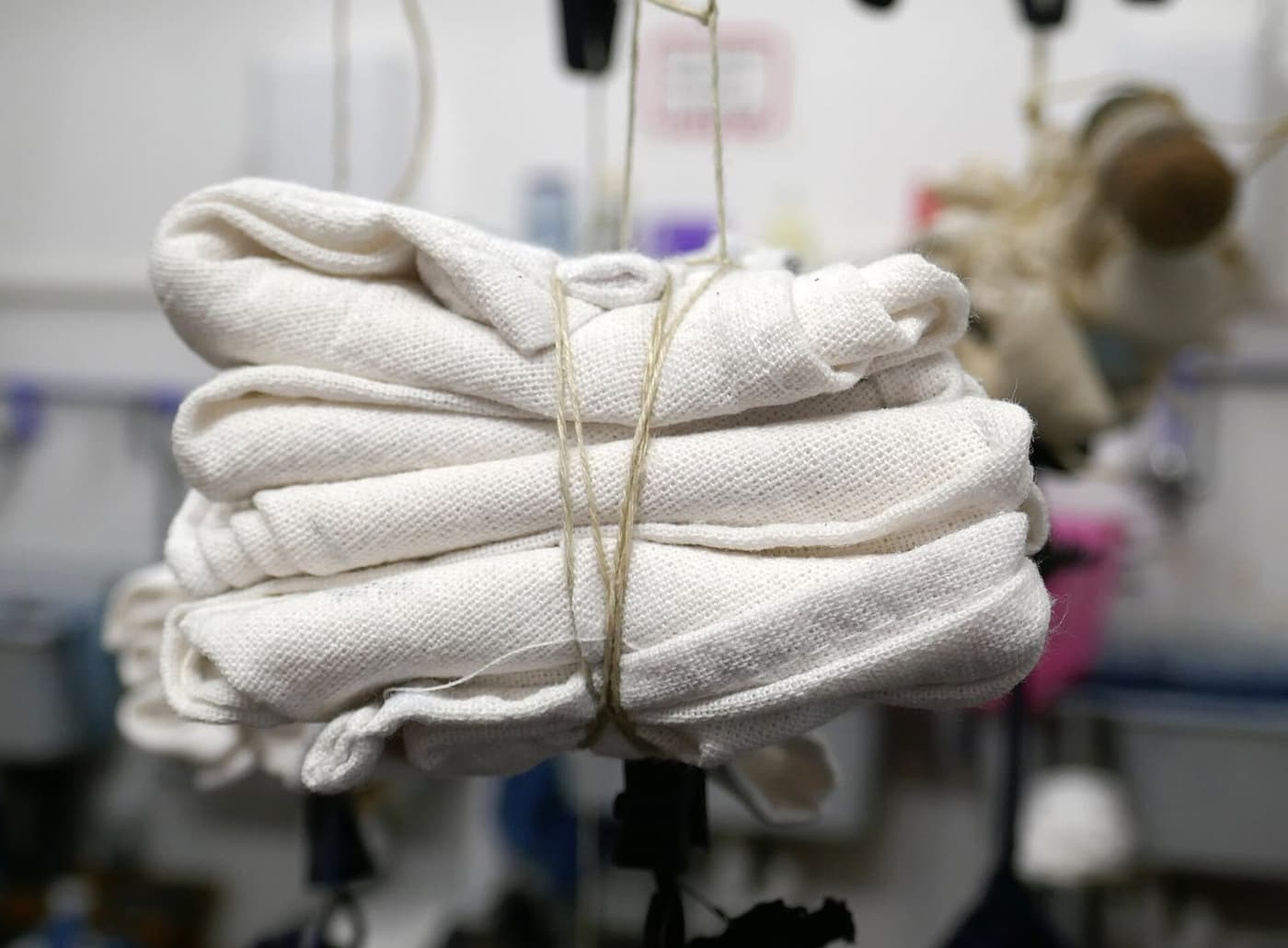
White linen bound tightly with string before dyeing
Cloth bound with string, waiting for the vat. Photo: Geolina163, CC BY-SA 4.0
Kumo shibori: a bound piece of cloth beside the finished dyed piece
Kumo: the bound cloth, and the same kind of piece after dyeing. Photo: 漱石の猫, CC BY-SA 4.0

[ About indigo ]

Things we get asked at markets

Where does it come from?
Our indigo is plant indigo from Indigofera tinctoria, a shrub of the bean family. Soaked and fermented, the leaves give the dye; most indigo sold today is made synthetically instead.
Why does it turn blue in the air?
In the vat the dye is in a yellow, soluble form. Out of the vat it reacts with the oxygen in the air and becomes blue indigo, which no longer dissolves. That’s what holds it in the cloth.
Somerset and blue?
In the Middle Ages, Somerset and Lincolnshire were England’s centres for growing woad, the European plant that gives the same blue.
How old is it?
The oldest indigo-dyed cloth found so far is about 6,000 years old, from Huaca Prieta in Peru.

Sources: Wikipedia articles on indigo dye, vat dyes, woad and shibori. Full list on the credits page.

[ Who you’re buying from ]

01

Tamsin Rowe

[ Dyes ]

Looks after the two vats, does the folding and clamping, and decides when a batch has had enough dips. Started Selwood in 2021.

02

Kit Adeyemi

[ Sews and packs ]

Cuts and hems every piece before it is dyed, does the stitching for the nui pieces, and wraps every order.

03

Ruth Melhuish

[ Orders and email ]

Answers the post, the emails and the phone (Tuesday to Thursday), and looks after shops that stock us.
A person holding up hands stained deep blue with indigo
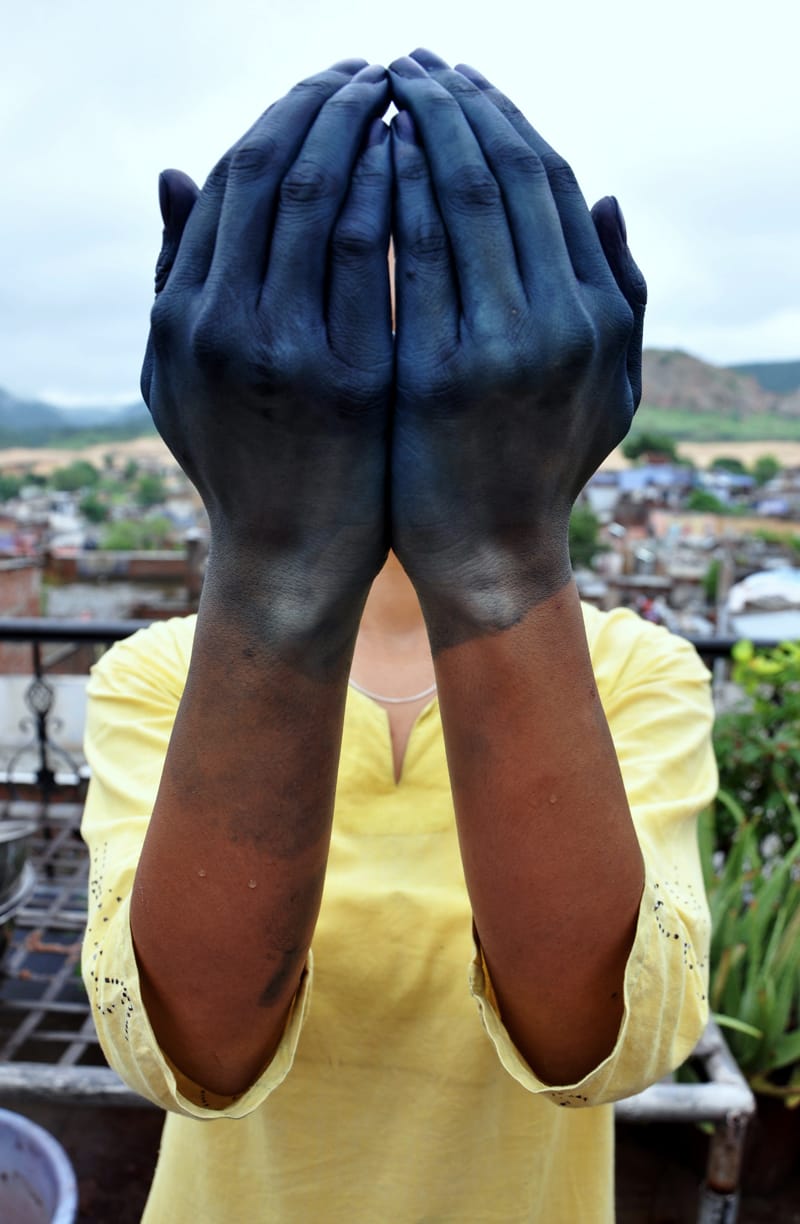
Indigo stains your hands blue for days. Photo: Anjora Noronha, CC BY-SA 3.0

Everything in the shop came out of these two vats in the last fortnight.