Sources
Every date and number on this site comes from the articles below. The stamps on the pages are redrawn by our own engraving program from a scan of a Twopence Blue in The Met's open collection; the photographs of real stamps and letters are listed with their licences.
Facts
- Penny BlackIssue dates, design, sheets of 240, 68,808,000 printed, the red cancel
- Two Penny Blue6,460,000 printed, one ounce rate, white lines added
- Penny Red10 February 1841, 21 billion, perforation dates, plate numbers, plate 77 at £495,000
- Penny Venetian RedDe La Rue, 1880, about 1.5 billion, fugitive lilac ink
- Penny Lilac12 July 1881, Die I and Die II, 33.6 billion
- Uniform Penny PostPostage before 1840, letters doubling
- Henry ArcherThe perforating machine, sold for £4,000
- Plating (philately)Reading position and plate from a stamp
Scans
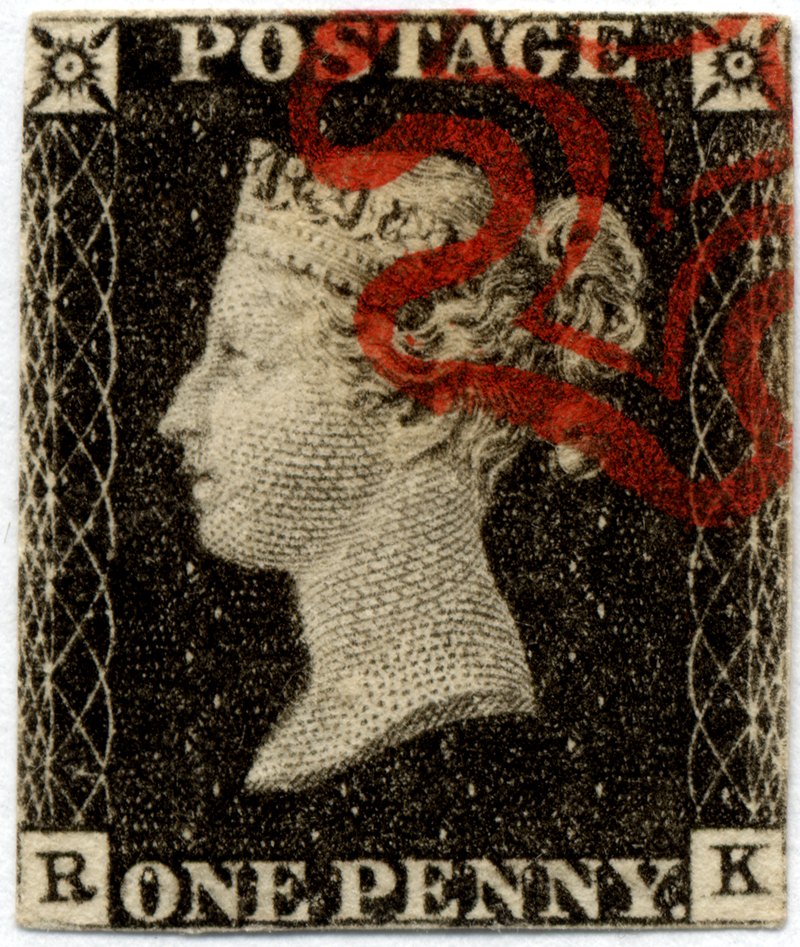
Penny Black with a red Maltese cross. Kevin Walsh. Public domain. Wikimedia Commons
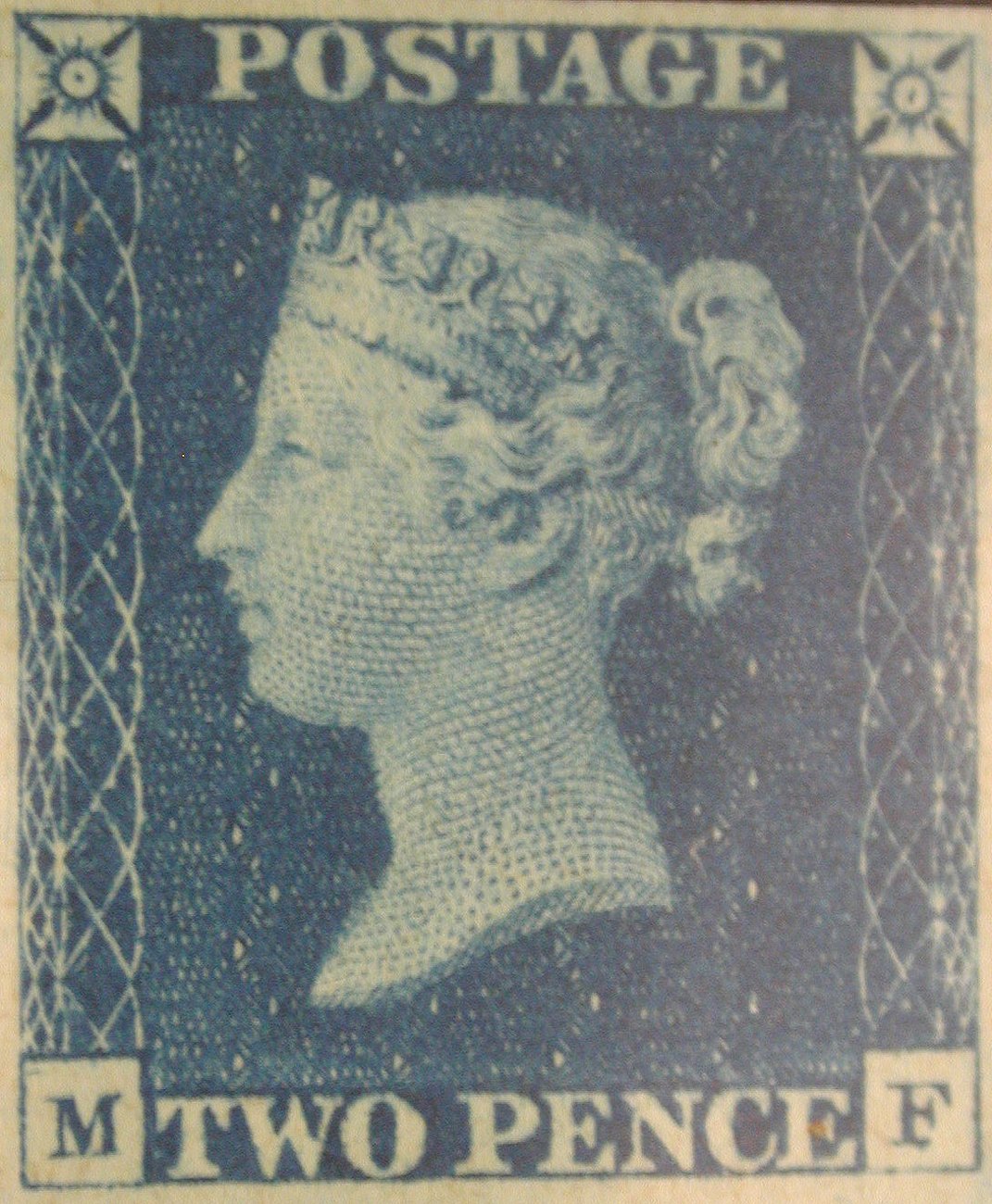
Twopence Blue, M F (source of the engraved head). The Met, SF2002.236.2. CC0. Wikimedia Commons
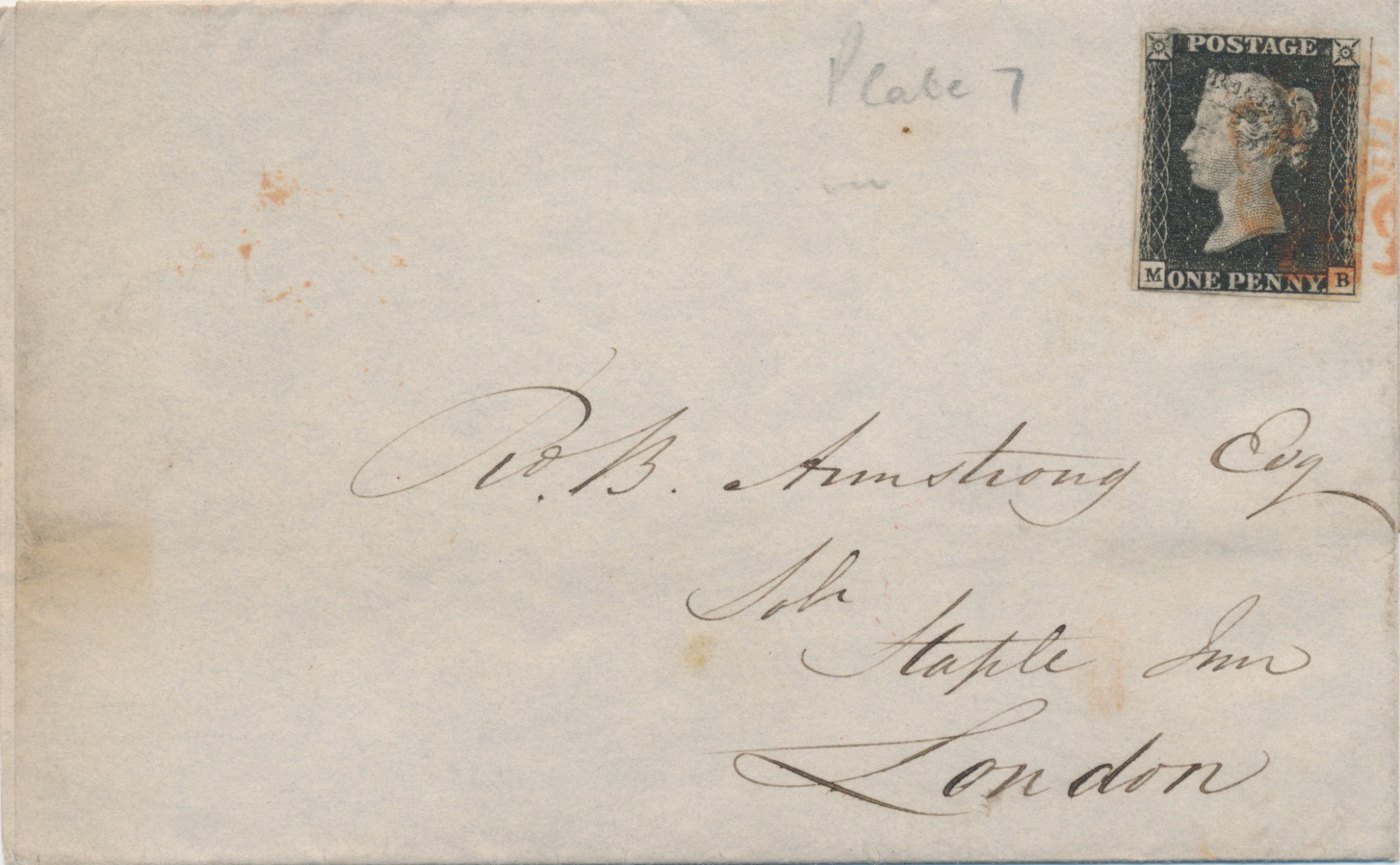
Penny Black cover said to be from 6 May 1840. General Post Office. Public domain. Wikimedia Commons
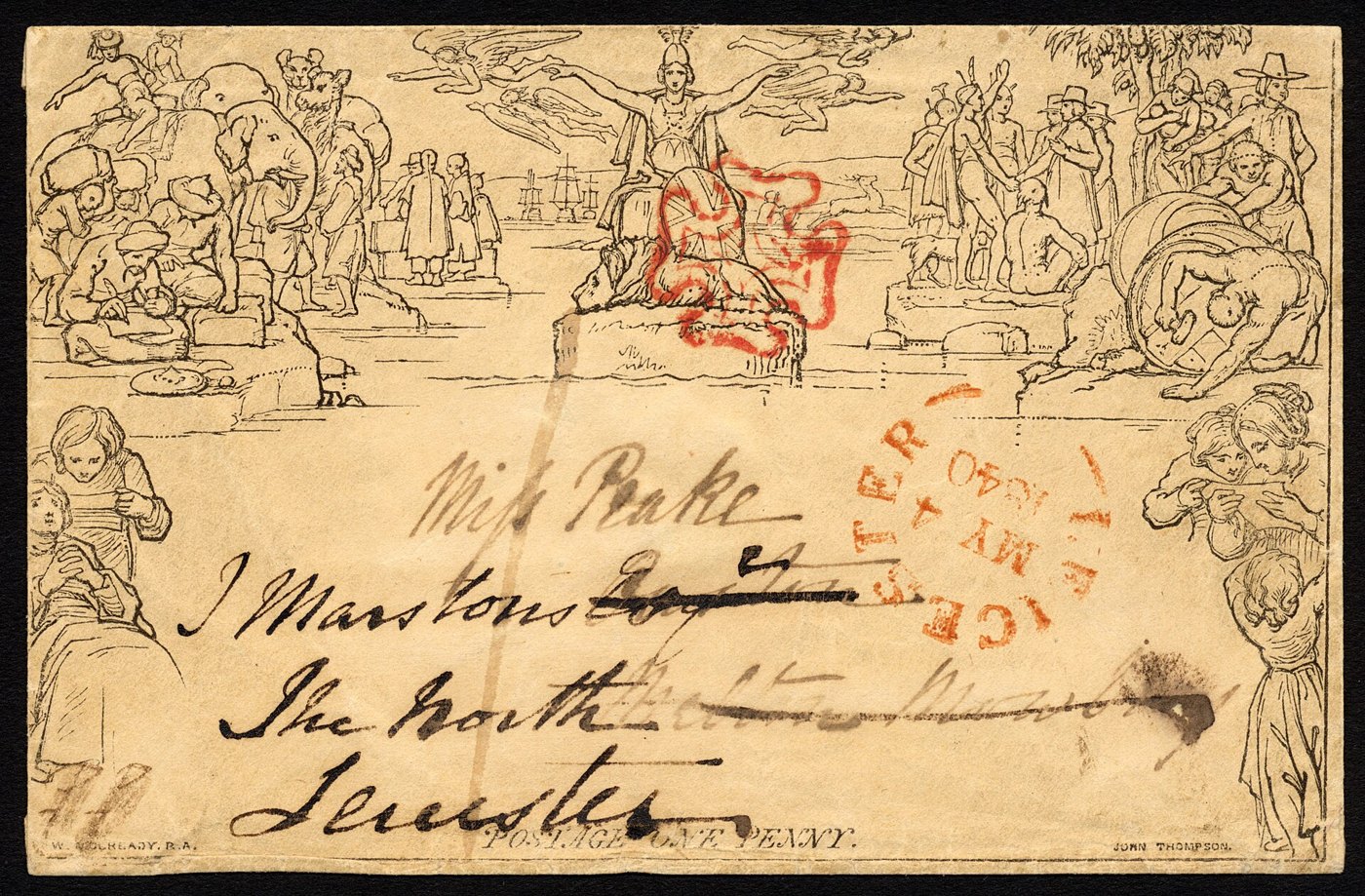
Mulready envelope, Leicester, 4 May 1840. William Mulready, engraved by John Thompson. Public domain. Wikimedia Commons
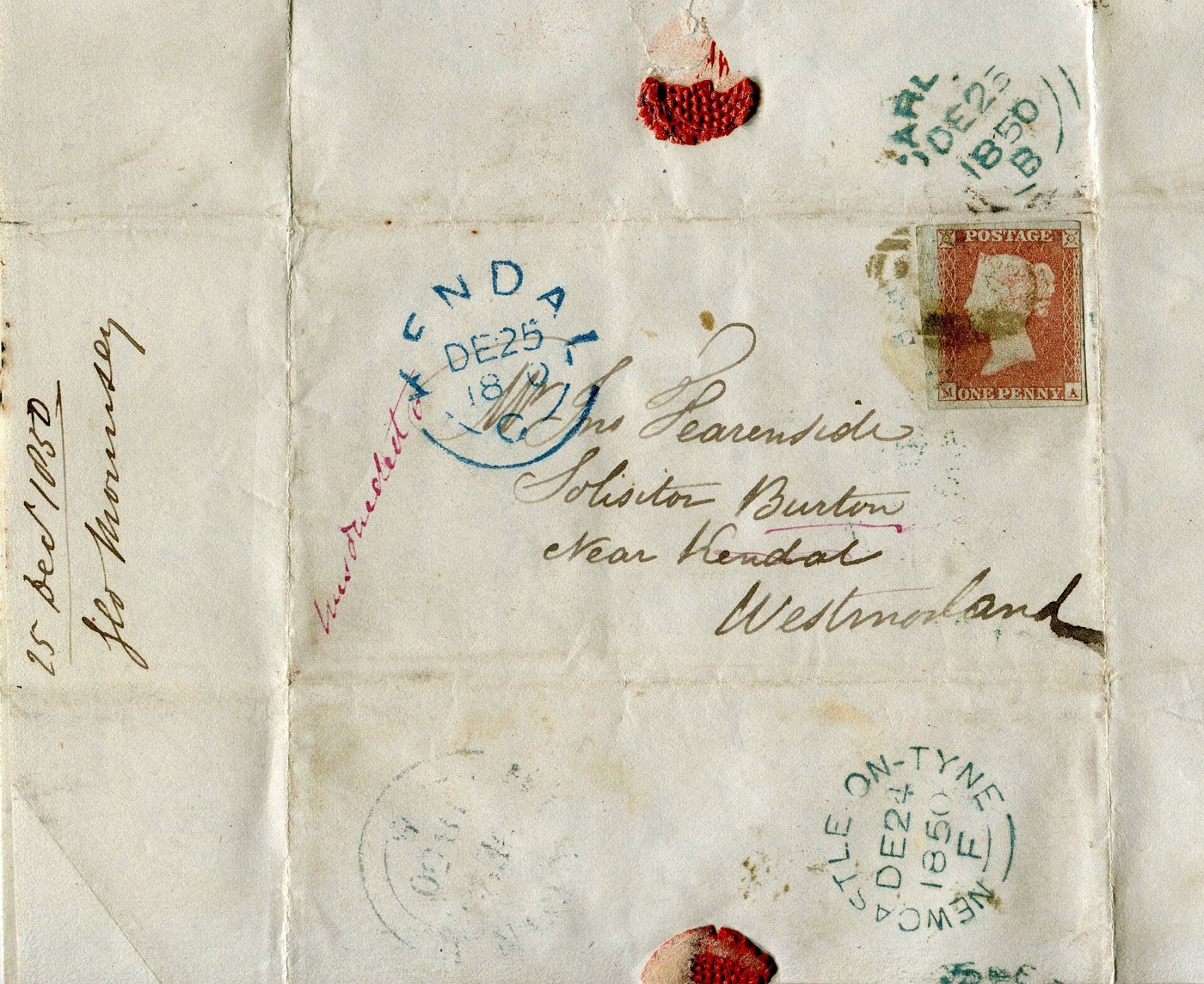
Penny Red on a letter, Newcastle, Christmas Eve 1850. Public domain. Wikimedia Commons
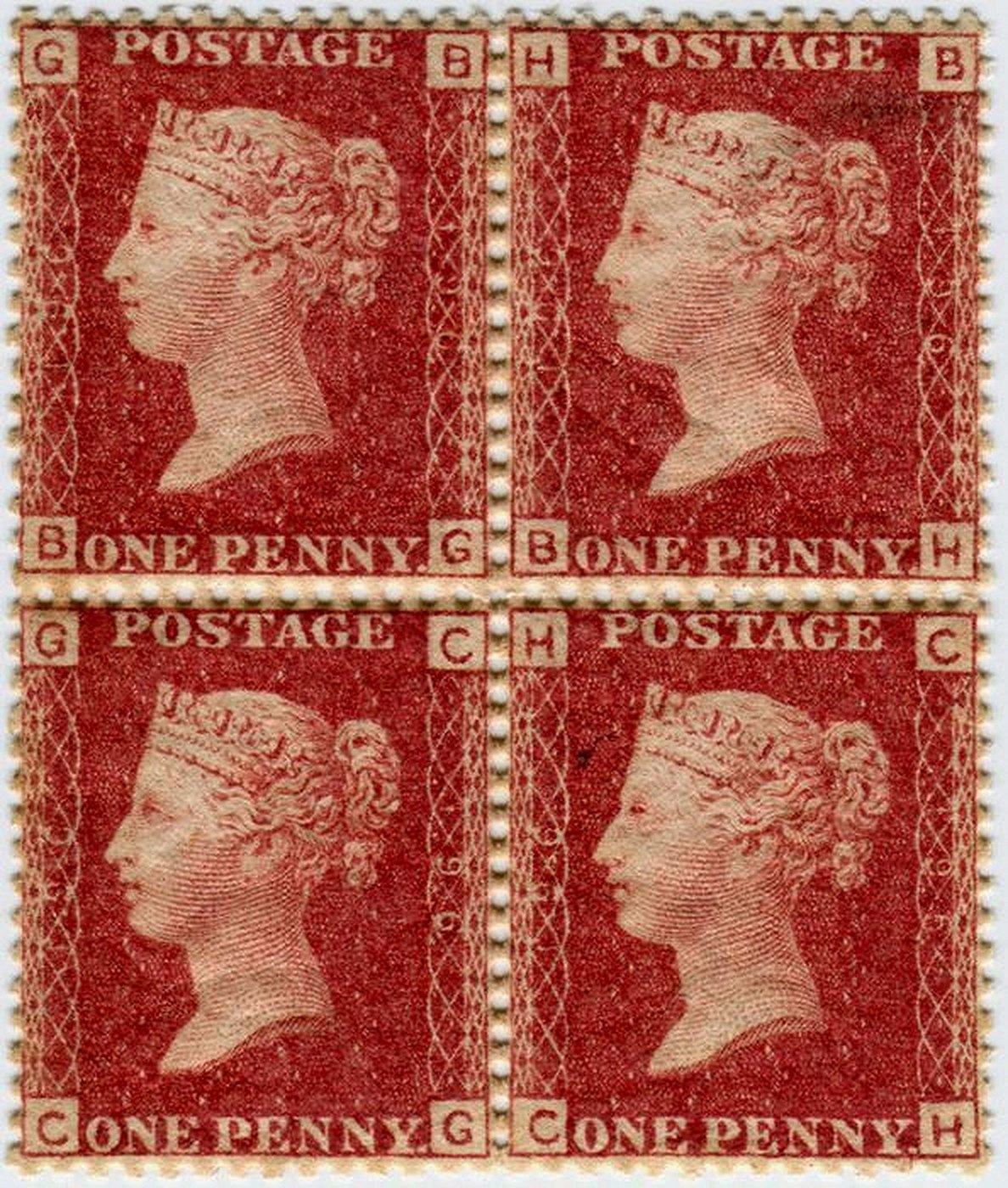
Penny Red block of four, plate 196. UK GPO. Public domain. Wikimedia Commons
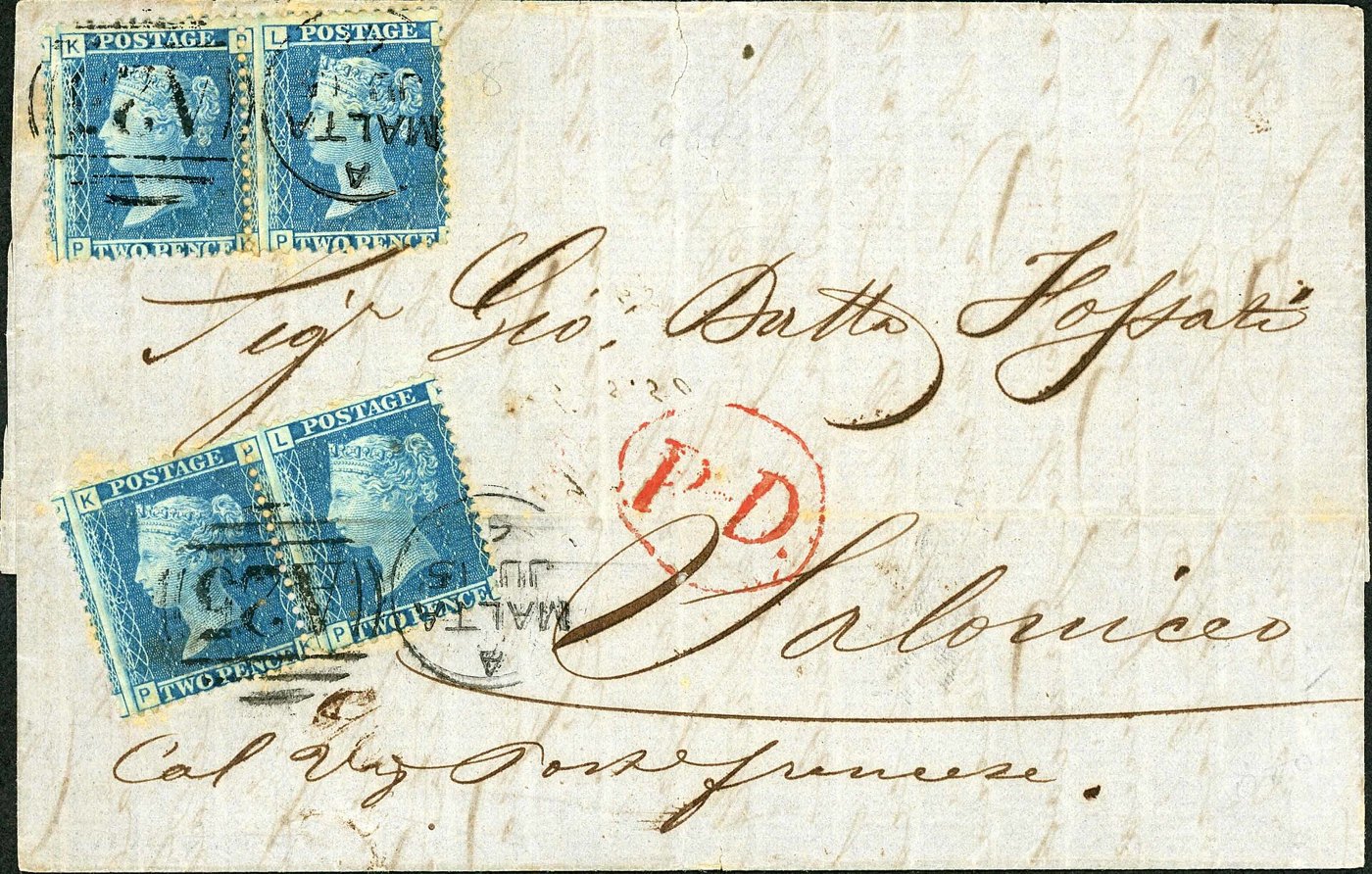
Twopence Blue pairs, Malta to Salonica, 1861. UK GPO. Public domain. Wikimedia Commons
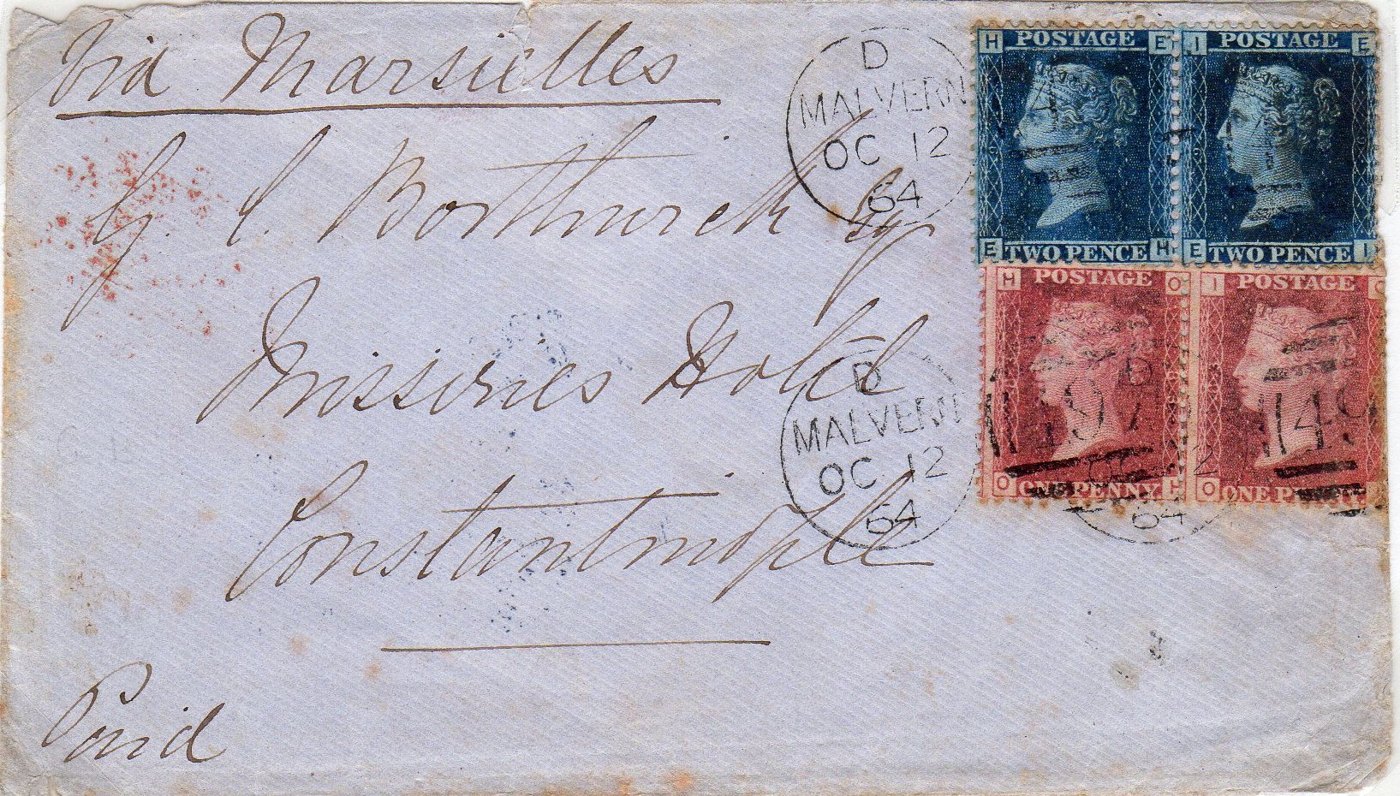
Blue and red pairs, Malvern to Constantinople, 1864. UK GPO. Public domain. Wikimedia Commons
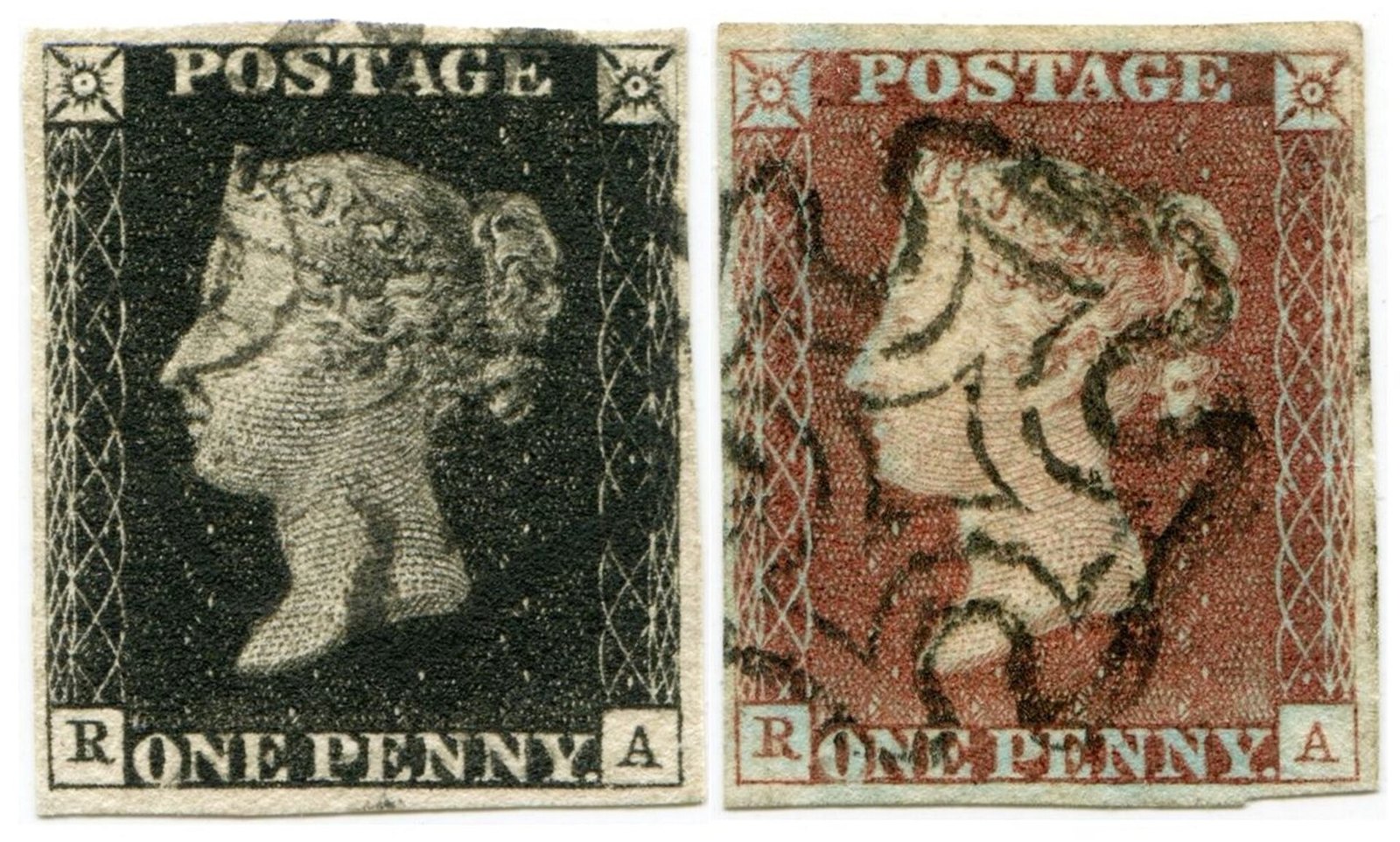
Penny Black and Penny Red, plate 10, both R A. Engraved by C. and F. Heath. Public domain. Wikimedia Commons
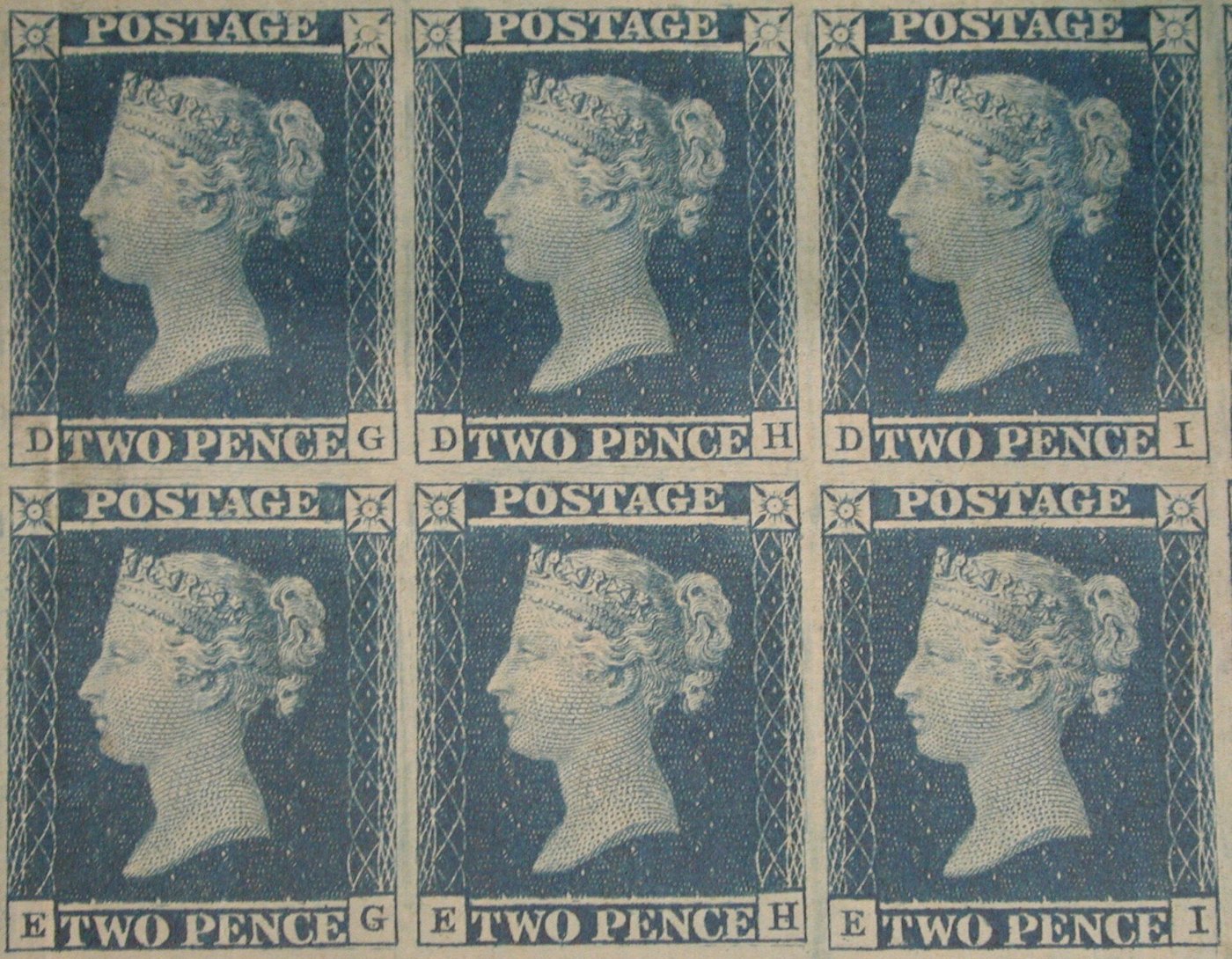
Twopence Blue block of four. The Met, SF2002.236.4. CC0. Wikimedia Commons
Type
Gravitas One by Sorkin Type Co, Manuale by Omnibus Type, Decalotype by Alfredo Marco Pradil (Hanken Design Co.). All three under the SIL Open Font License.