We read the corner letters and plate numbers on Britain's first stamps, and tell you where on the sheet yours was printed.
First day of use6 May 1840
A row, A to T
A place in the row, A to L
Five inks in forty-one years.
Scroll for 1840One penny, any distance.
Before 1840 the person receiving a letter paid for it, by distance and by the sheet, often more than fourpence. From May 1840 the sender paid one penny for half an ounce, anywhere in Britain, and proved it with a stamp. In the first year the number of letters sent more than doubled.
The first stampwas black
- Printed
- 68,808,000
- Plates
- 11
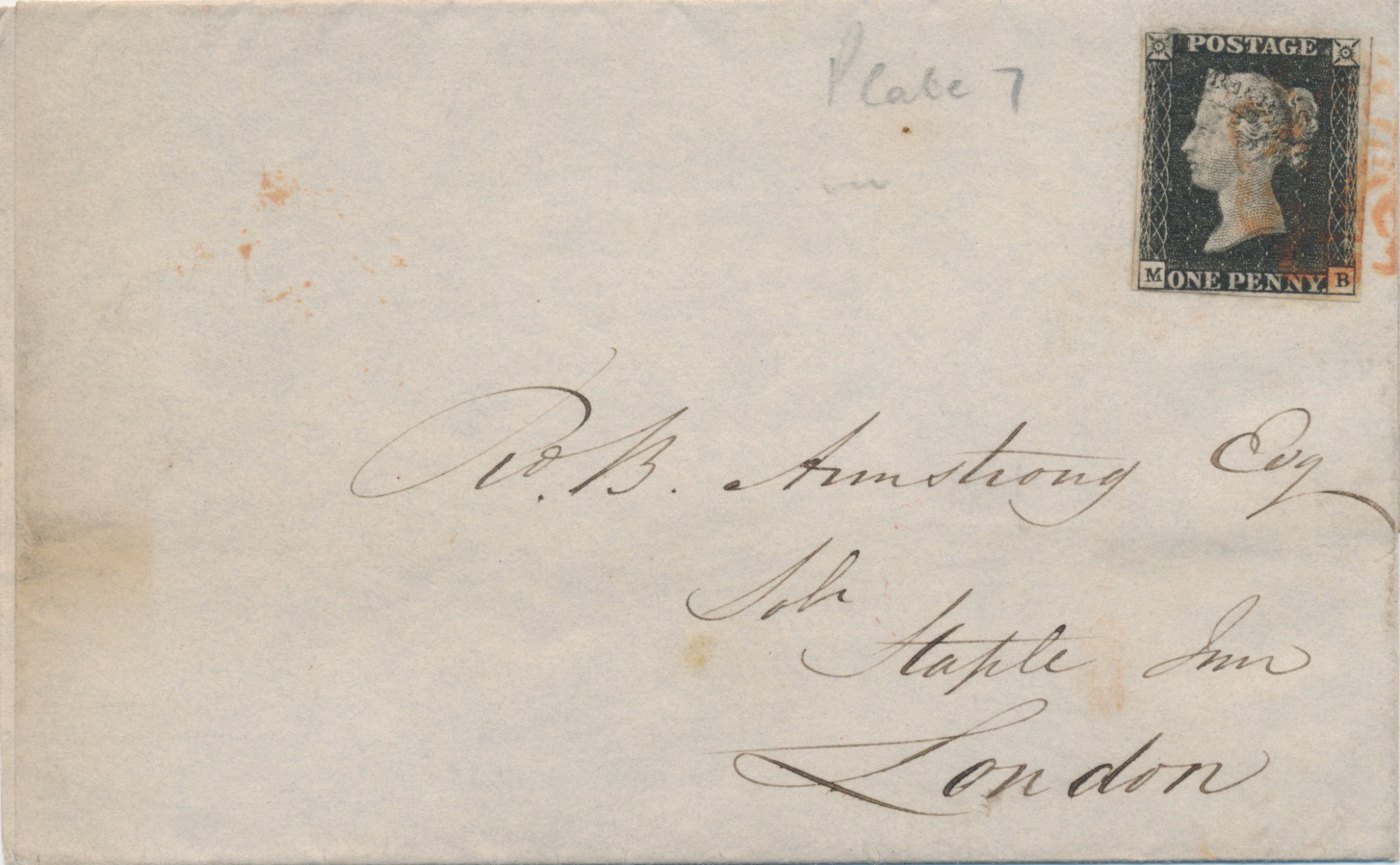
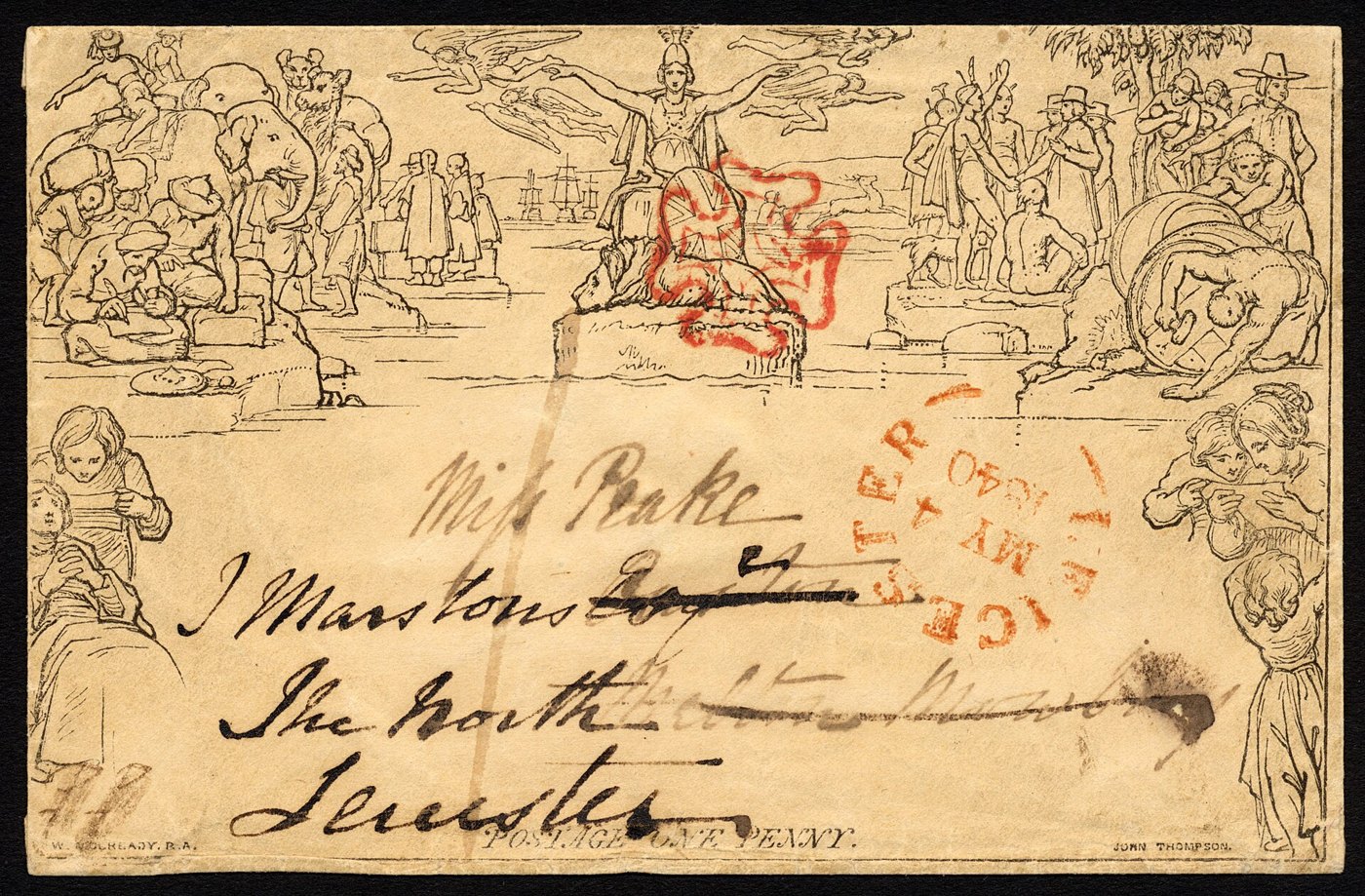
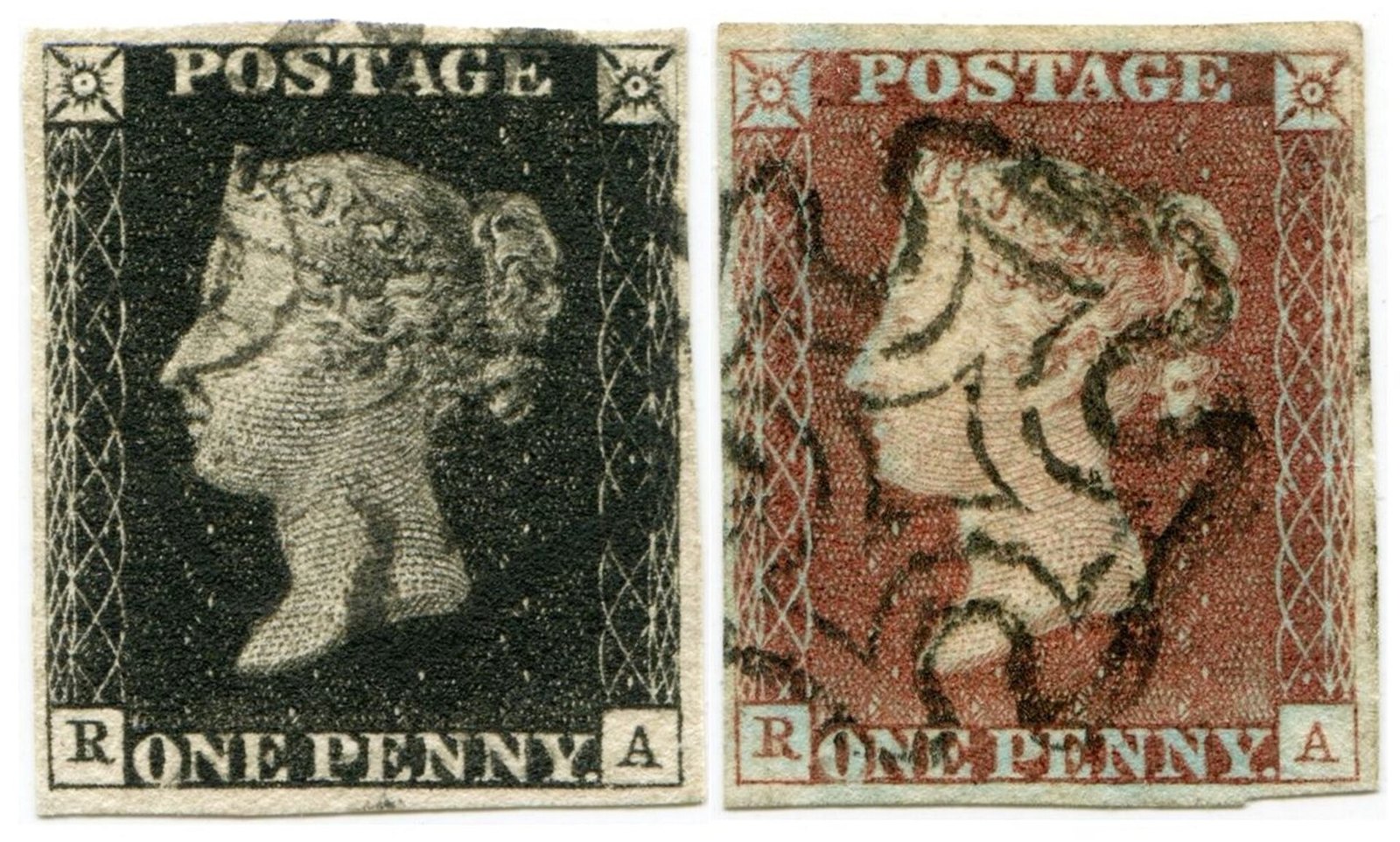
Clerks cancelled each Penny Black with a red Maltese cross. On black ink the red barely showed, and it washed off, so used stamps could be cleaned and posted again.
Row A of 20: AA to AL. Twelve stamps, one shilling.
Twice the weighttwice the price
- Printed
- 6,460,000
- Weight
- 1 oz
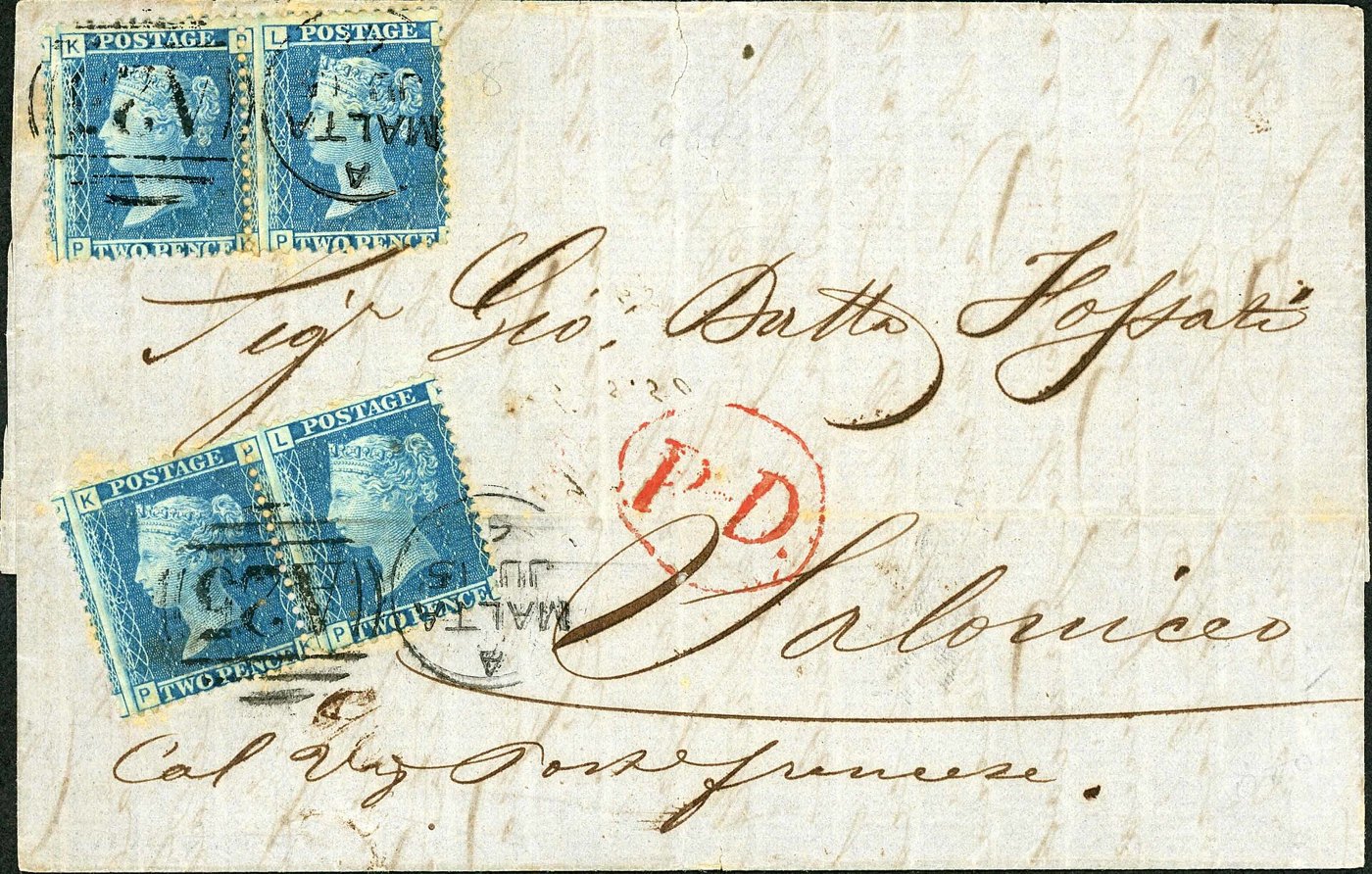
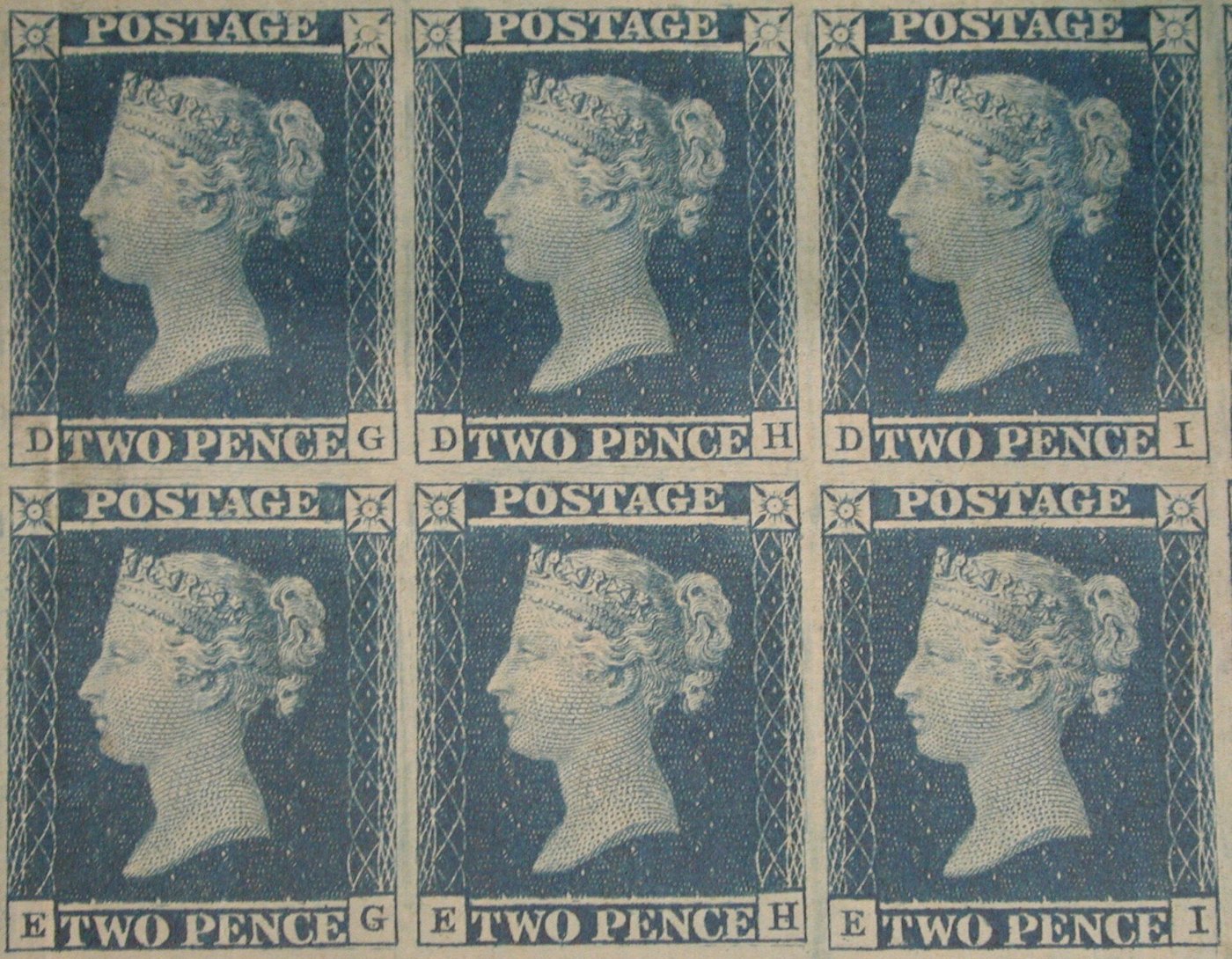
The Twopence Blue paid for a letter up to one ounce. It came from the same die as the penny; only the value changed. It was printed from May to August 1840, so it is scarcer than the Penny Black.
Row M of 20: MA to ML, from two plates destroyed in 1843.
The pennyturns red
- Printed
- 21 billion
- First issued
- 10 Feb
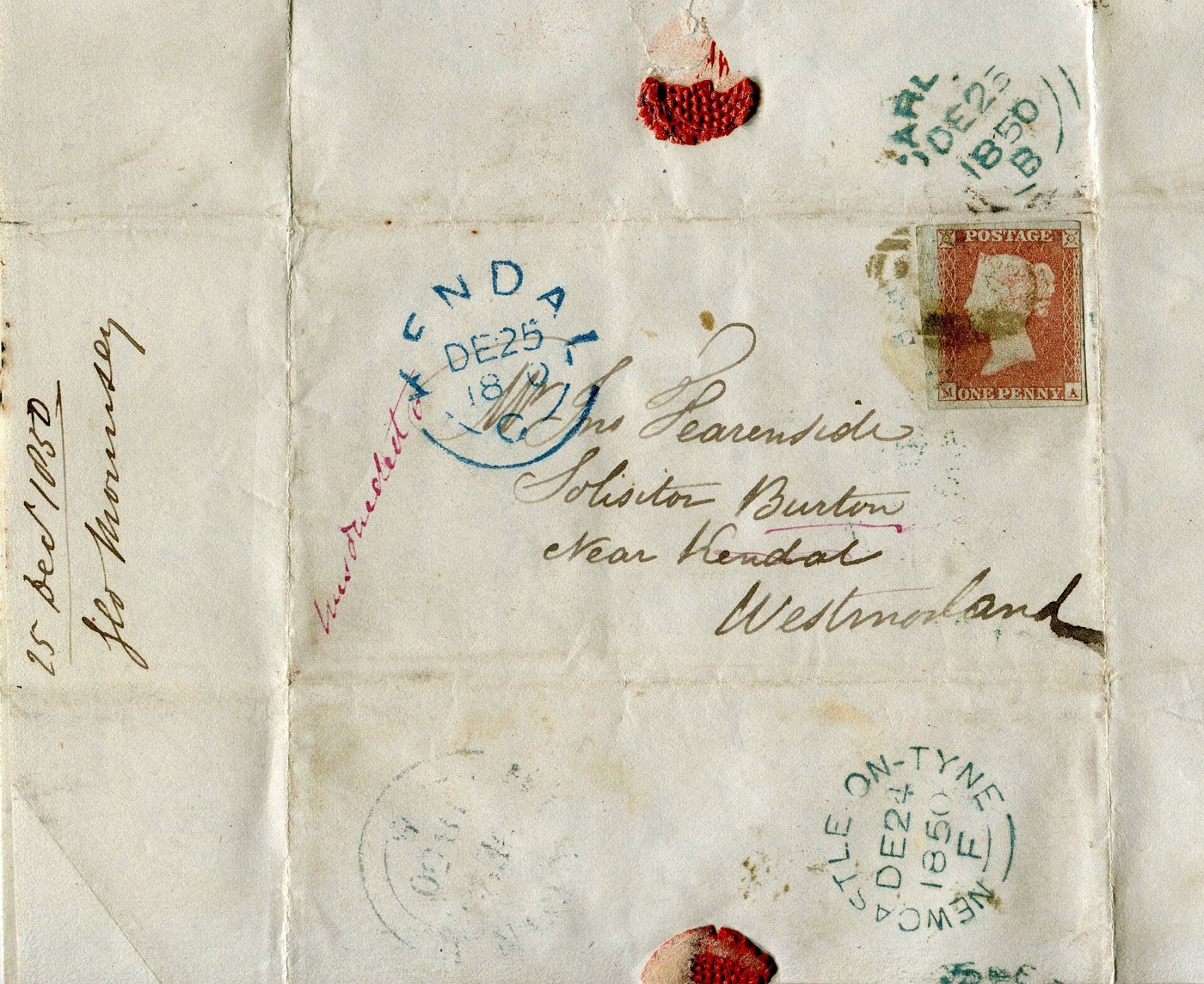
So the colours swapped. From 10 February 1841 the penny was printed red-brown and the cancel was struck in black ink: easy to see, and hard to wash off.
Row R of 20: RA to RL, still cut from the sheet with scissors.
Two halvesdon't match
- Plates numbered
- 71–225
- Perforation gauge
- 14
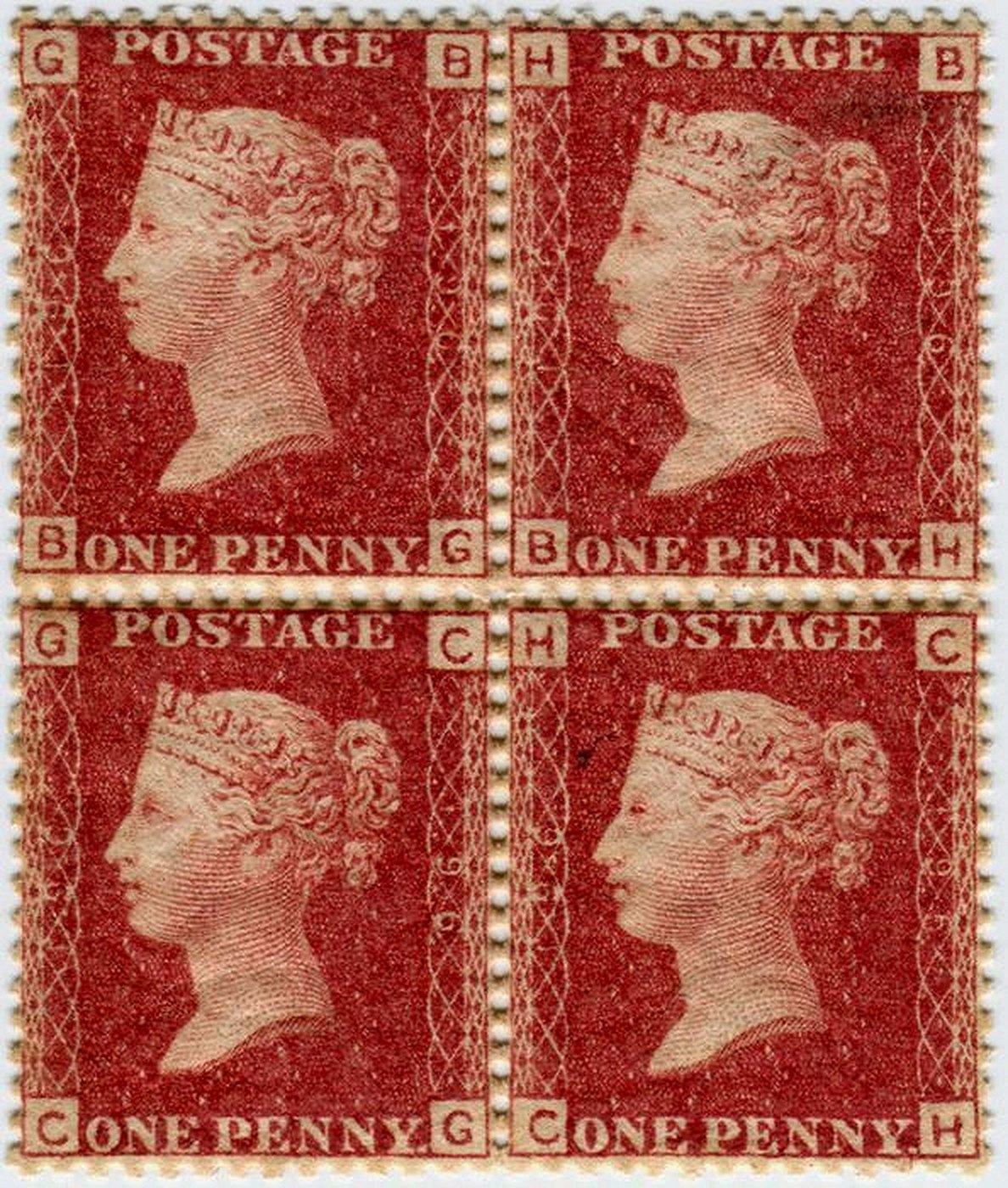
Some people glued the clean halves of two used stamps together. From 1 April 1864 the top corners repeat the bottom letters in reverse, so halves no longer match, and the plate number is engraved in the side lace. By then every sheet was perforated.
Row G of plate 77: four letters on every stamp.
Ink that runswhen washed
- Printed, Die II
- 33.6 billion
- Dots per corner
- 16
The Penny Lilac of 12 July 1881 was printed in a fugitive ink: wash off the cancel and the stamp spoils with it. The corner letters went too; dots took their place.
Inscribed POSTAGE AND INLAND REVENUE: one stamp for postage and for revenue.
£495,000for one penny
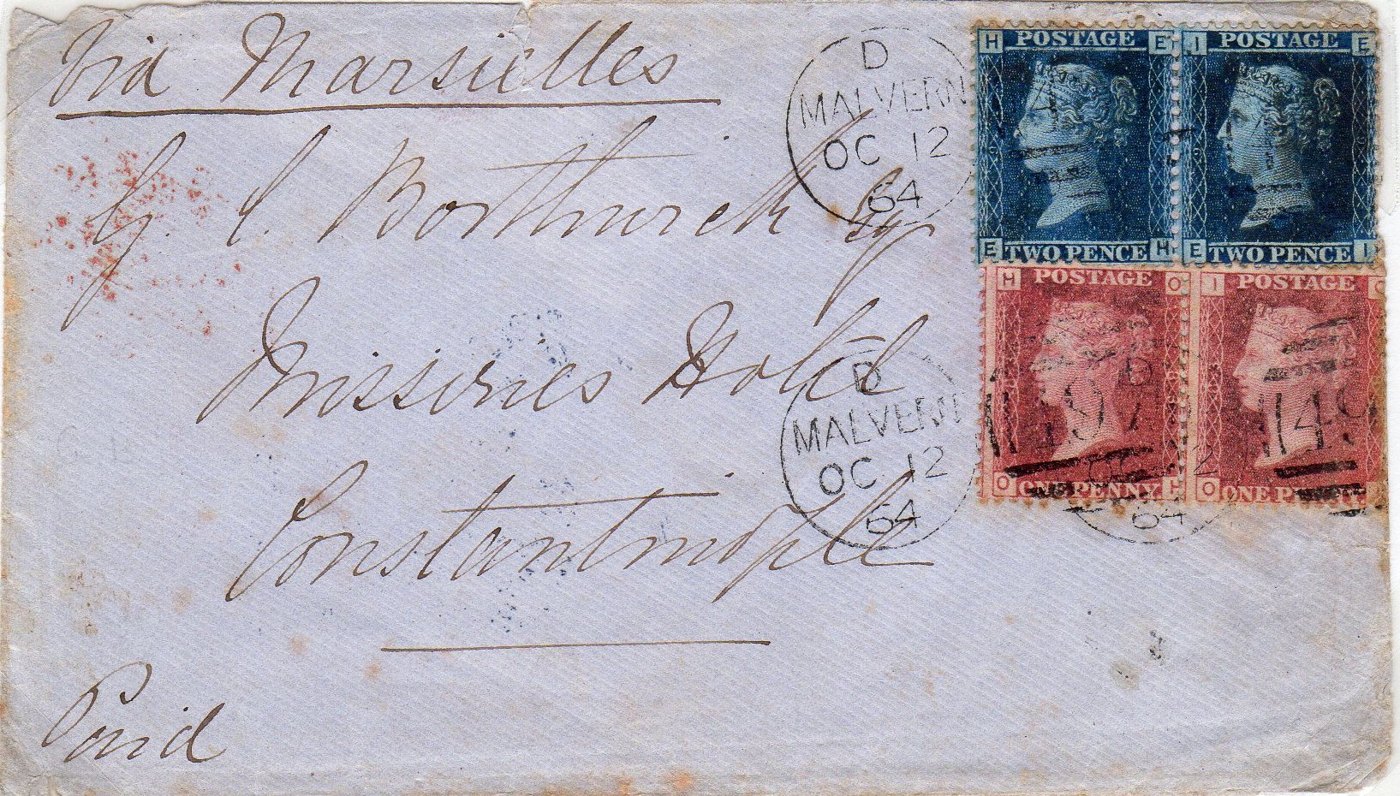
In 2016 a Penny Red from plate 77 sold at auction for £495,000. The plate number sits in the side lace, a few millimetres high.