Sources and credits
Where everything here comes from
The facts come from the articles below, the quotations from their 17th- and 19th-century authors. The pictures in the evidence are public domain. The plates were drawn for this folio.
01/
Texts
- DodoWikipedia
- Mare aux SongesWikipedia
- Roelant SaveryWikipedia
- Ustad MansurWikipedia
- Second Dutch Expedition to the East IndiesWikipedia
- Broad-billed parrotWikipedia
- Cylindraspis (Mascarene giant tortoises)Wikipedia
- Sideroxylon grandiflorum (tambalacoque)Wikipedia
- Vieux Grand PortWikipedia
- Hamon L'EstrangeWikipedia
02/
Archive pictures
- Dodo sketch, Gelderland journalJoris Joostensz Laerle (attributed), 1601–1603Public domain · Wikimedia Commons
- Dodo among Indian birdsUstad Mansur, c. 1625Public domain · Wikimedia Commons
- Edwards's DodoRoelant Savery, 1626Public domain · Wikimedia Commons
- The dried Oxford headH. E. Strickland, 1848Public domain · Wikimedia Commons
- Owen's skeleton reconstructionRichard Owen, drawn by James Erxleben, 1866Public domain · Wikimedia Commons
- The London footJoseph Dinkel, 1848Public domain · Wikimedia Commons
03/
The drawings
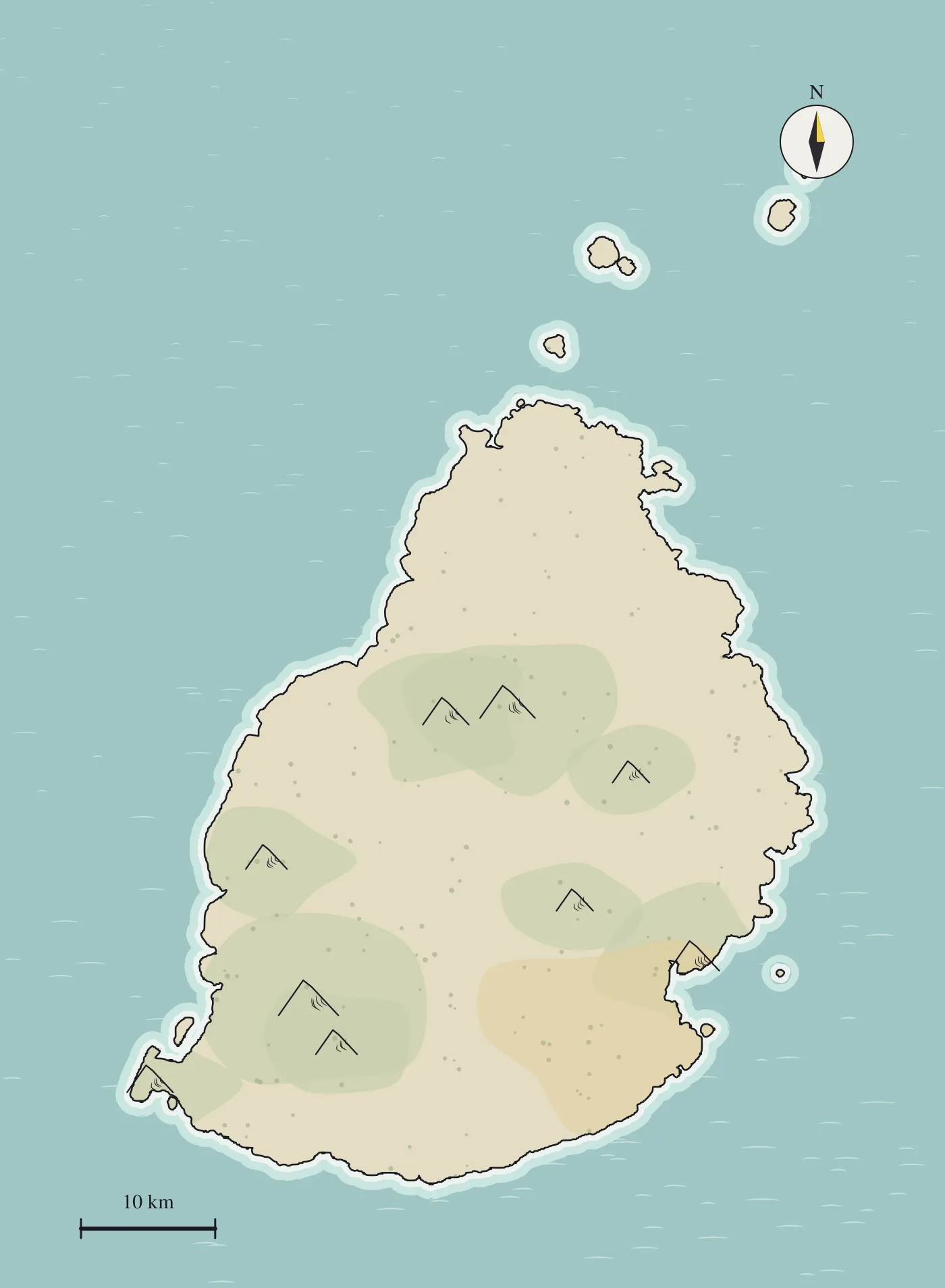
The seven plates, the birds in the essay and the map were drawn for this folio, in ink line with flat colour and one shadow per shape. They follow the sources above: the dodo's build from the subfossil bones and Mansur's living bird, its colours only where a witness gave one. Where no witness did, the bird is left uncoloured; the face and legs follow the painters and are marked as such.
The coastline of the map is traced from “Mauritius location map” by Uwe Dedering, CC BY-SA 3.0; the redrawn map is shared under the same licence.
04/
Type and icons
- Crimson Pro, by Jacques Le BaillySIL Open Font License
- Latin Modern Mono, by the GUST e-foundryGUST Font License
- Material Symbols Light icons, by GoogleApache License 2.0