

A folio in seven plates
Walghvogel
The dodo, drawn from the evidence
In 1598 Dutch sailors wrote down a bird nobody in Europe had seen. Within one lifetime it was gone from Mauritius, the only place it lived.
What is left: ship's journals, about twenty pictures, one dried head and a swamp full of bones.
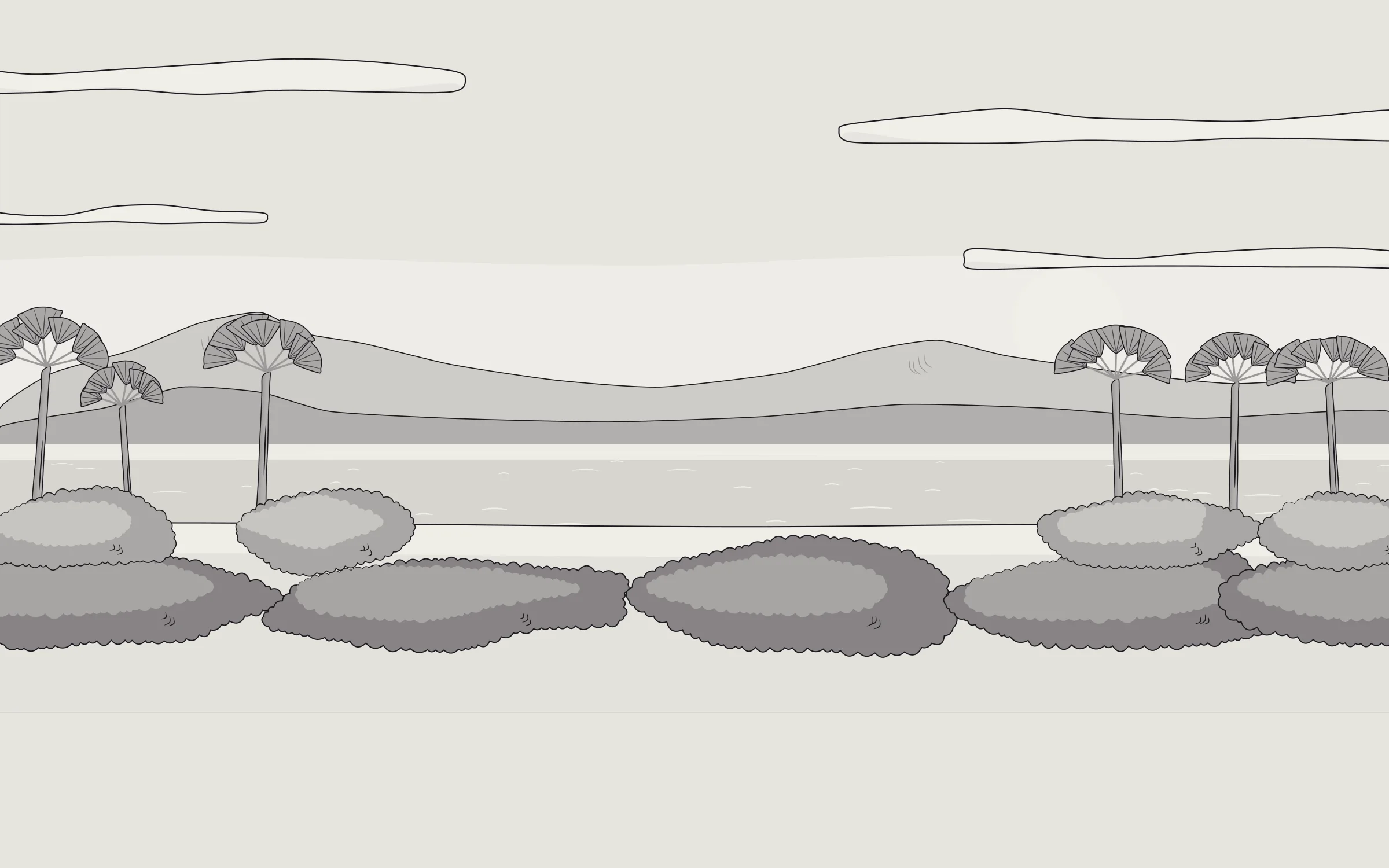
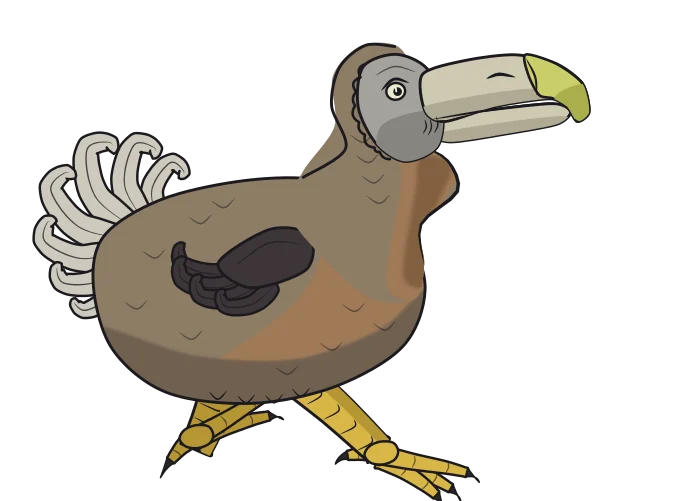
Nobody alive has seen a dodo's colours. So we draw it uncoloured until a witness describes it.
01/Before 1598Mauritius
The Island
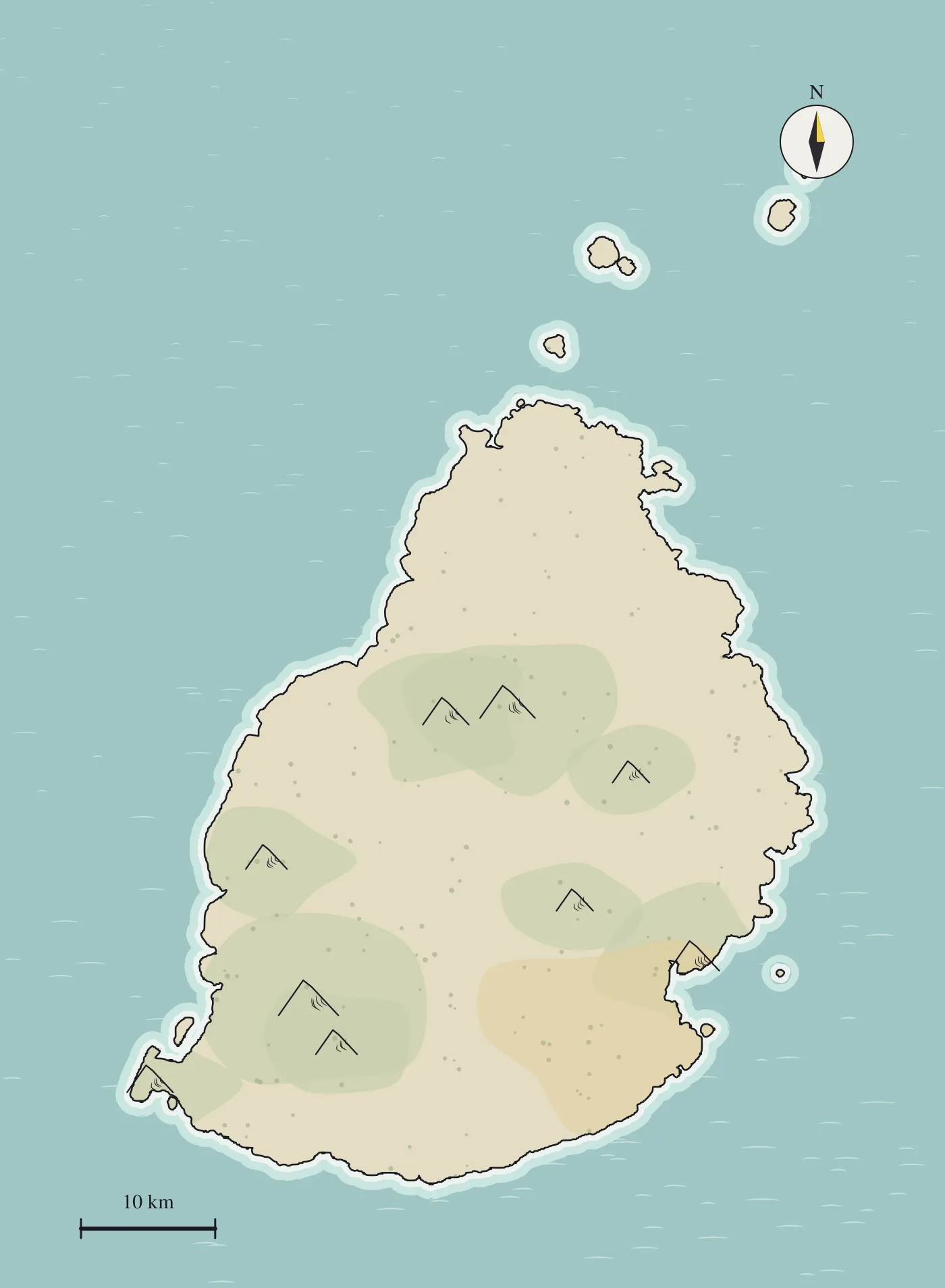
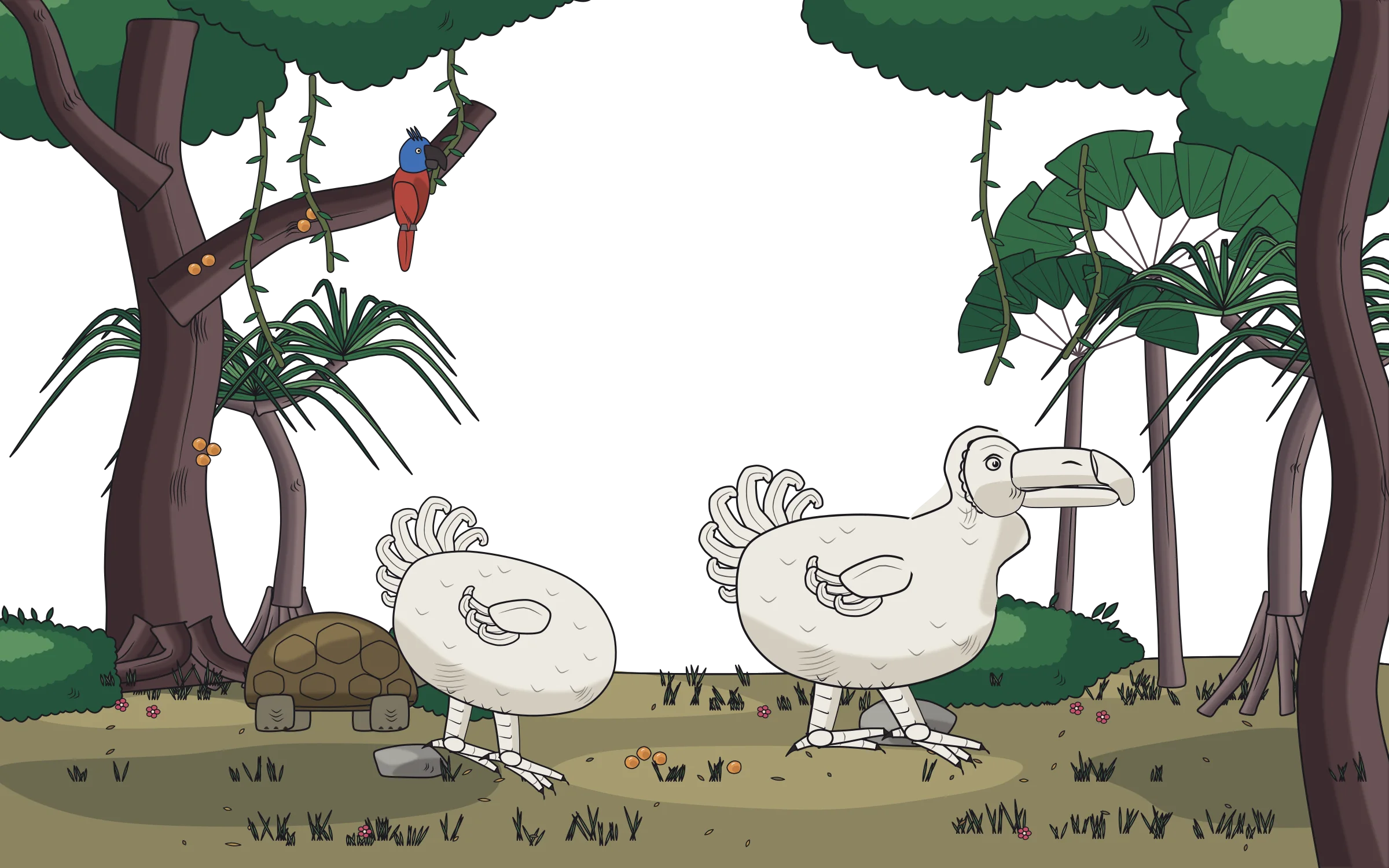
An island of 1,860 km² east of Madagascar, covered in forest, with no mammals that hunted. A pigeon landed there and stayed.
- Height62.6–75 cm, from the bones
- Weight10.6–17.5 kg in the wild
- AteFallen fruit, seeds and roots; it swallowed stones to grind them
- LivedThe drier coastal woods of the south and west
- Nearest kinThe Nicobar pigeon; the extinct Rodrigues solitaire
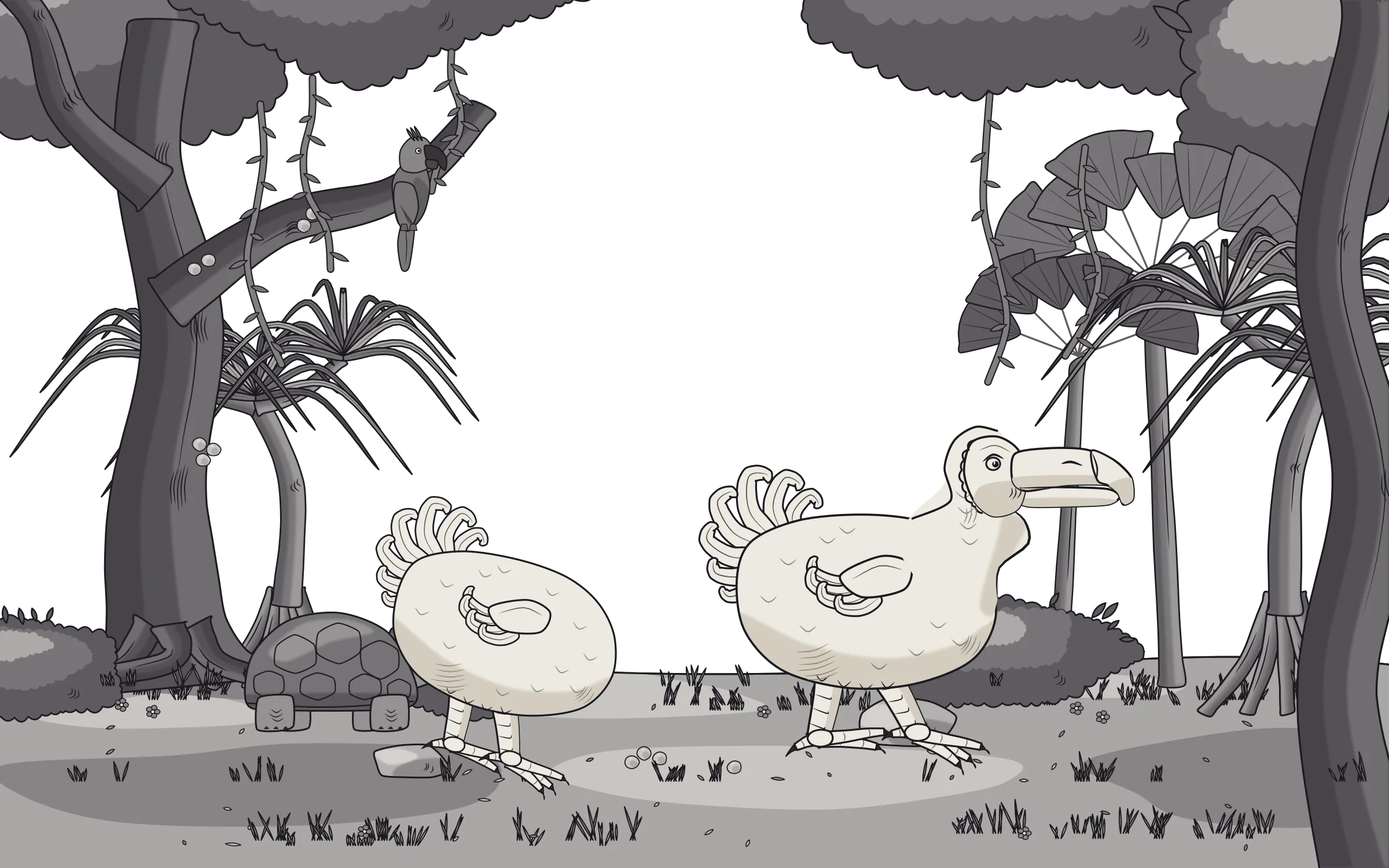
The dodo was a ground pigeon that grew large and stopped flying. Its wing bones were small but kept their muscle scars, so the wings were probably used for balance and display. Its leg bones say it could run quite fast.
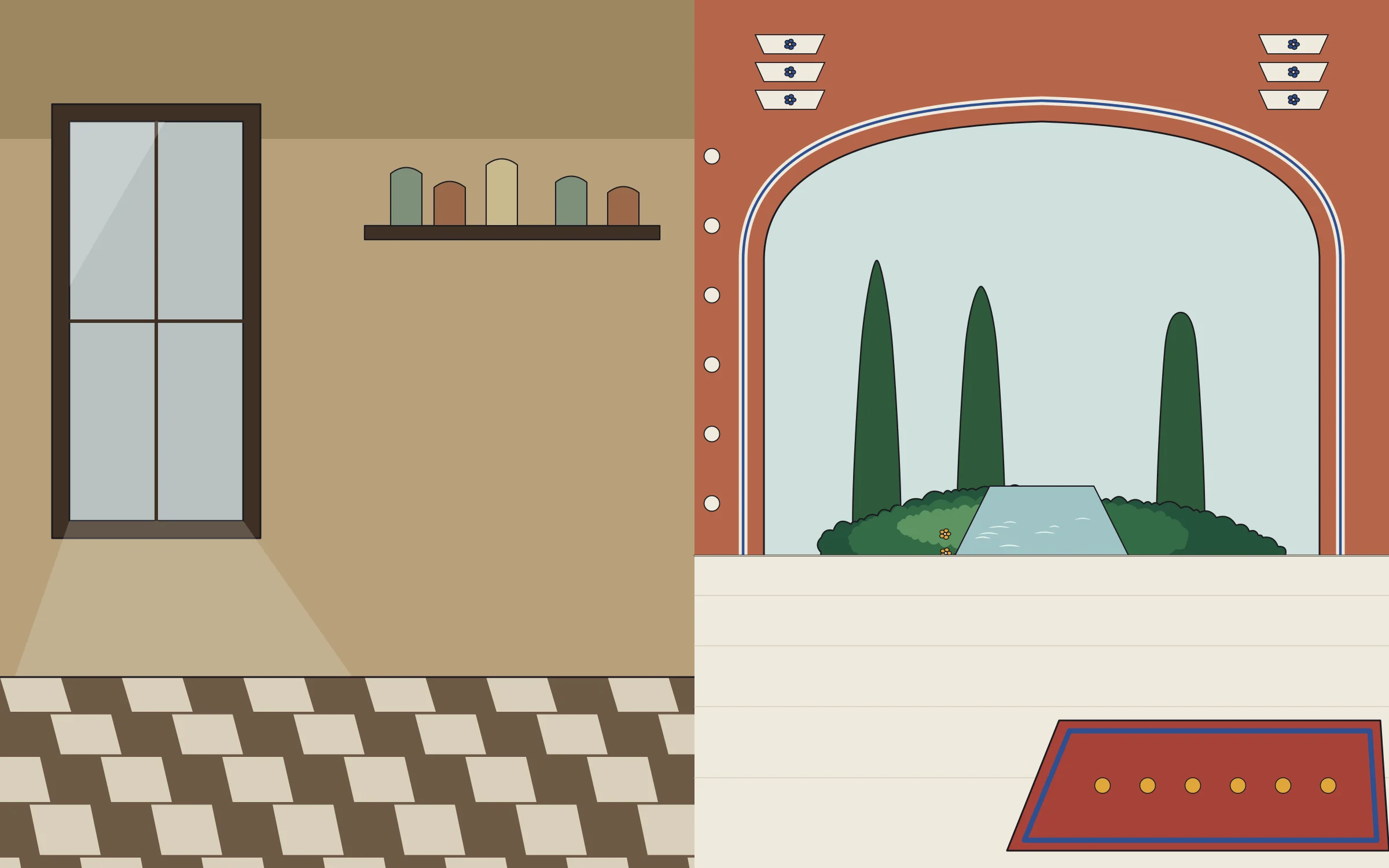
It shared the island with giant tortoises, a big-headed blue parrot and a flightless red rail. All of them are gone too. In Plate I the forest is in colour because we know what grew there. The two birds are not, yet.
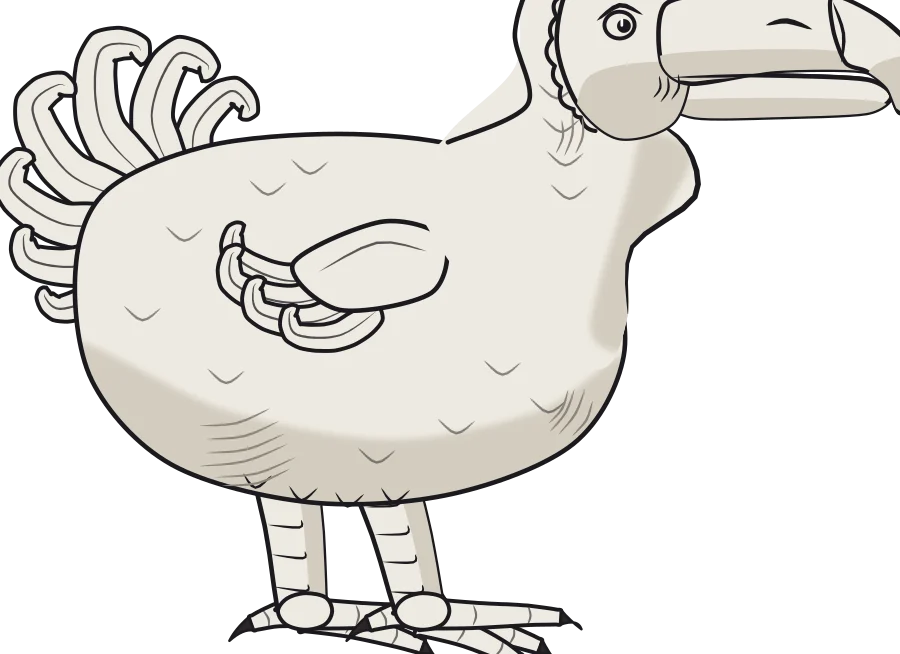
Drawn to the same heightThe tallest estimate from the subfossil bones. Most pictures make it look bigger and rounder than this.
02/1598 · walghvogelWarwick Bay
The Landing
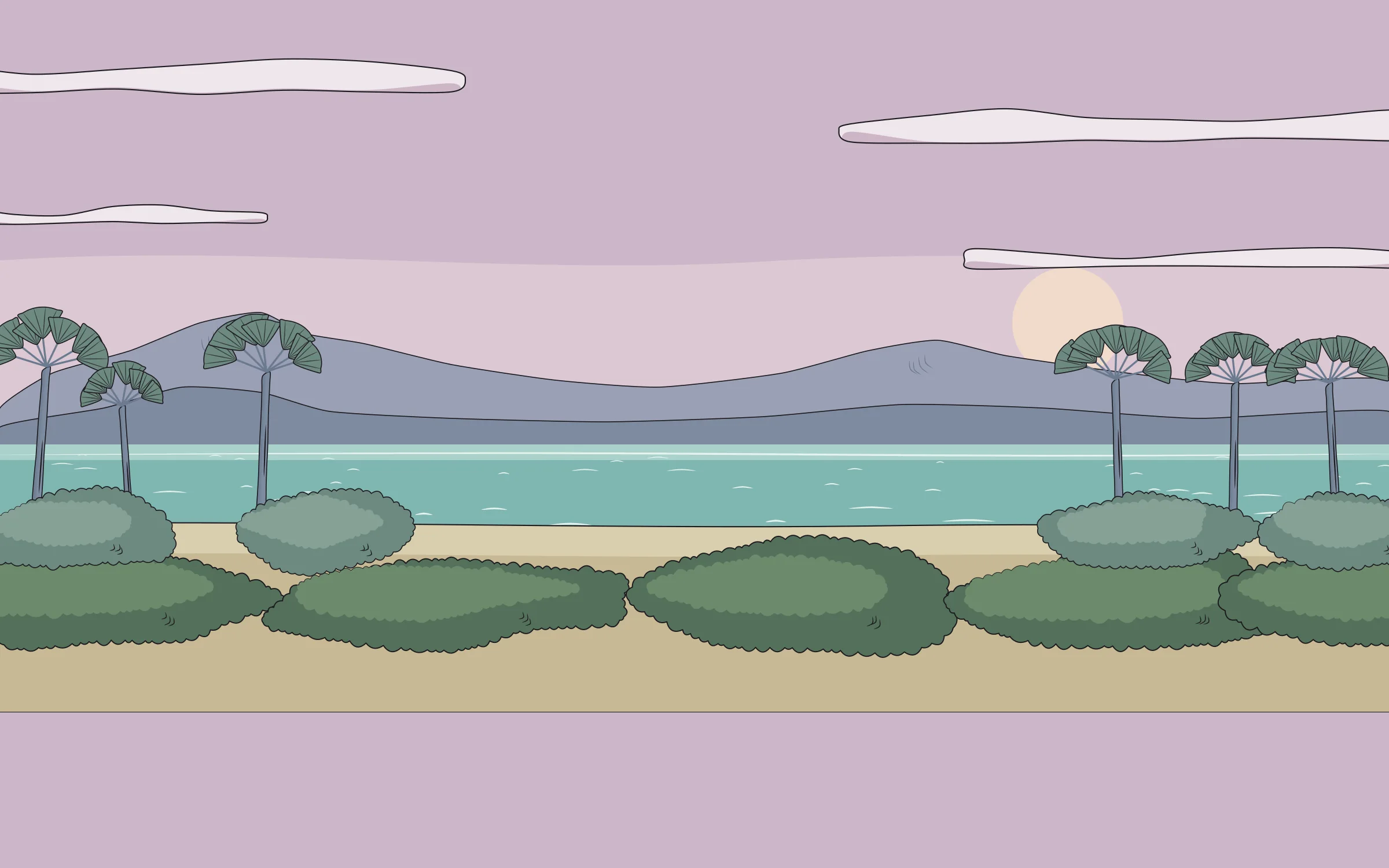
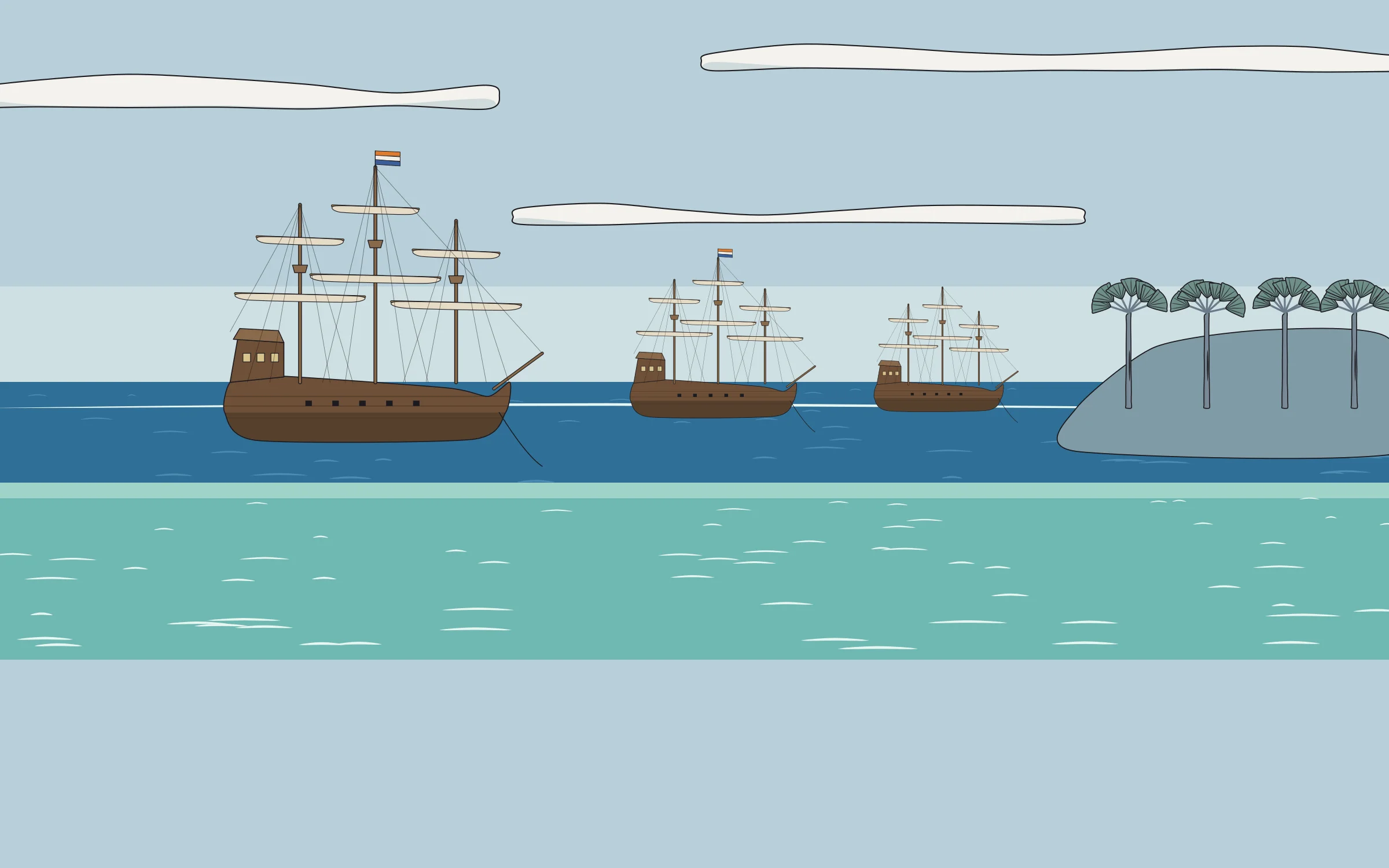
In September 1598 half of a Dutch fleet sheltered from storms in a bay on the south-east coast. They stayed twelve days.
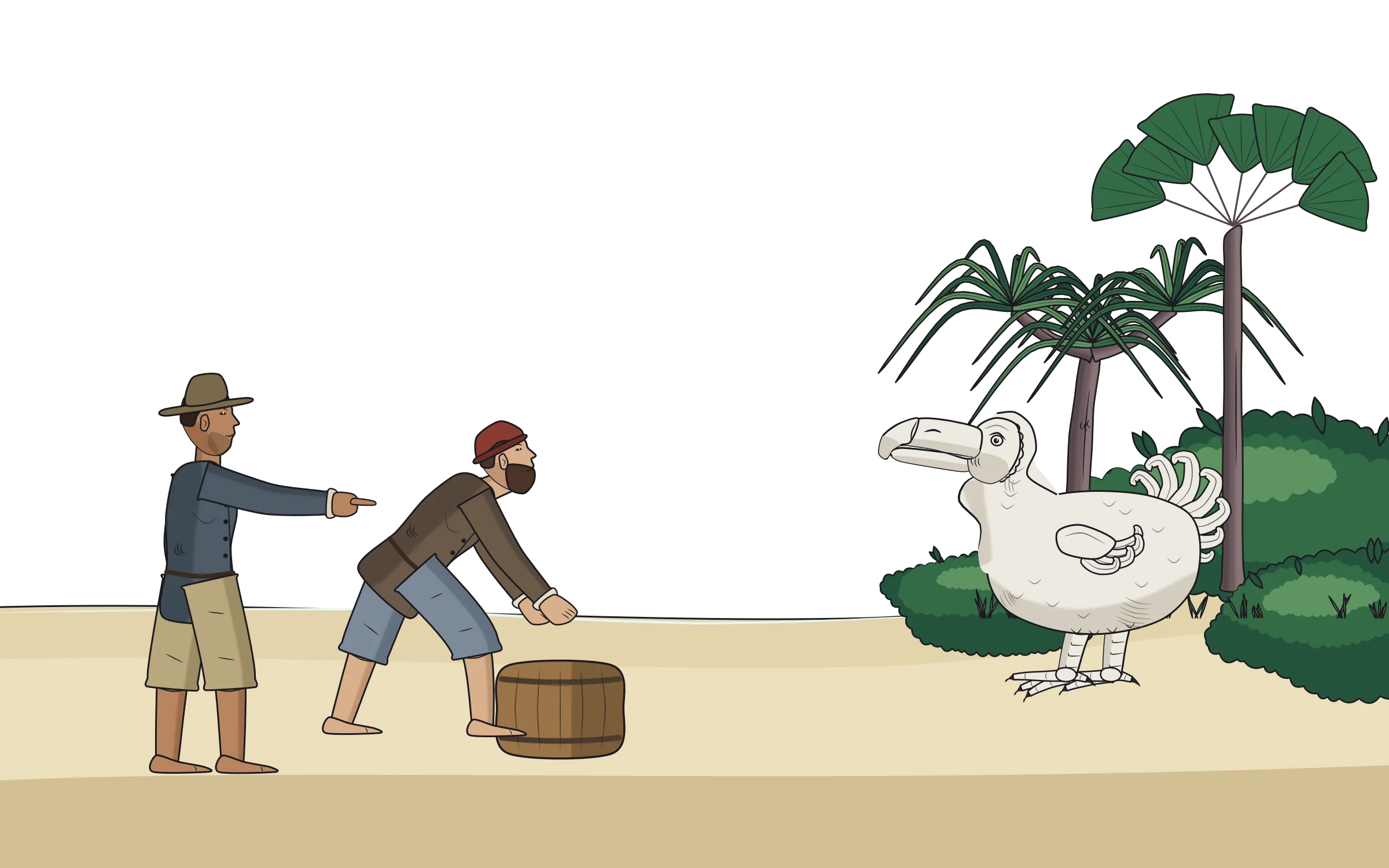
“Larger than our swans, with huge heads only half covered with skin as if clothed with a hood.”
What the bird did
Nothing. It had never met a predator, so it did not run.
The ships belonged to Vice-Admiral Wybrand van Warwijck. They named the bay after him, renamed the island after Maurice of Nassau, left a rooster and seven hens, and planted orange and lemon trees.
They also ate the birds, and found them disappointing. The longer they were cooked, the tougher they got. So the first name the dodo was given was walghvogel: the tasteless, loathsome bird.
The names, in the order people gave them
One bird, seven names in 168 years
- 1598walghvogel
“Tasteless bird”: Van Warwijck's crew.
- 1602dodaars
“Knot-arse”, for the tuft of curled feathers on its rear: Willem van West-Zanen.
- 1602dronte
“Swollen”: the crew of the Gelderland. Still its name in some languages.
- 1628dodo
In a letter from Emmanuel Altham, who said the Portuguese called it that.
- 1634dodo, in print
Sir Thomas Herbert's travel book.
- 1760Raphus cucullatus
“The hooded one”: Mathurin Jacques Brisson's genus with an older Latin name.
- 1766Didus ineptus
“The inept dodo”: Carl Linnaeus. The older name won.
03/1598–1638London
The Witnesses
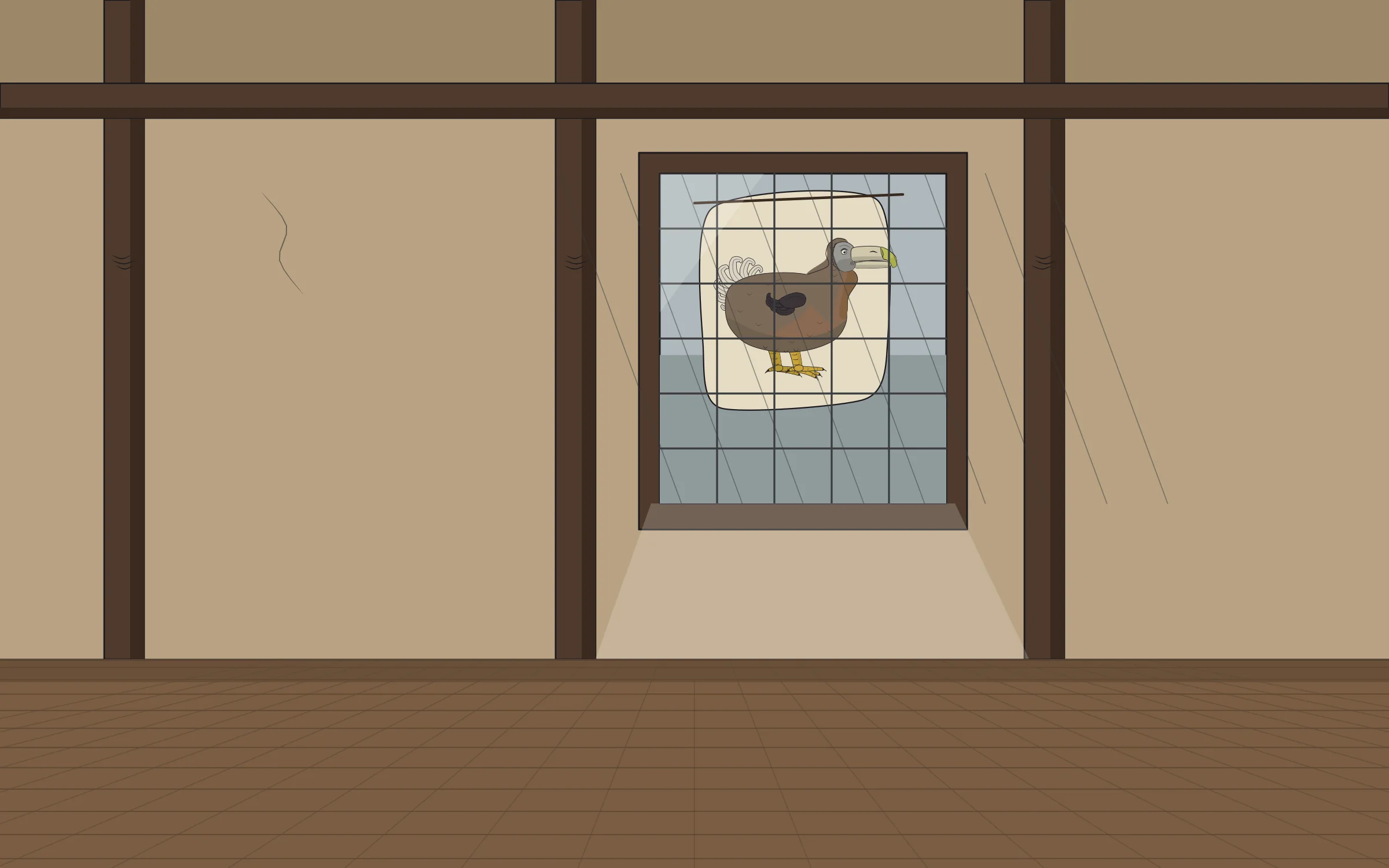
About 1638 a showman in London hung a picture of a strange bird outside a chamber and charged people to come in and see it. Hamon L'Estrange went in.
-
Van Warwijck's crew · 1598
The tail consists of a few soft incurved feathers, which are ash coloured.
Tail
-
Van Warwijck's crew · 1598
These birds lack wings, in the place of which 3 or 4 blackish feathers protrude.
Wings
-
Thomas Herbert · 1634
From which part to the end tis a light green, mixed with pale yellow tincture.
Beak
-
Thomas Herbert · 1634
Her eyes are small and like to Diamonds, round and rowling.
Eyes
-
Hamon L'Estrange · 1638
Coloured before like the breast of a young cock fesan…
Breast
-
Hamon L'Estrange · 1638
…and on the back of a dunn or deare colour.
Back
-
No witness
Nobody wrote down the colour of the naked face or the legs. For those we have only the painters: grey skin, a pale horn beak, yellow legs.
Face, legs
Three people wrote down colours, forty years apart. Their words are all the colour this bird has.
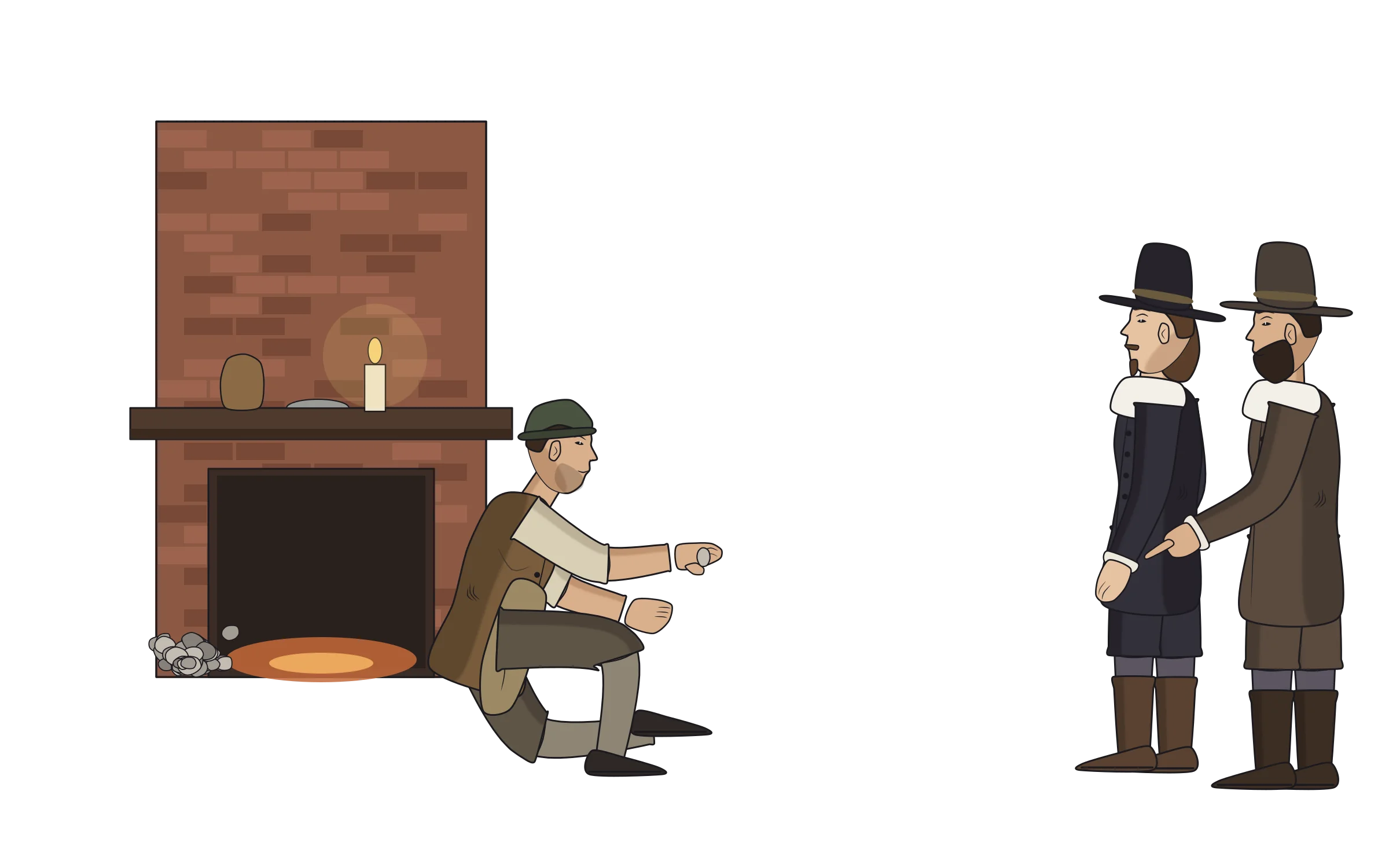
L'Estrange watched the keeper feed it pebbles “as big as nutmegs” from a heap at the end of the chimney, and was told it swallowed them to help it digest. It is the only account of a living dodo in Europe. A dodo may also have been sent to England by Emmanuel Altham in 1628, with a jar of ginger for his sister. He added: “if it live.”
04/1625–1626Utrecht · Surat
The Painters
About twenty pictures of the dodo survive from the 1600s. Nobody knows how many were painted from a living bird.
The fat one everyone knows
Savery painted at least twelve dodos. One, now in the Natural History Museum, London, became the standard image: a very fat grey bird. It was probably painted from an overfed captive or a crudely stuffed skin.
The slim brown one
Mansur, painter to the emperor Jahangir, painted a slimmer, brownish bird among Indian birds that are all drawn accurately. It probably lived in Jahangir's menagerie at Surat, where Peter Mundy saw two live dodos a few years later.
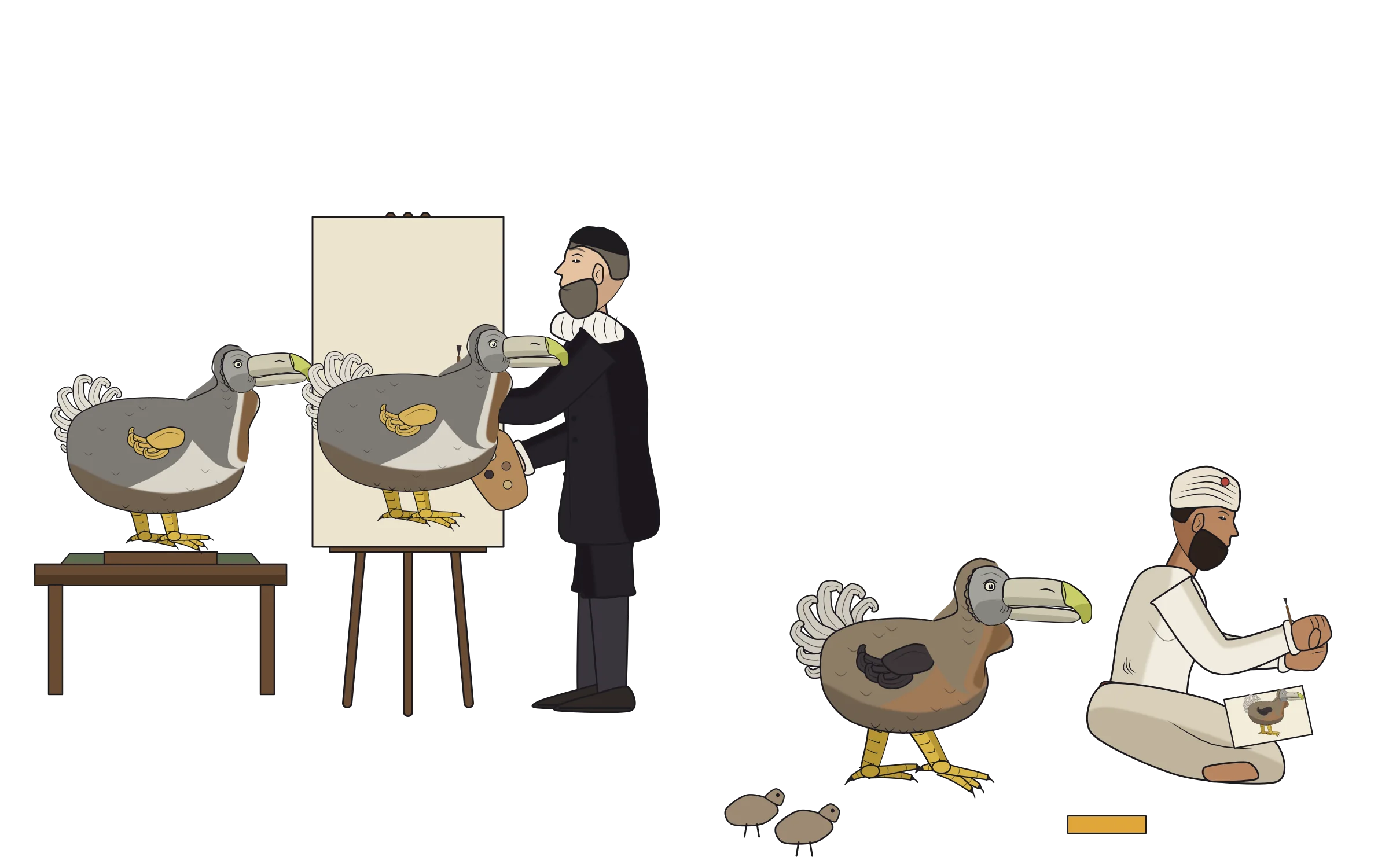

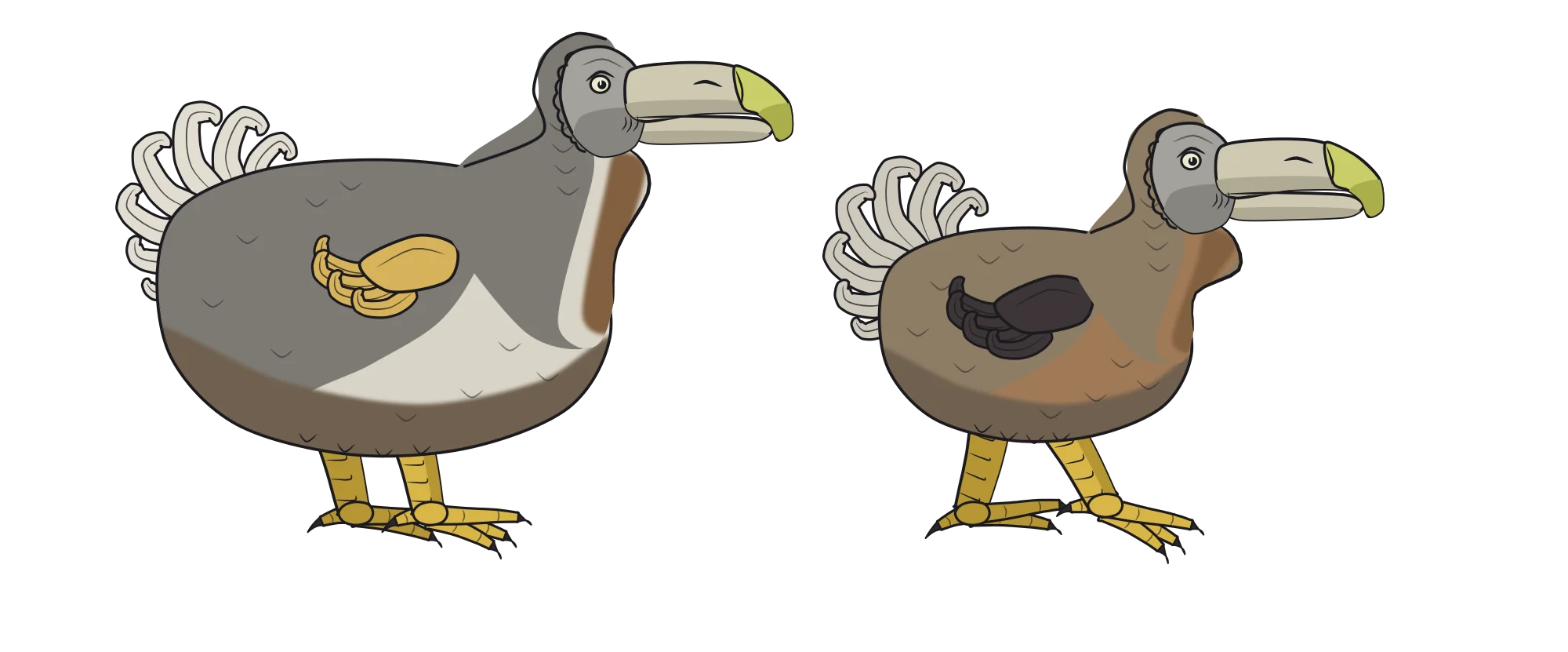
Savery, 1626An overfed or stuffed birdMansur, c. 1625Probably a living bird
Same bird, two pictures
Both are drawn here at their height: up to 75 cm. Only the build changes. Stuffed dodos often had gaping nostrils; living ones, like Mansur's, had slits.
05/1662Amber Island
The Last Ones
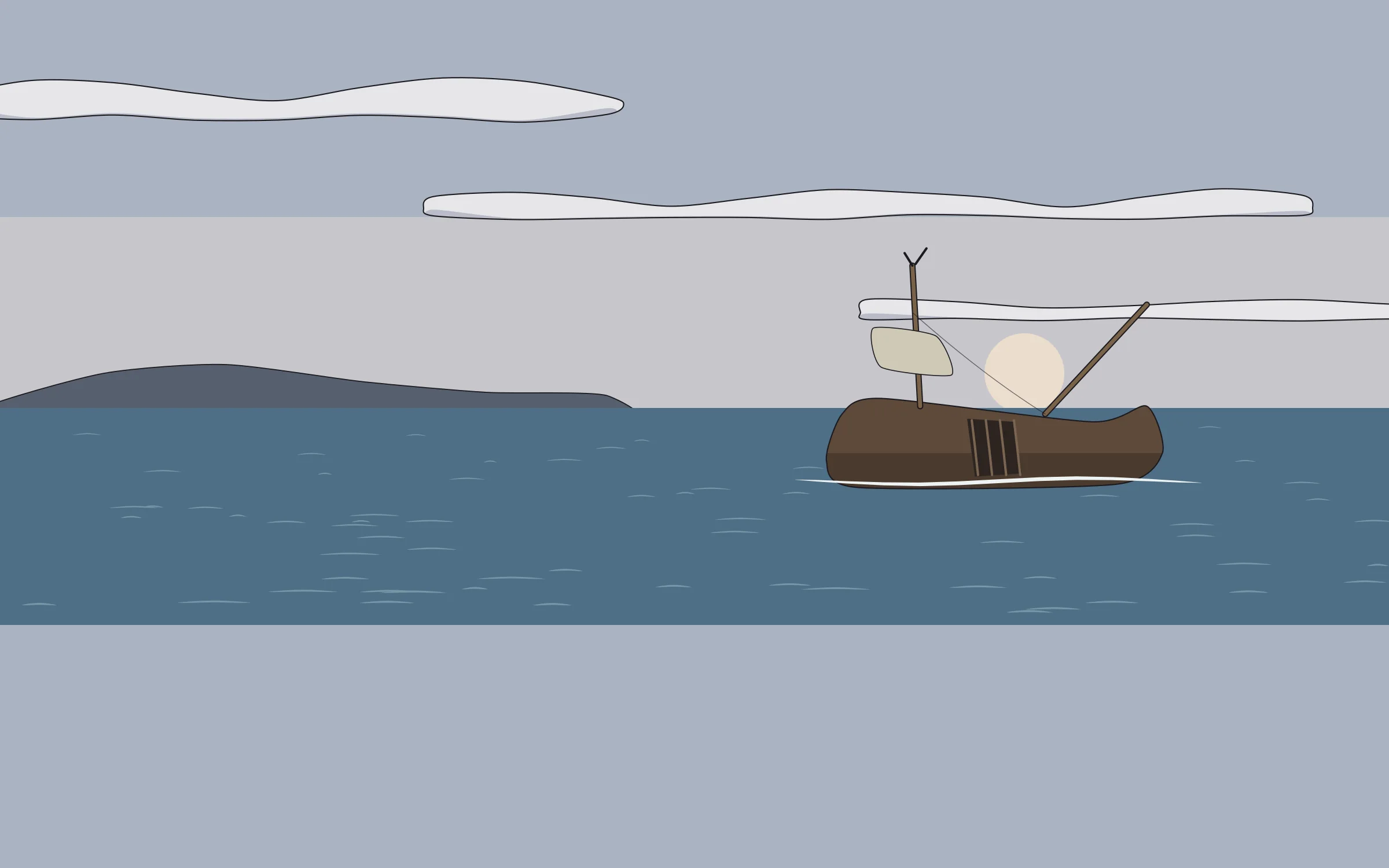
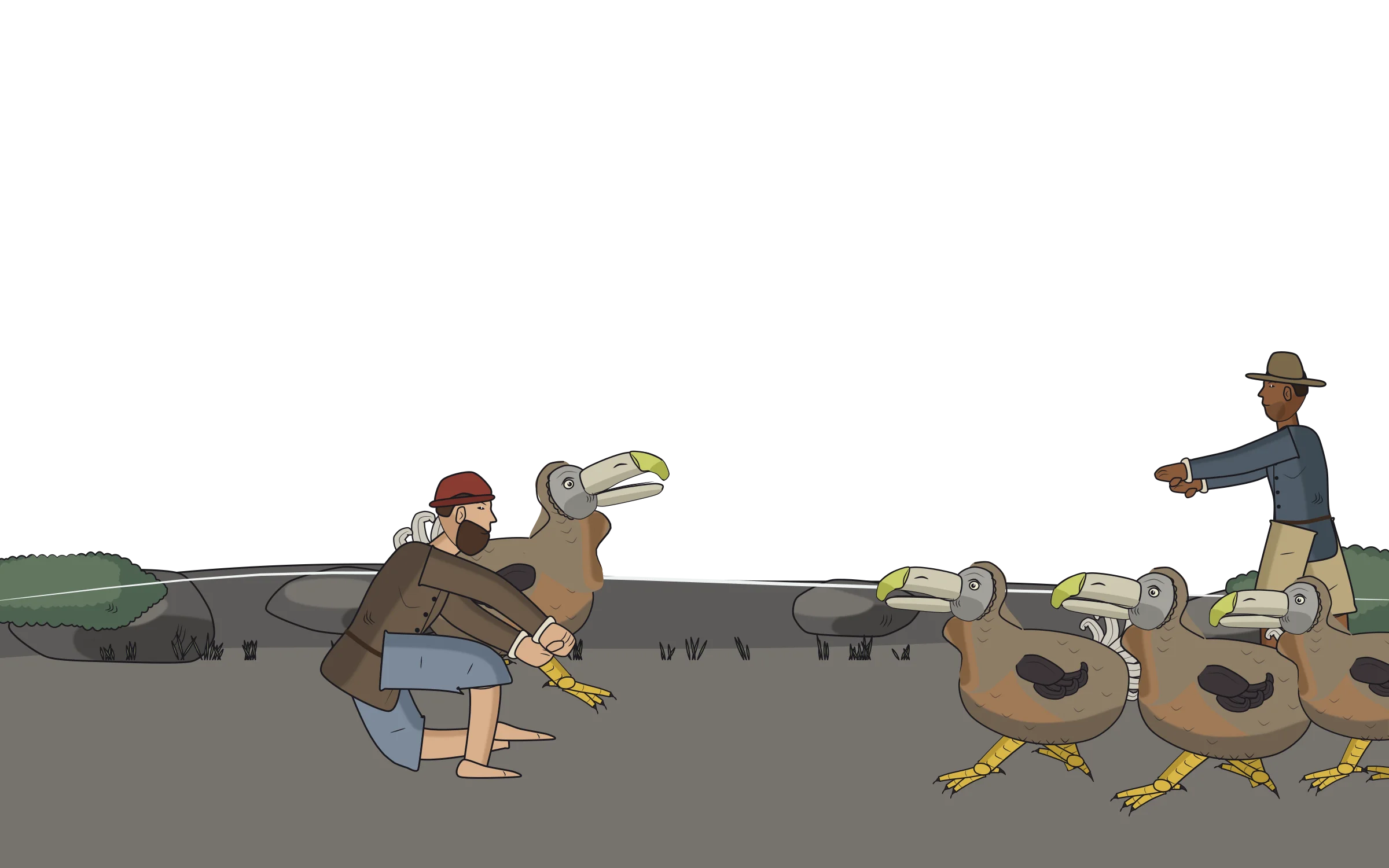
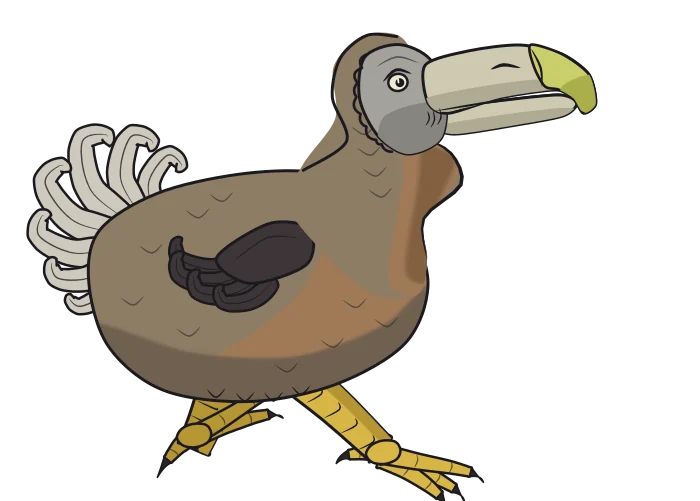
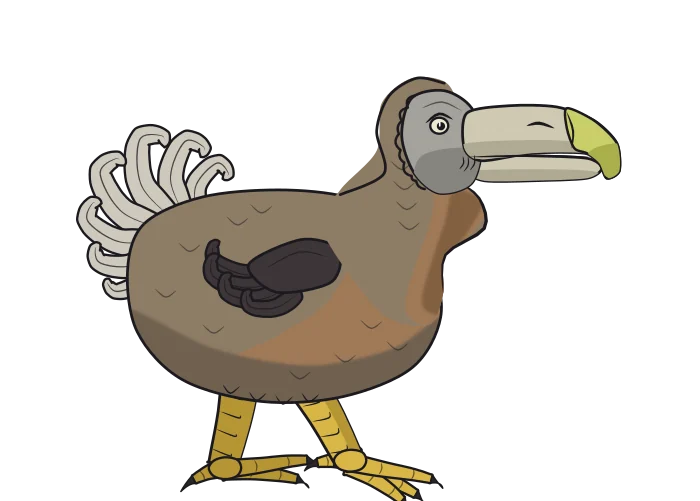
Volkert Evertsz was shipwrecked from the Arnhem on a small islet off the north-east coast. The birds he met there are the last ones most experts accept.
“When we held one of them by its leg… it made a great noise, the others all on a sudden came running as fast as they could to its assistance.”
- SettlersNever more than 50 people in the 17th century
- What they broughtDogs, pigs, cats, rats and crab-eating macaques, which raided the nests
- Later reportsProbably the red rail, which inherited the name
- Gone byAbout 1700; one estimate gives 1693
Hunting was not the main cause. The bird laid one egg on the ground, and the pigs and monkeys found it. Nobody noticed the dodo had gone. By the 1800s many naturalists thought it had never existed.
06/1865–2005Mare aux Songes
The Bones
George Clark, the schoolmaster at Mahébourg, looked for dodo bones for thirty years. In 1865 he found them in a swamp near the sea.
“By feeling in the mud with their naked feet, they met with one entire tibia, a portion of another, and a tarso-metatarsus.”
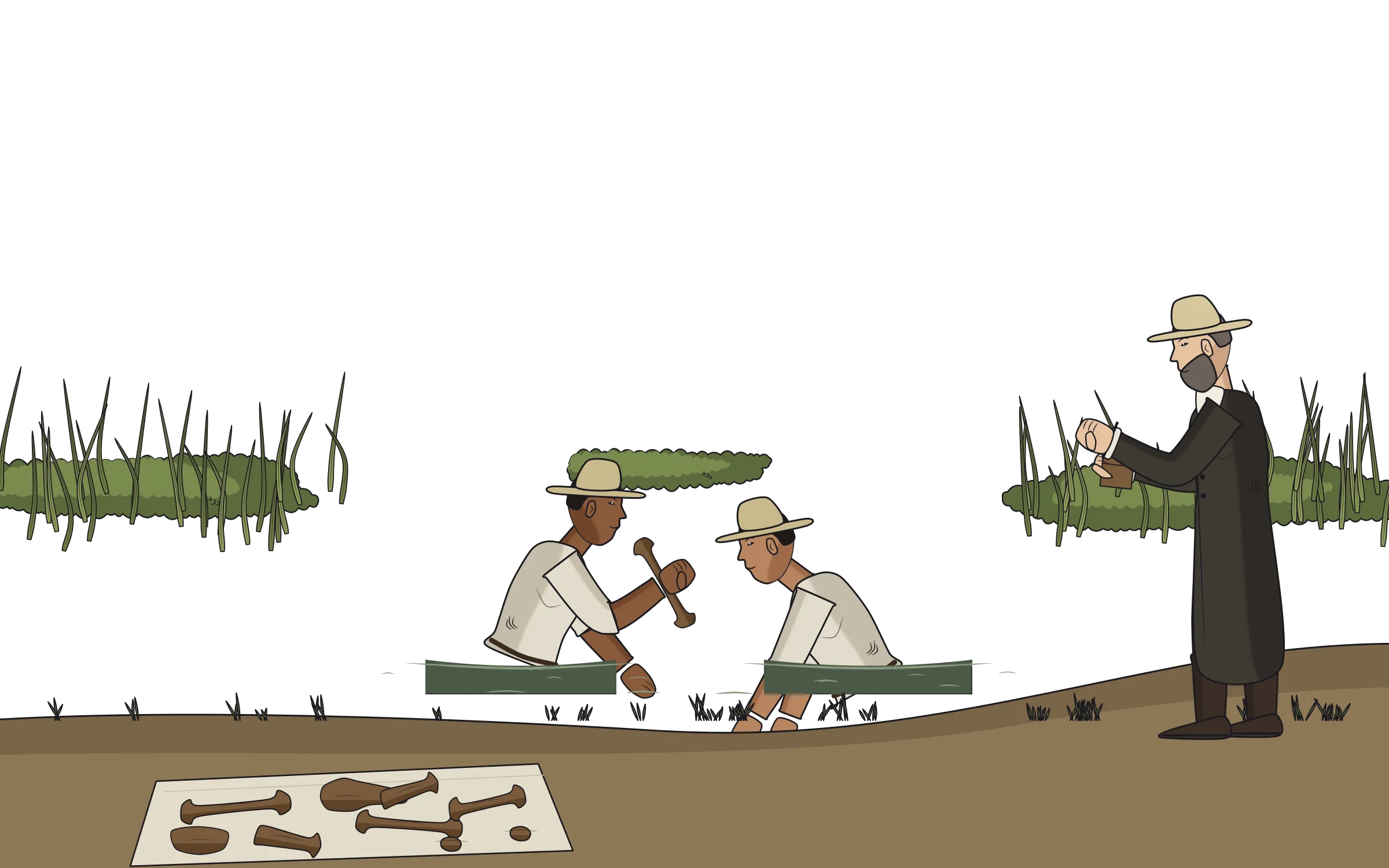
From one swamp
300+The remains of more than 300 dodos, almost all leg bones; the skulls and wings had mostly washed away. Twenty-six museums now hold dodo bones, nearly all from here. In 1904 a cave near Le Pouce gave up the only complete skeleton of a single bird.
In 1865, the year of Clark's first finds, Lewis Carroll put a Dodo in Alice's Adventures in Wonderland.
07/Oxford1656 → today
What Is Left
One dried head and one foot. They are the only soft tissue of a dodo left anywhere.

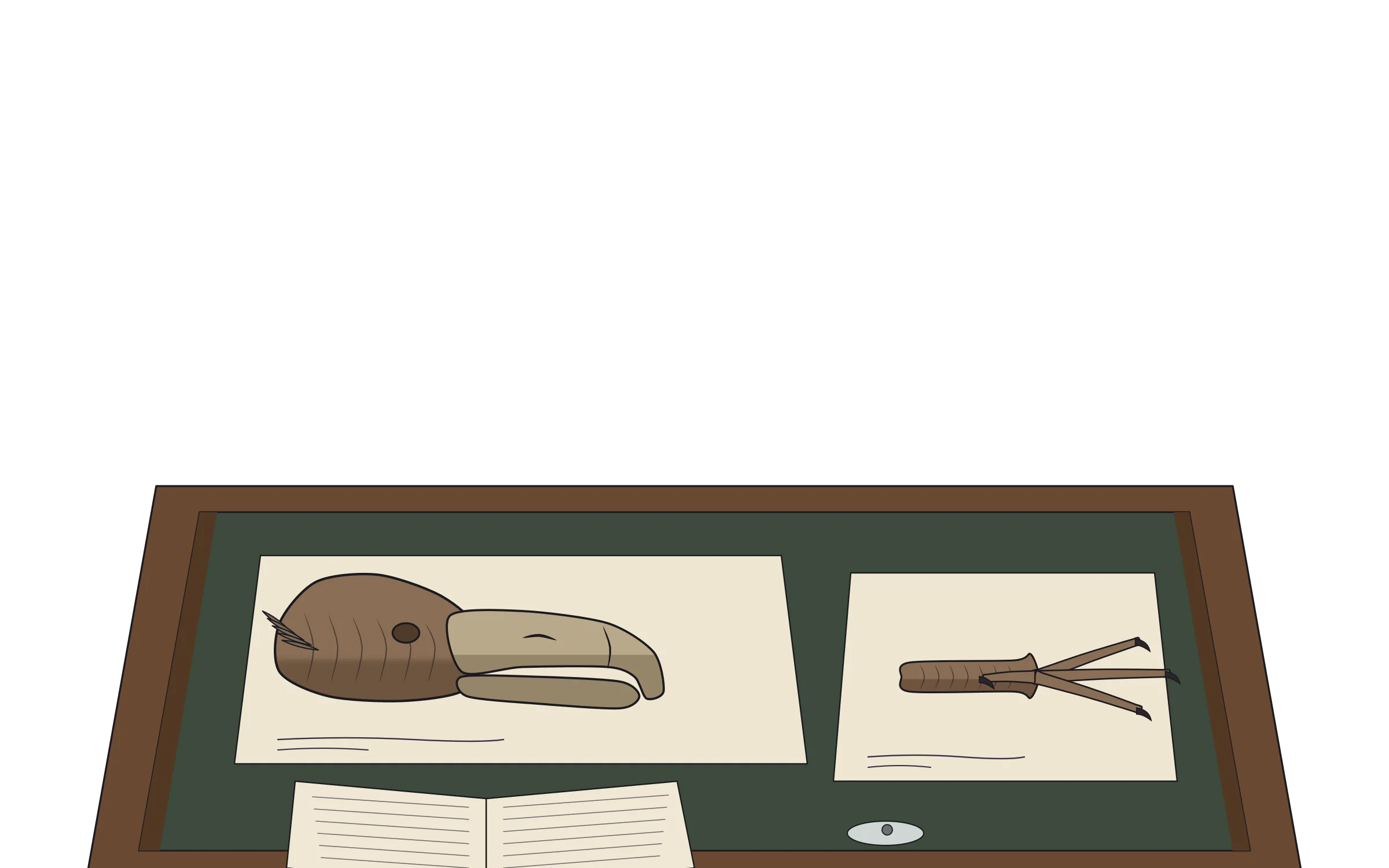

- 1656Listed in the Tradescant collection in London
- 1659Moved to the Ashmolean Museum, Oxford
- 1848Head dissected by Strickland and Melville: a pigeon
- 2002DNA from its bones: nearest living kin, the Nicobar pigeon
- 2018Scans find lead shot in the head
Books often say the museum burned the rotting stuffed bird in 1755 and saved only the head and foot. That is now thought to be a myth. The museum's Statute 8 let the keeper move anything “old and perishing” into a closet, and that is where it went.
The bird was shot, either before it left Mauritius or after it reached England. It may be the one L'Estrange saw.
The folio
Seven plates, and where every colour came from
Each plate is printed at 420 × 297 mm on 300 g cotton paper, with its sources in the margin. A 48-page booklet holds every account and picture in full. 500 copies.
€58Shipping €9 in Europe, €18 elsewhereDispatched within five working days