(Notes) Sources and credits
Where it comes from
This site is a reading of the public record of one comet. It is not affiliated with any observatory or space agency. Every fact comes from the articles below; every picture is public domain or openly licensed.
Text
- WikipediaHalley’s Cometorbit, structure, every return, 2061 and 2134. Text CC BY-SA; facts restated in our own words.
- WikipediaGiotto (spacecraft)the 596 km flyby, 13 March 1986. Text CC BY-SA; facts restated in our own words.
- WikipediaEdmond Halleythe 1705 Synopsis and his dates. Text CC BY-SA; facts restated in our own words.
- WikipediaJohann Georg Palitzschthe recovery on Christmas Day 1758. Text CC BY-SA; facts restated in our own words.
- WikipediaOrionidsthe October shower. Text CC BY-SA; facts restated in our own words.
- WikipediaEta Aquariidsthe May shower. Text CC BY-SA; facts restated in our own words.
Pictures
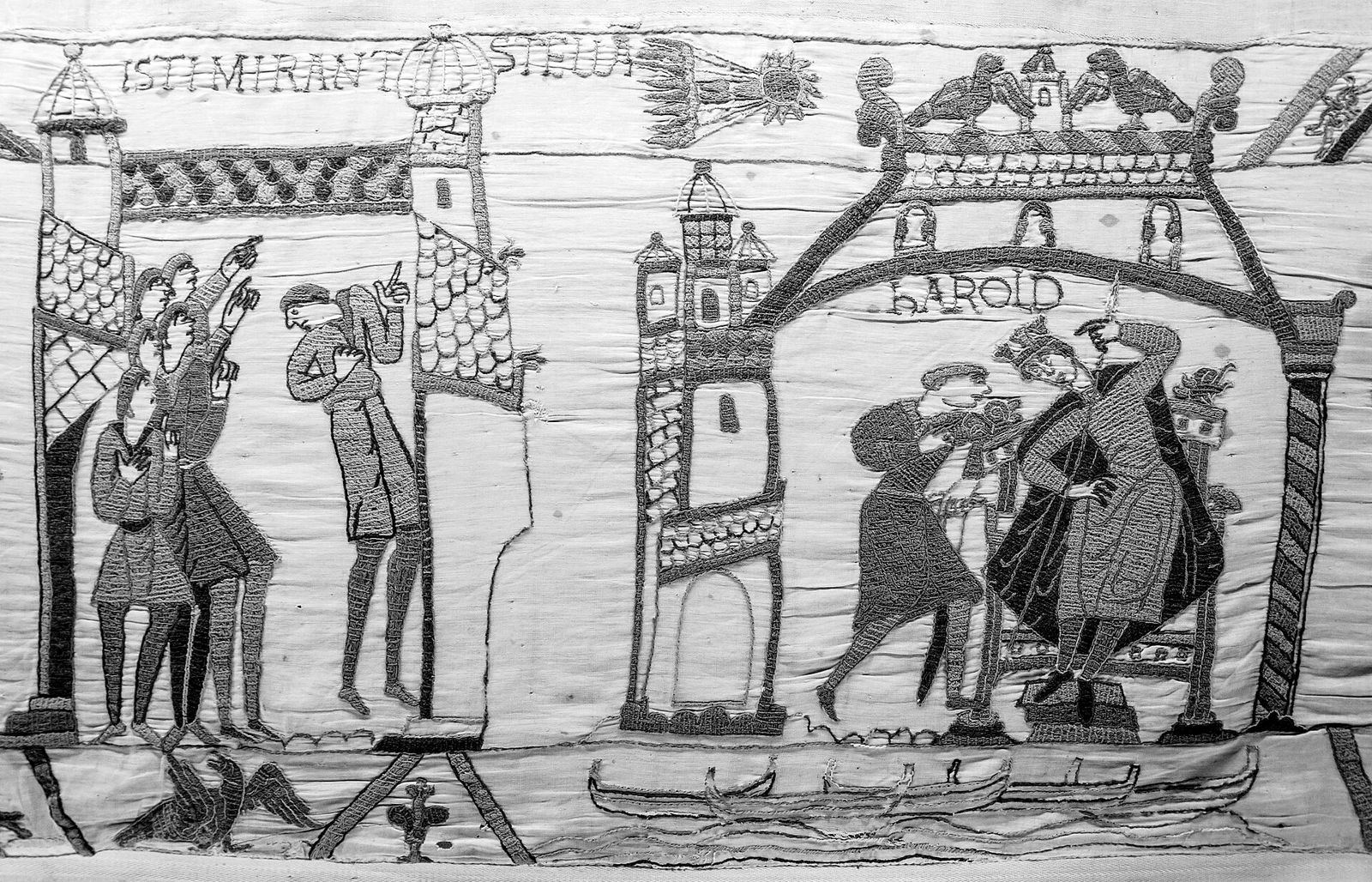 Bayeux Tapestry, scenes 32–33 (1066)Photo: Myrabella. Public domain. Wikimedia Commons. Shown in greyscale.
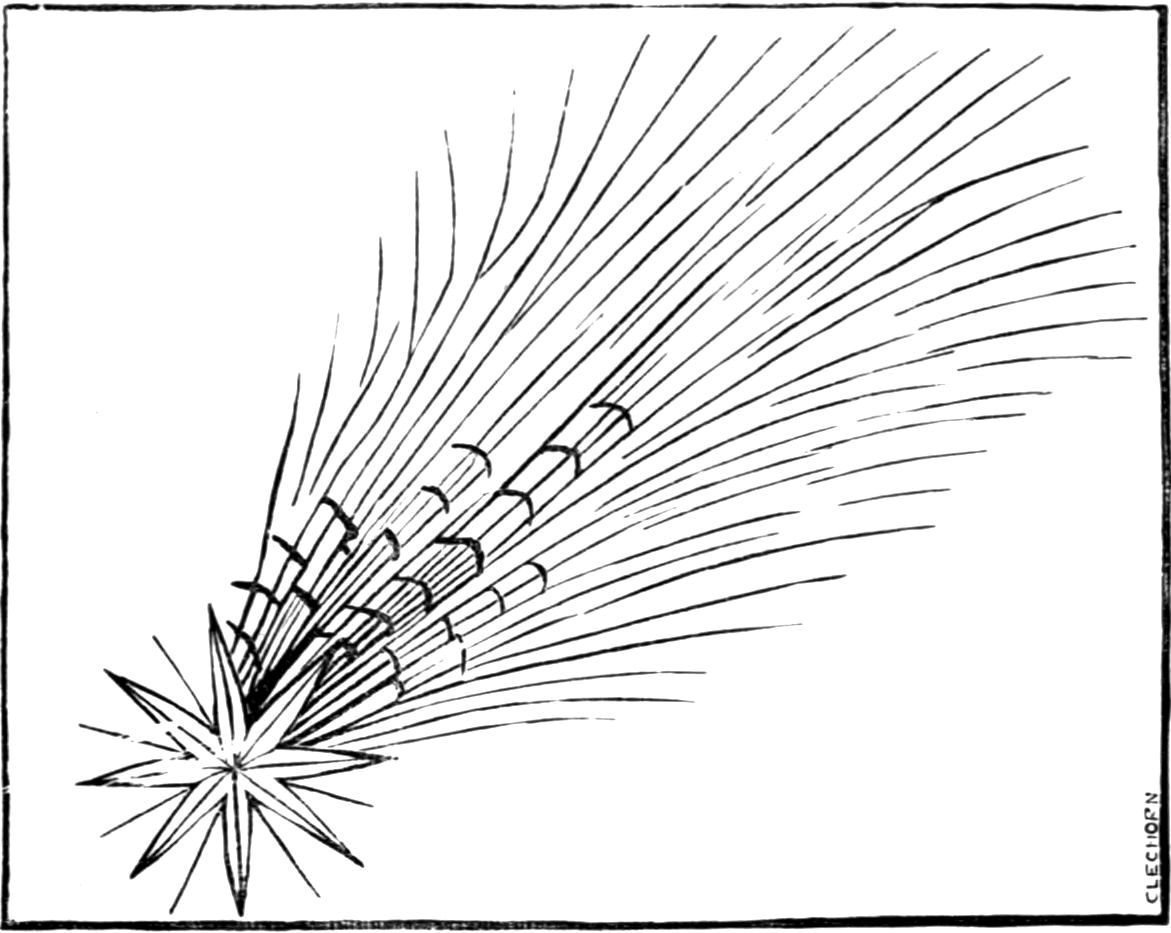 “Halley’s Comet, 684”, from the Nuremberg Chronicle, reproduced in G. F. Chambers, The Story of the CometsPublic domain. Wikimedia Commons. Shown in greyscale.
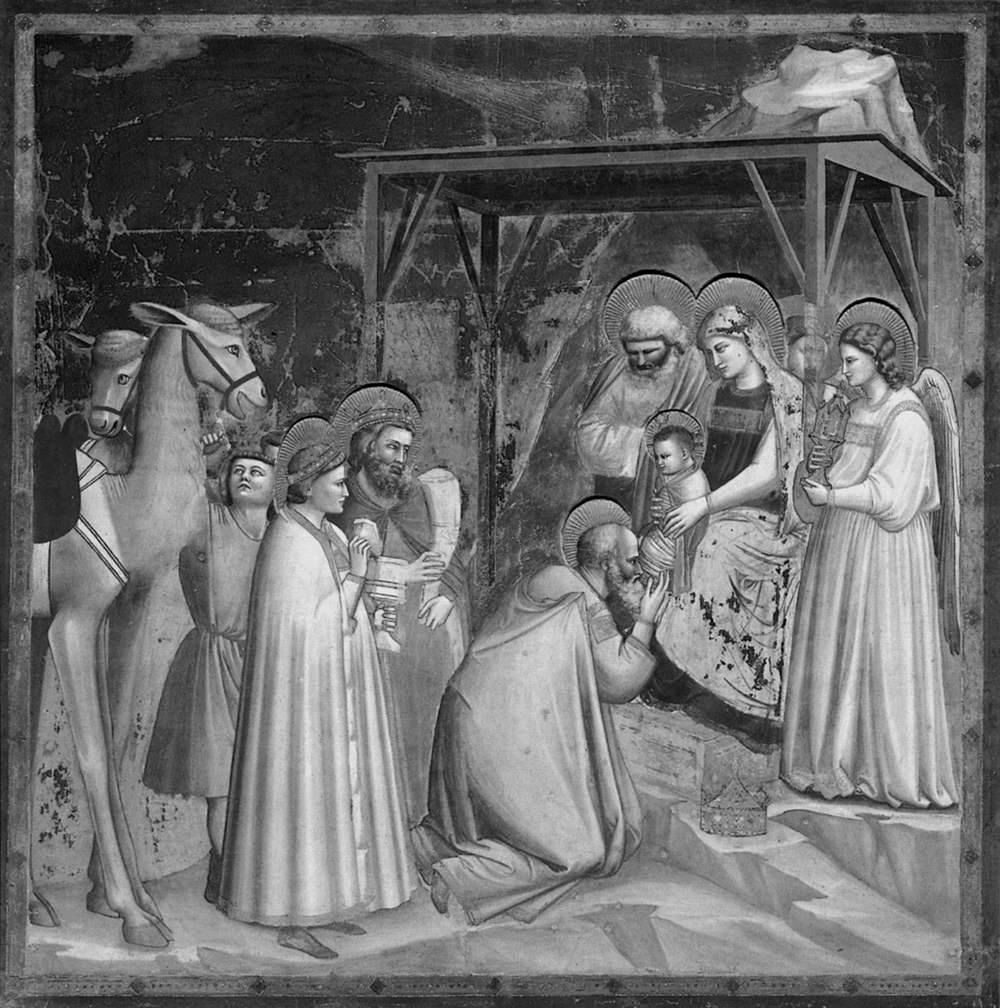 Giotto di Bondone, Adoration of the Magi, Scrovegni Chapel, PaduaPublic domain. Wikimedia Commons. Shown in greyscale.
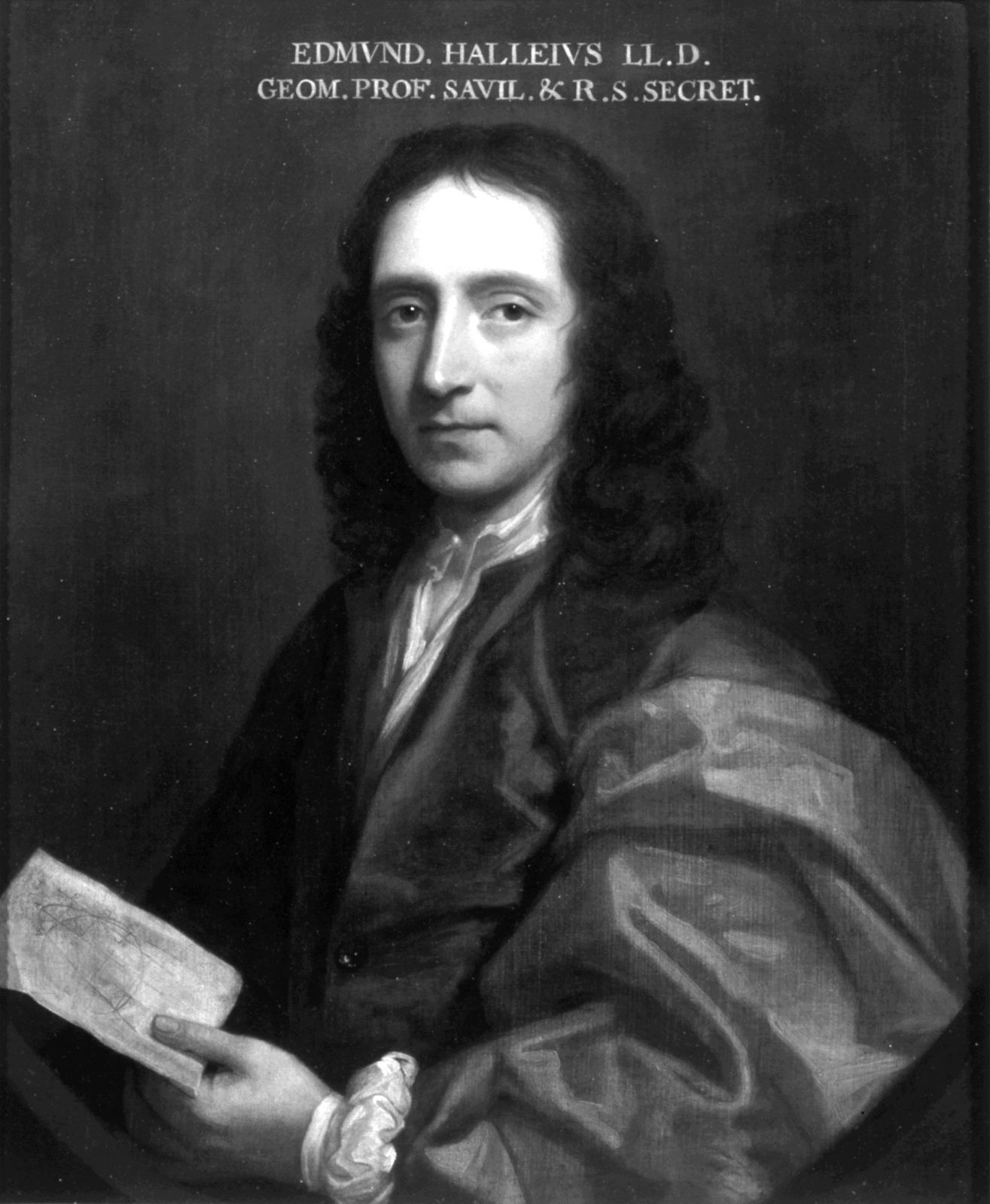 Thomas Murray, portrait of Edmond HalleyPublic domain. Wikimedia Commons. Shown in greyscale.
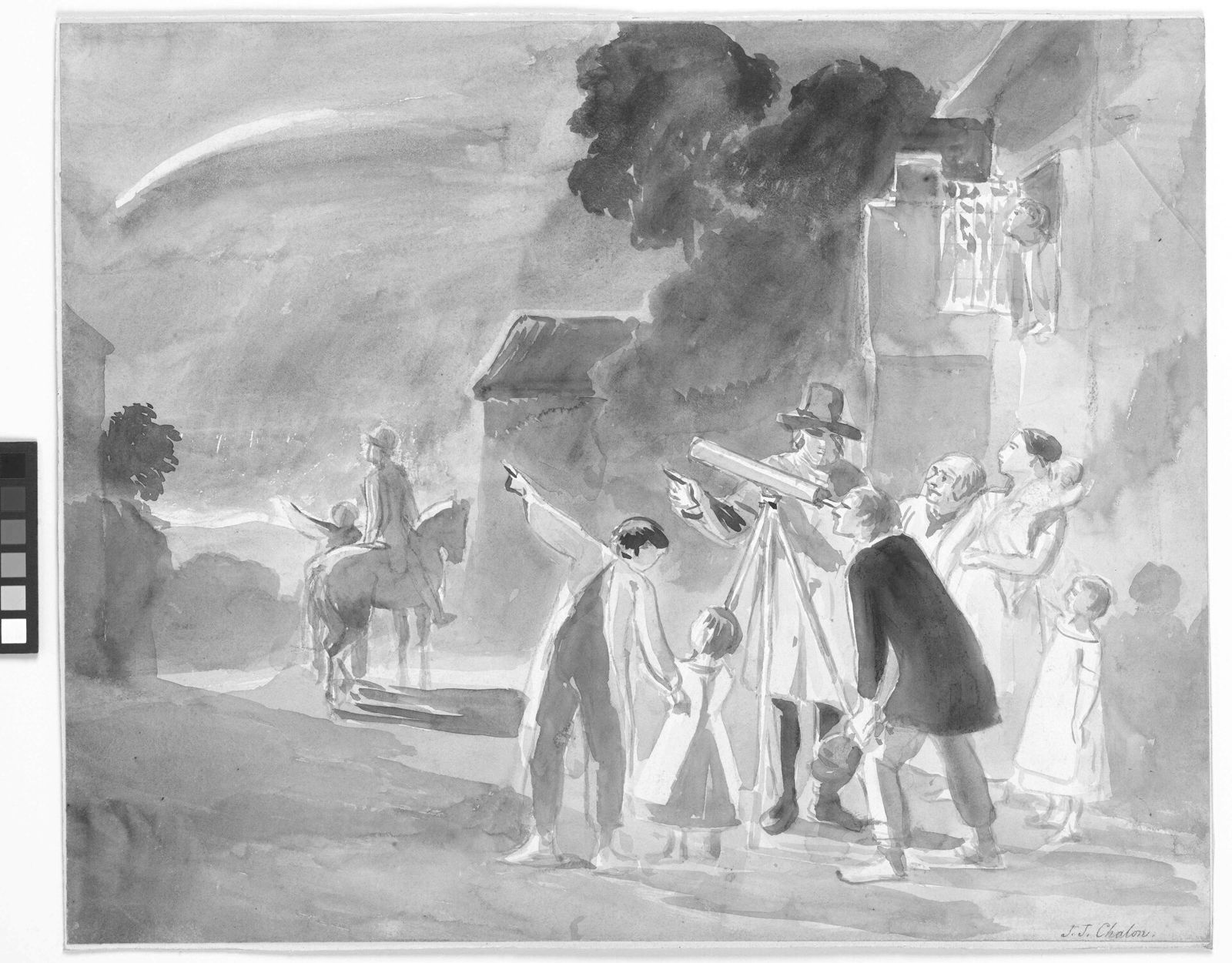 John James Chalon, Looking at Halley’s Comet, 1835 (Royal Museums Greenwich)Public domain. Wikimedia Commons. Shown in greyscale.
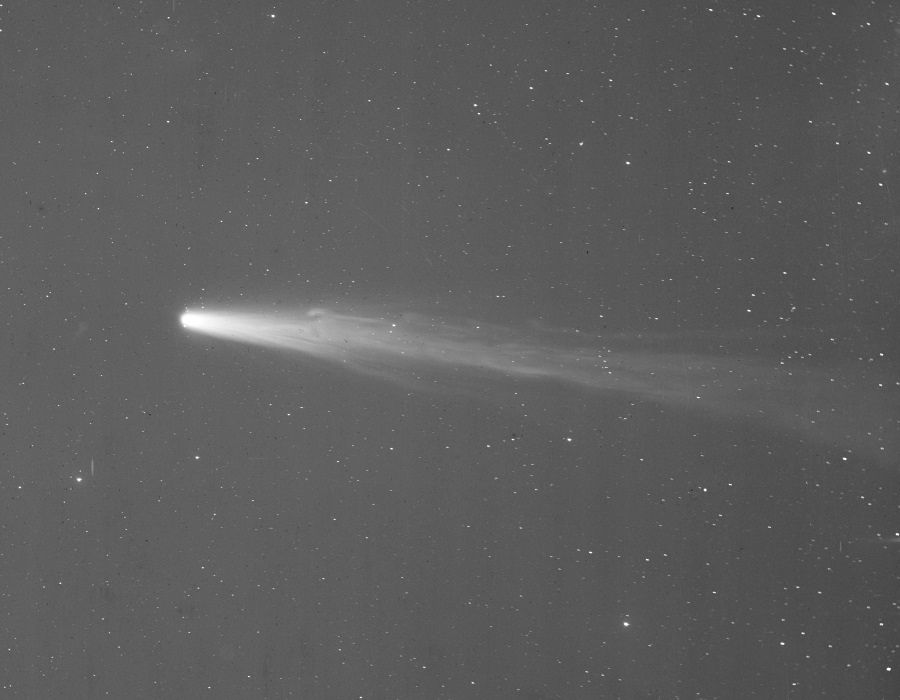 Harvard College Observatory, plate b41215, 21 April 1910, ArequipaPublic domain. Wikimedia Commons. Shown in greyscale.
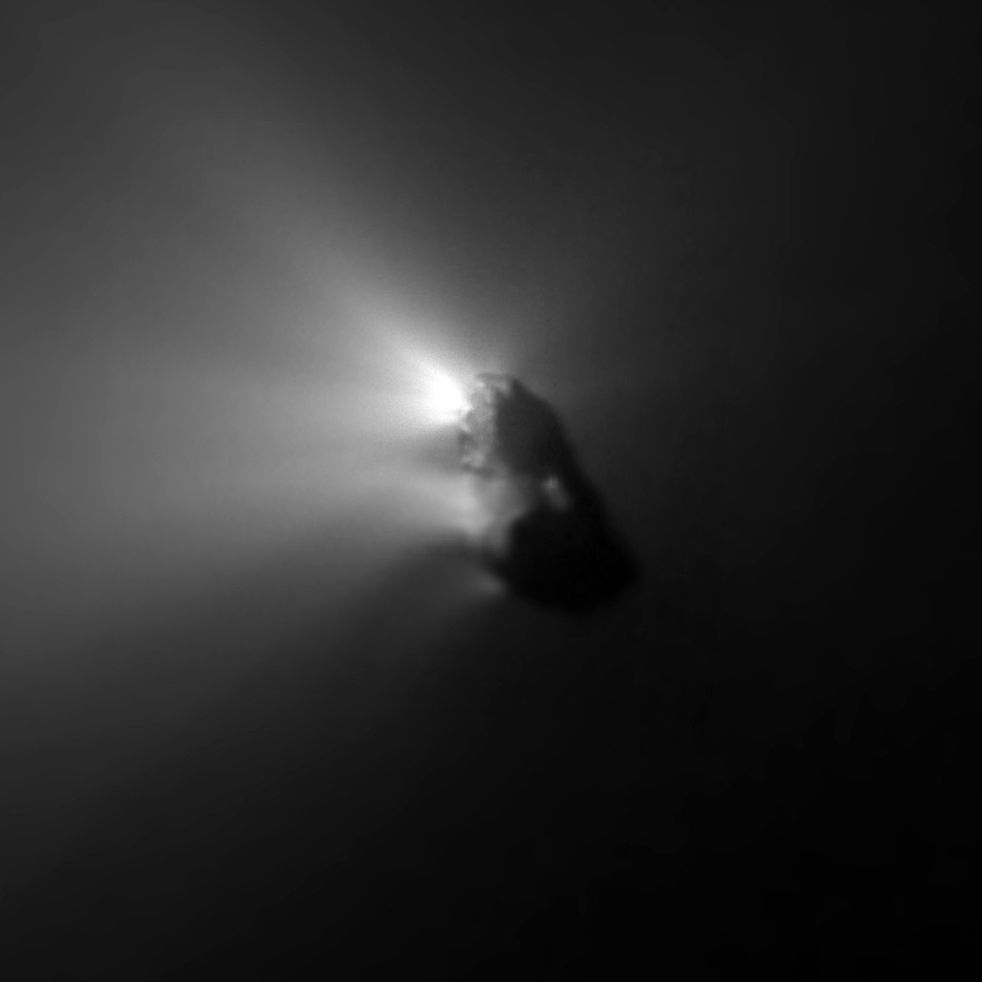 Giotto Halley Multicolour Camera, nucleus composite, March 1986ESA/MPS. CC BY-SA 3.0 IGO. Wikimedia Commons. Shown in greyscale.
The drawings
Every orbit, spiral and plate on the site is drawn in your browser by one small program. It solves Kepler’s equation for the comet’s 1986 orbit (perihelion 0.586 au, eccentricity 0.967, inclination 162°), and between two recorded returns it uses that interval as the period, so the dot for each year sits where the comet actually was.
The planets are drawn as circles from their average positions. That is good enough to show where Earth stood at each return, not to point a telescope: for the returns of 1910 and 1986 the drawn closest approaches land within about 0.02 au of the published figures. The meteor and comet plates are drawings, not photographs.
Type and icons
Fira Sans and IBM Plex Serif, both under the SIL Open Font License. Icons from Phosphor (MIT licence).