240 BC
2061
Halley’s Comet has been seen at every return since 240 BC. The next is due on 28 July 2061.
Thirty returns are on record, 74 to 79 years apart. This is all of them, and the comet’s orbit as it stands today.
Today about 35 au from the Sun, near the far end of its orbit. It turned back on 9 December 2023.
Distances drawn on a square-root scale, so Mercury and Neptune fit one picture.
(01) What it is
A lump of dust and ice about 15 kilometres long, on an orbit that takes it from inside Venus’s path out past Neptune and back. Near the Sun it grows a cloud of gas and a tail longer than 100 million kilometres. That is what people have been writing down since 240 BC.
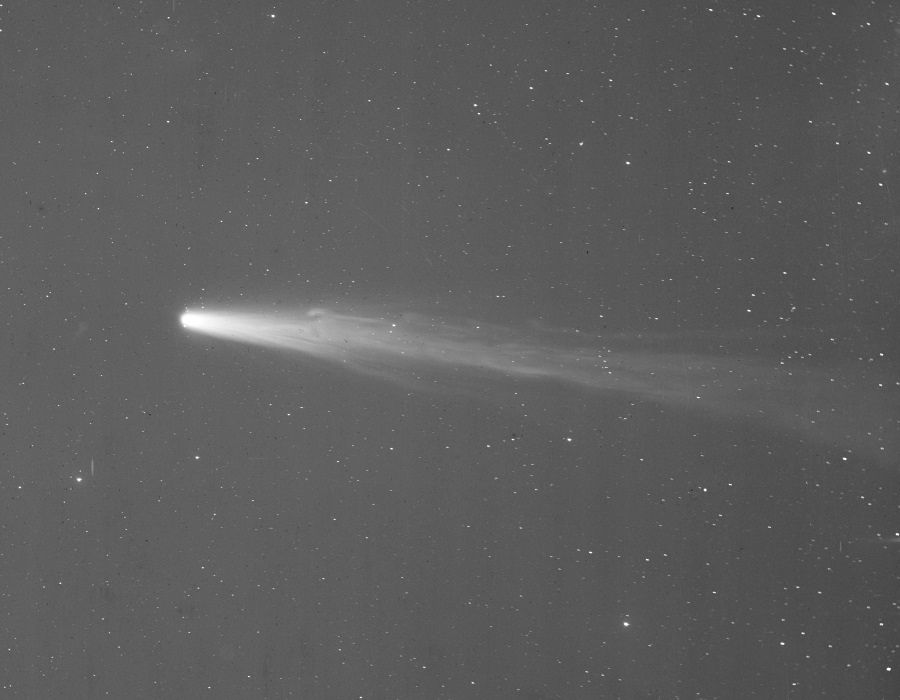
It goes round the Sun the wrong way, opposite to every planet, tilted 18° to their plane. At its closest it passes 88 million kilometres from the Sun; at its farthest it is 5.2 billion kilometres out, about where Pluto is.
The nucleus reflects only 4% of the sunlight that hits it, about as much as coal. What makes the comet bright is the gas and dust it loses each time it comes in. The gas is about 80% water vapour and 17% carbon monoxide.
- Nucleus, longest side
- 15km
- Sunlight it reflects
- 4%
- Farthest from the Sun
- 35au
(04) Chapters:
Chapter I240 BC1066
A broom star
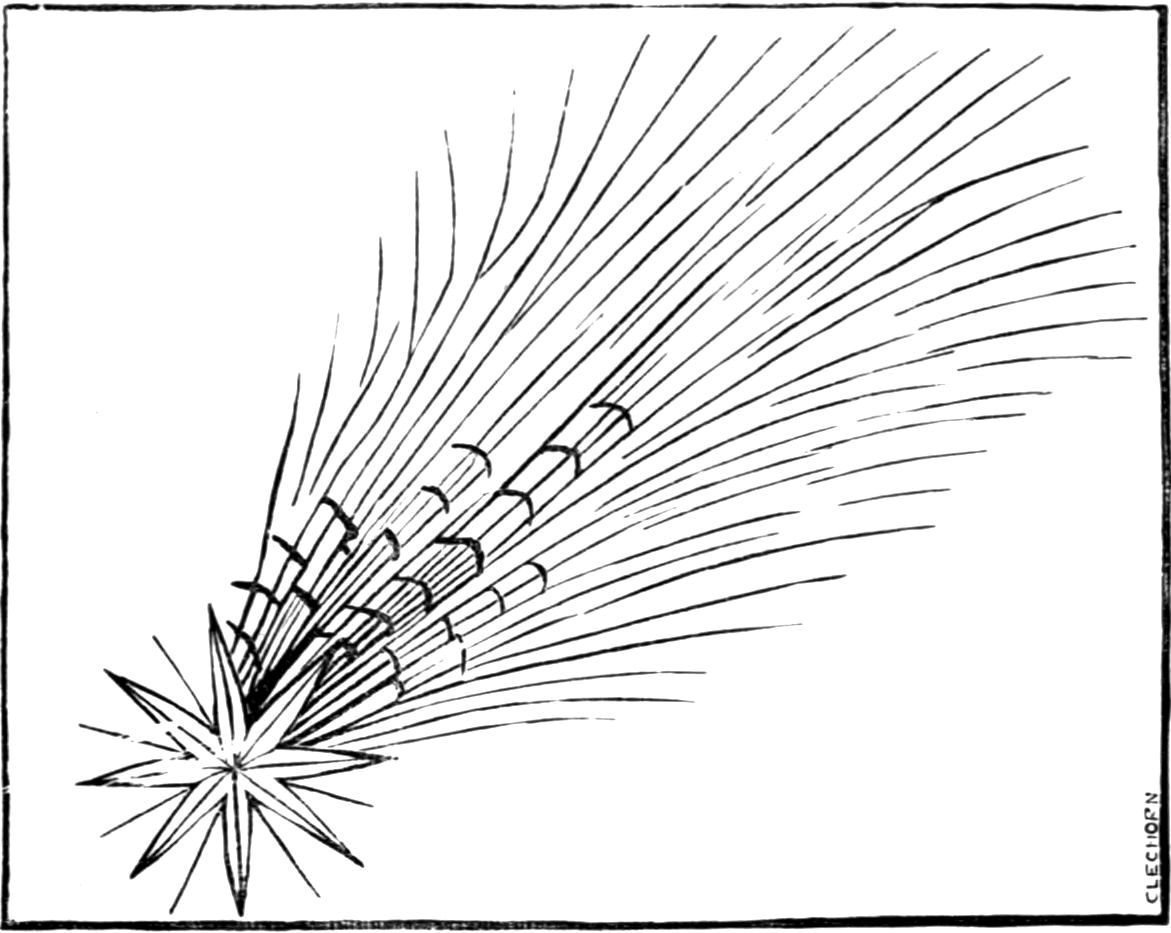
The oldest certain record is Chinese. In 240 BC the Shiji notes a comet that appeared in the east and moved north. Babylonian astronomers wrote it down on clay in 164 and 87 BC; the second time they saw it “day beyond day” for a month.
For the next thousand years almost every return is in someone’s chronicle. Chinese records of 684 call it the broom star. A Syriac chronicle of 760 saw “a white sign” shaped like a broom for fifteen nights in May. The Annals of Ulster, 912: “A dark and rainy year. A comet appeared.”
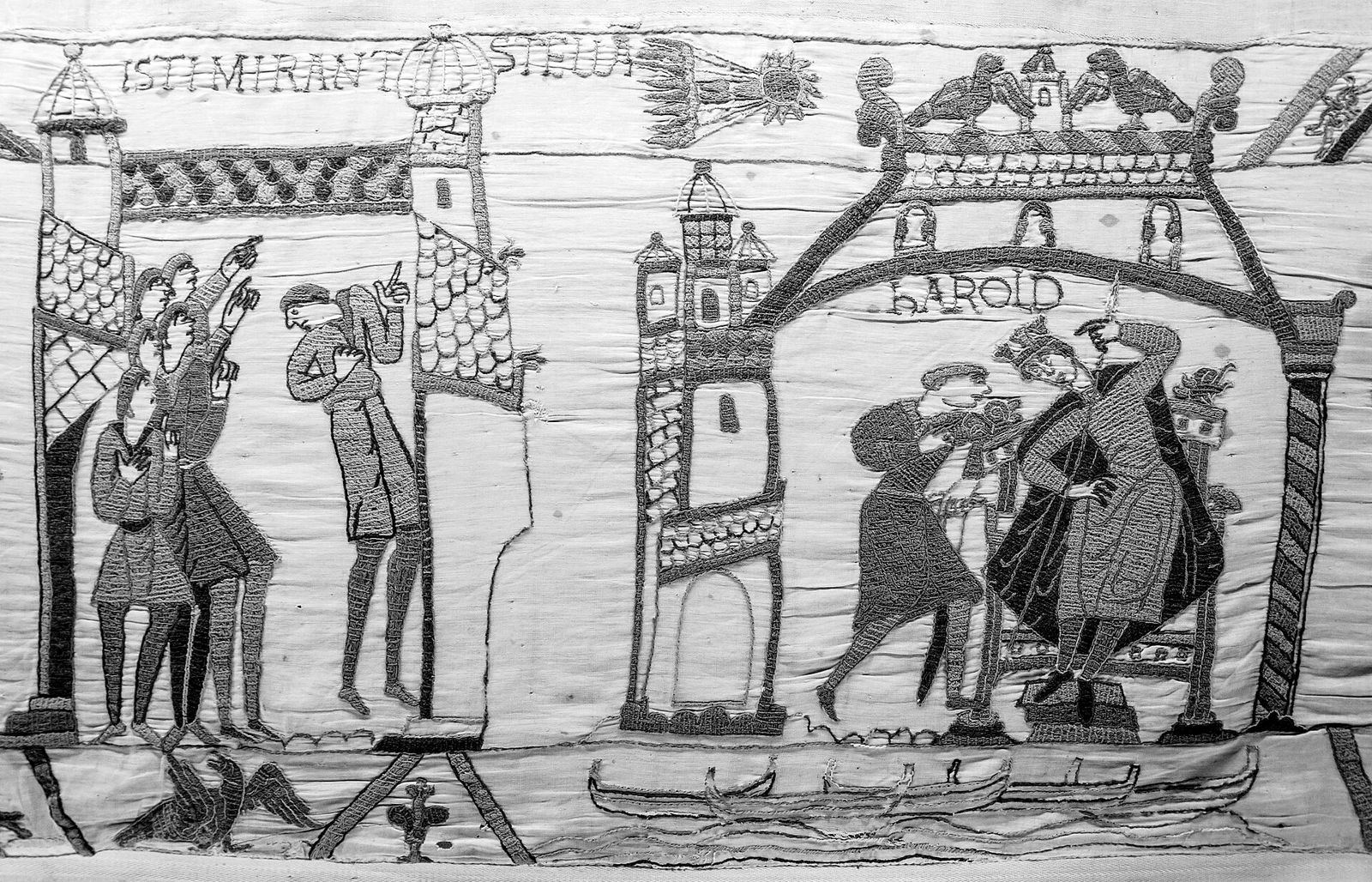
“You’ve come, have you? You’ve come, you source of tears to many mothers. It is long since I saw you.”
Chapter II11451456
Painted from life
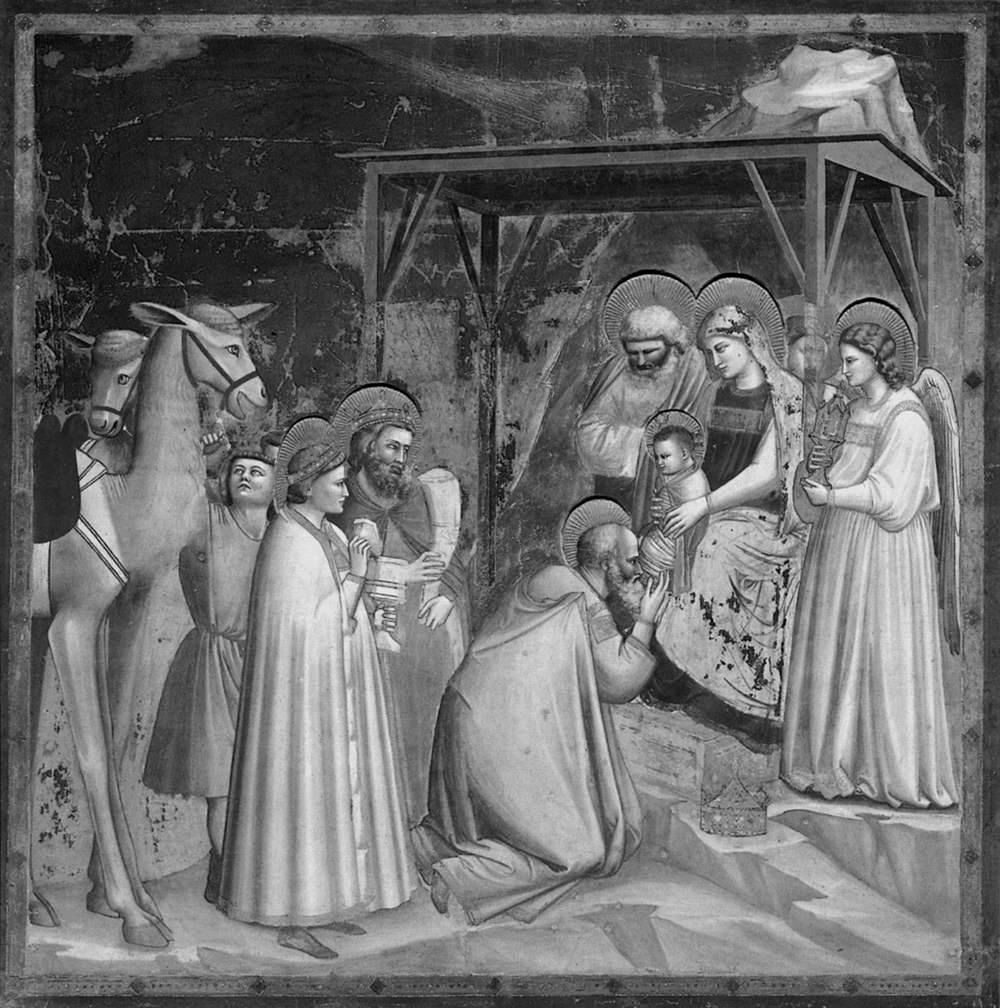
In 1301 the Florentine chronicler Giovanni Villani wrote that the comet left “great trails of fumes”. It stayed in the sky from September to January. The painter Giotto saw it and put it over the stable in Padua as the Star of Bethlehem, with its head, tail and bright centre.
It may be the first convincing portrait of one particular comet. Nearly seven centuries later the European Space Agency named its probe to Halley after him.
In 1222 Koreans saw it in daylight on 9 September. In 1456 it was recorded in Kashmir by the poet Śrīvara, and in Ethiopia the emperor Zara Yaqob, after a bright light in the sky usually identified as this comet, founded a new capital, Debre Berhan, the City of Light. The story that the Pope excommunicated the comet that year was invented by a French writer in the 18th century.
Chapter III15311759
The same comet
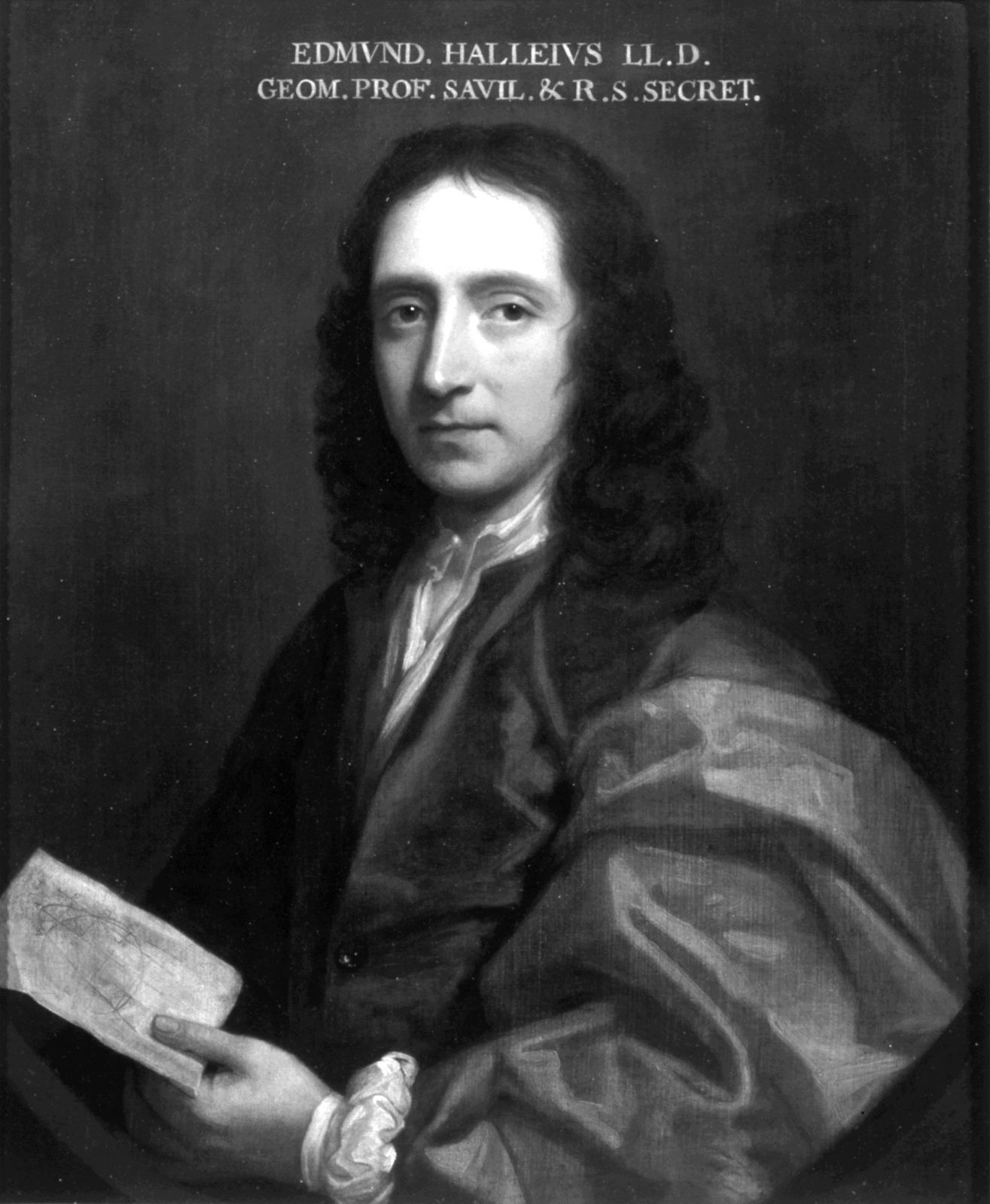
Until 1705 no comet was known to come back. Edmond Halley compared the orbits of 24 comets using Newton’s new laws and found that the ones seen in 1531, 1607 and 1682 were the same object. He predicted it would be back in 1758. He died in 1742.
On Christmas Day 1758 a farmer near Dresden, Johann Georg Palitzsch, who had taught himself astronomy, found it first. Three mathematicians in Paris, Alexis Clairaut, Joseph Lalande and Nicole-Reine Lepaute, had worked out that Jupiter and Saturn would hold it back. They put perihelion at 13 April 1759; it came on 13 March.
It was the first proof that anything other than a planet goes round the Sun.
Chapter IV18351986
Photographed
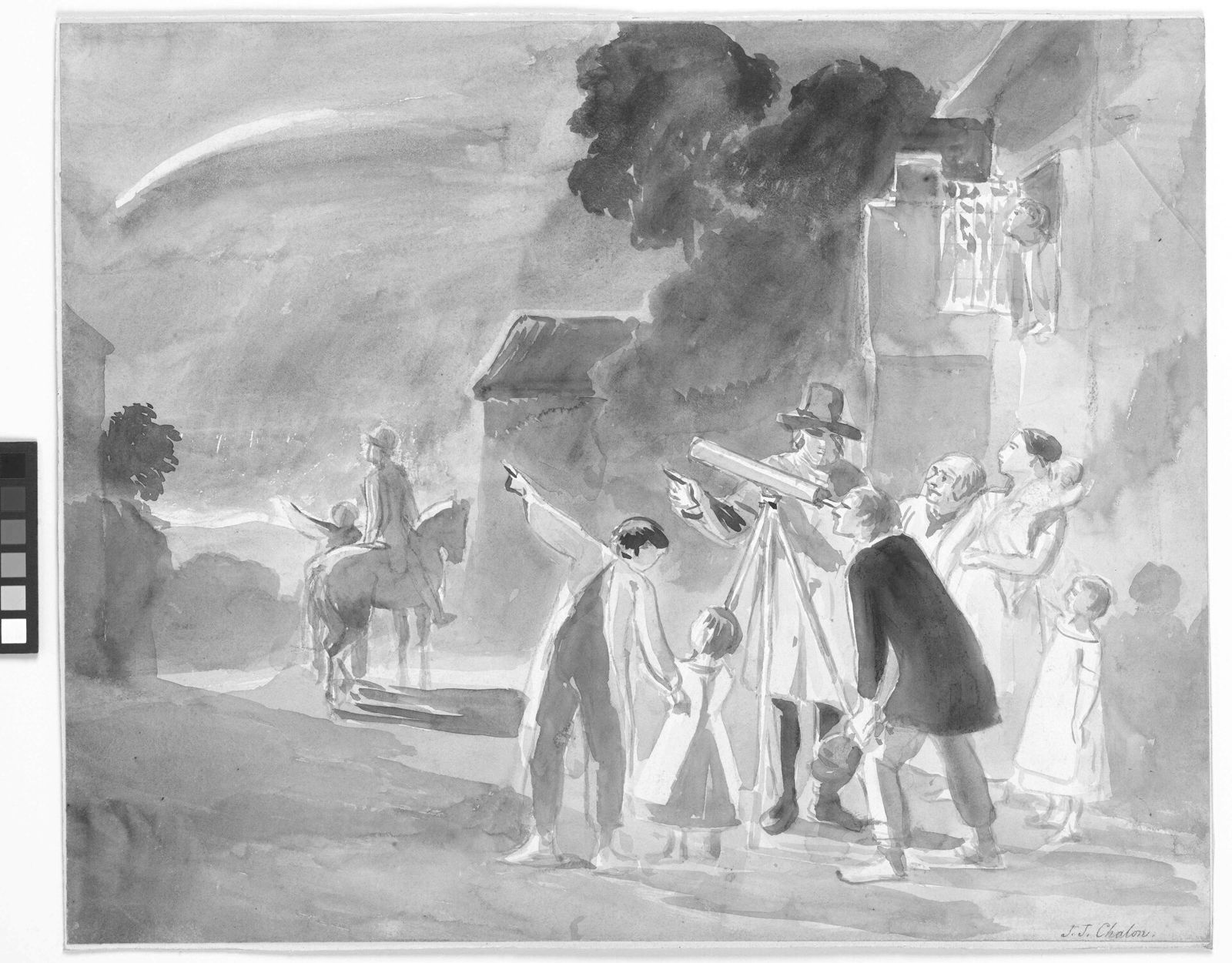
Mark Twain was born on 30 November 1835, two weeks after that year’s perihelion. In 1909 he wrote that he had come in with Halley’s comet and expected to go out with it. He died on 21 April 1910, the day after the next perihelion.
1910 was the first return caught on photographic plates and the first measured with a spectrograph. The spectra showed cyanogen in the tail. On 19 May Earth passed through that tail; people bought gas masks and “anti-comet pills”. Nothing happened.
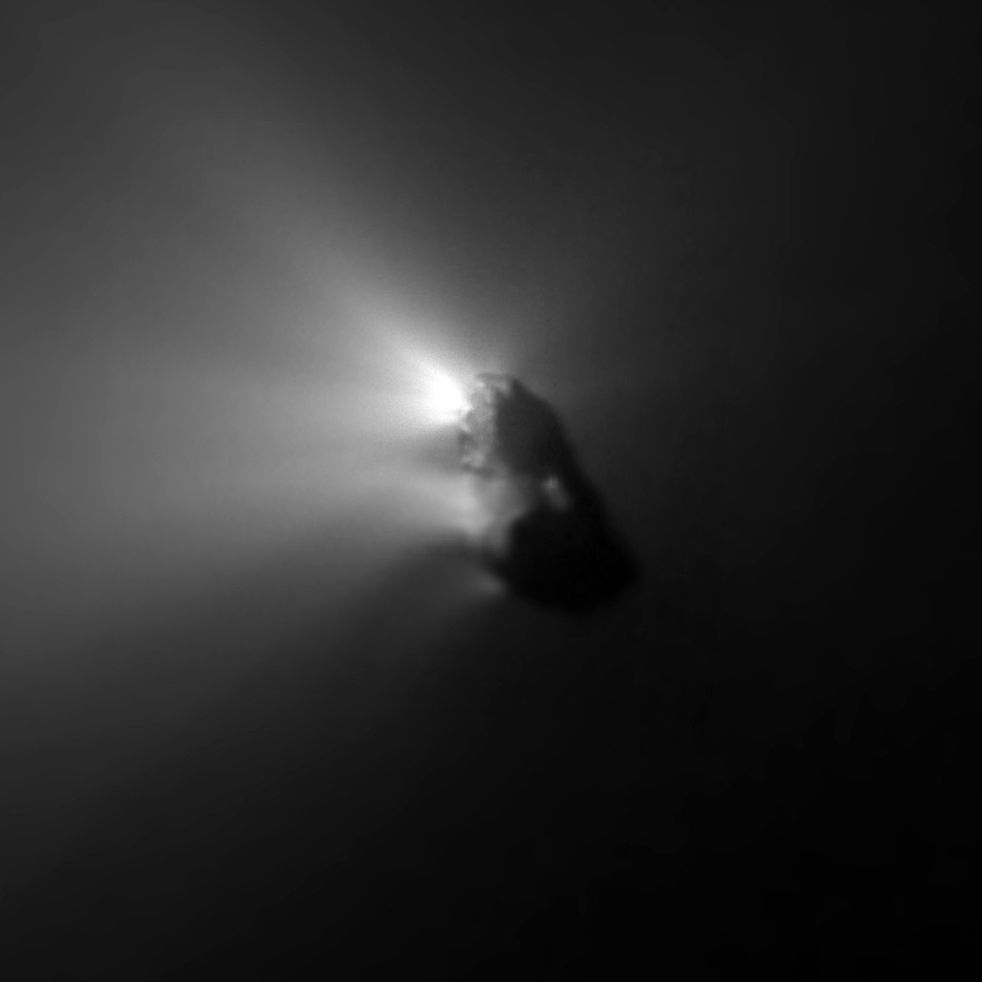
1986 was the worst view in 2,000 years: Earth and the comet were on opposite sides of the Sun, and city light hid what was left. Instead, five spacecraft went to meet it. The Soviet Vega 1 took the first picture of a comet’s nucleus on 4 March.
On 13 March ESA’s Giotto, named after the painter, passed 596 kilometres from the nucleus. It found a dark, potato-shaped body about 15 by 8 kilometres with jets on its sunlit side, and only about a tenth of the surface active.
Out and back
0.6 au from the Sun · 54 km/s
- 9 Feb 1986 Perihelion. The comet leaves the inner Solar System.
- 12 Feb 1991 An outburst at 14.3 au throws out a dust cloud 374,000 km long.
- 2003 Three of the Very Large Telescopes in Chile catch it at magnitude 28.2, the faintest comet ever imaged.
- 9 Dec 2023 Aphelion: 35 au out, moving at 0.91 km/s. It starts to fall back.
- Today Heading in, still beyond Neptune’s orbit.
- 28 Jul 2061 Perihelion, with Earth on the same side of the Sun.
(05) Next
2061
Perihelion is due on 28 July 2061, with the closest approach to Earth a day later. This time the comet will be on our side of the Sun, about nine times brighter than in 1986.
Can’t wait? Earth crosses the comet’s old dust every year. The Orionids peak in late October; the Eta Aquariids around 5 May.