The school-field oak.
A school had been told its oak "had to go" after a bracket fungus appeared at the base. The tree was already on the Ordnance Survey map of the 1880s.
- Oak
- Quercus robur
- Primary school field, south Bristol
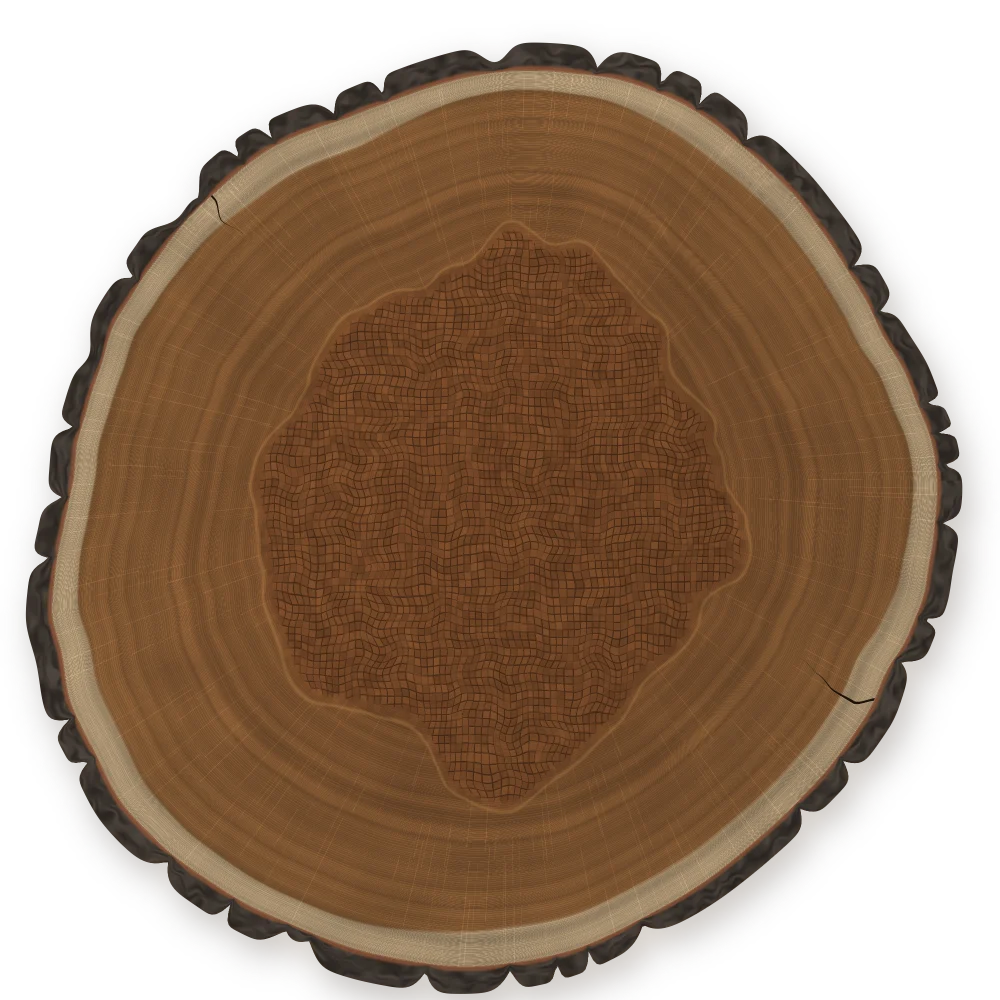
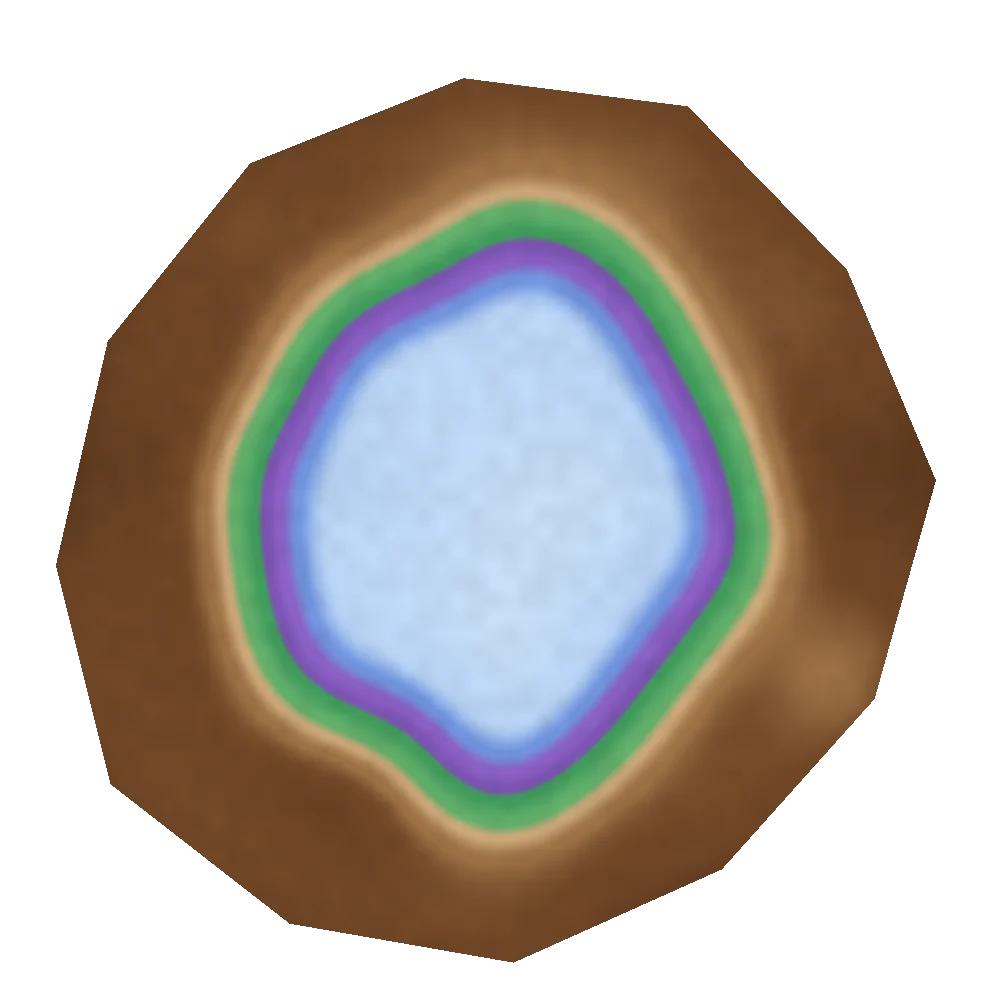
From the outside it looked like a healthy, heavy oak: a full crown, sound bark, one sulphur-yellow bracket near the root flare. Brackets like that belong to a brown-rot fungus that feeds on heartwood, so the question wasn’t whether the oak was decaying, but how far it had got.
We set twelve sensors around the stem at 1 m and tapped each one. Sound crossing the centre arrived late on every path: a central column of decay, slow enough to read violet and blue on the tomogram. Around it, a wall of sound wood that the fungus hadn’t crossed.
The thinnest part of that wall was 184 mm on a 508 mm radius — a t/R of 0.36, above the 0.3 guide most consultants start from. A resistance drill through the thin side confirmed the edge of the decay within a few millimetres of the tomogram.
We specified a 20% crown reduction to take load off the stem, and a re-test in three years. The oak stays. The children still sit under it.
Resistance-drill trace
Bark → depth · the trace drops where the needle meets decay
“We came in expecting to lose it. We left with a drawing of the inside of our tree and a plan to keep it.”
Head teacher · Primary school field, south Bristol