The critic, round 4
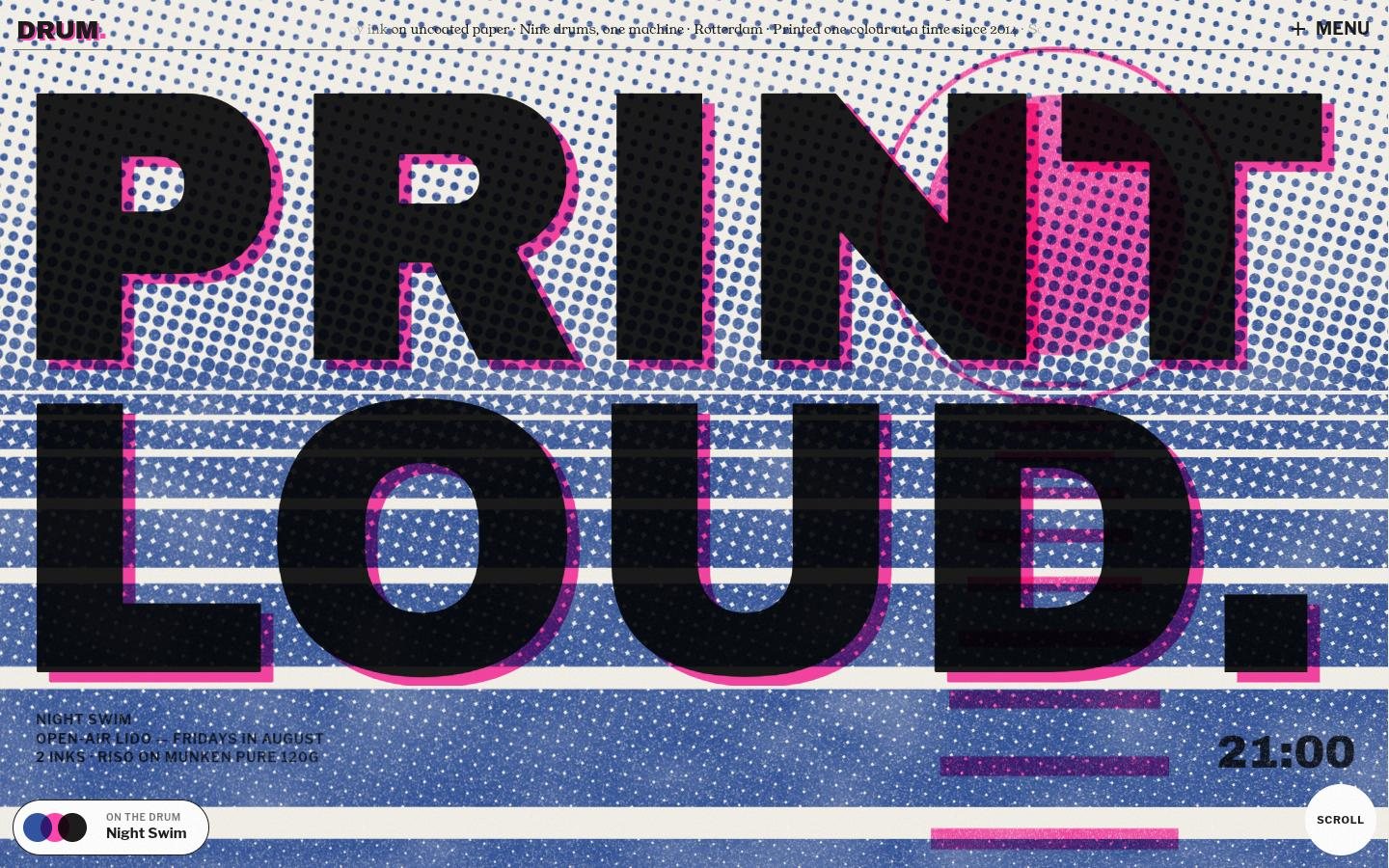
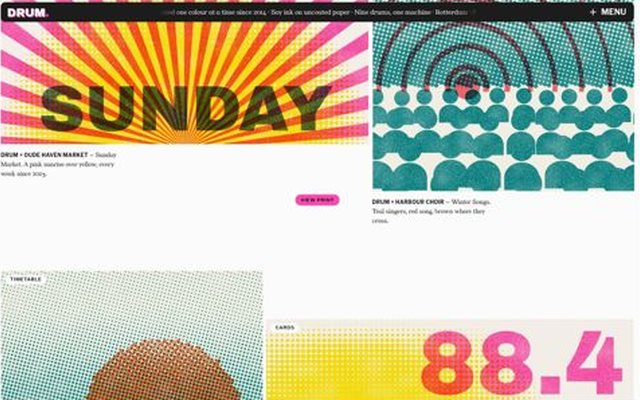
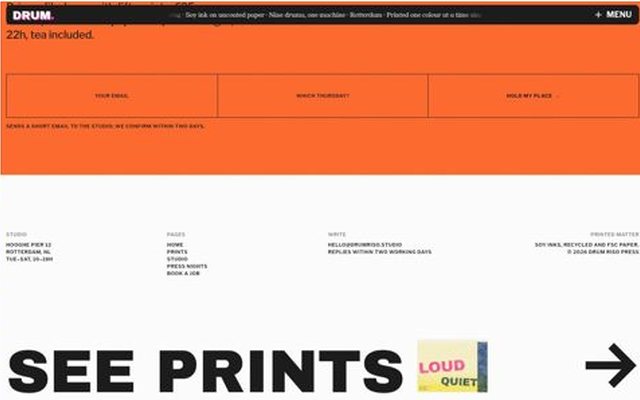
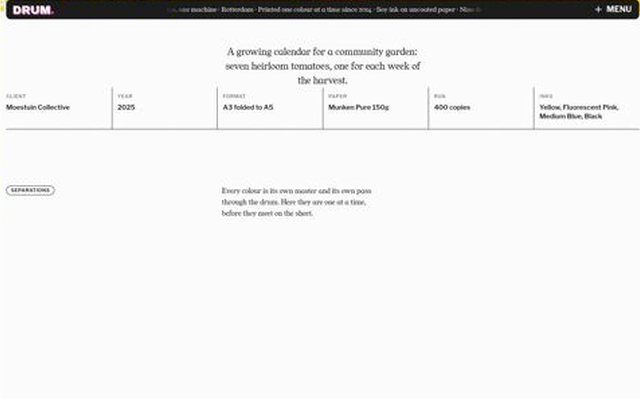
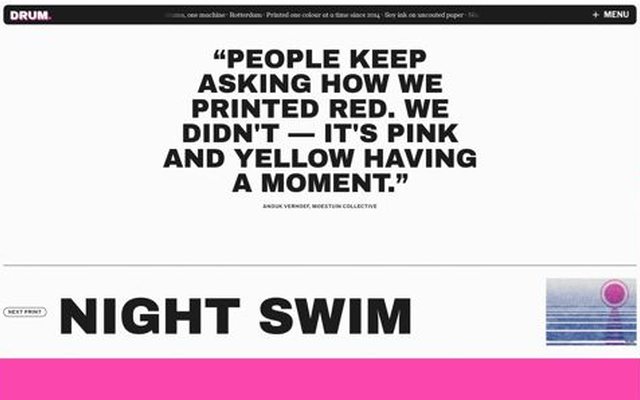
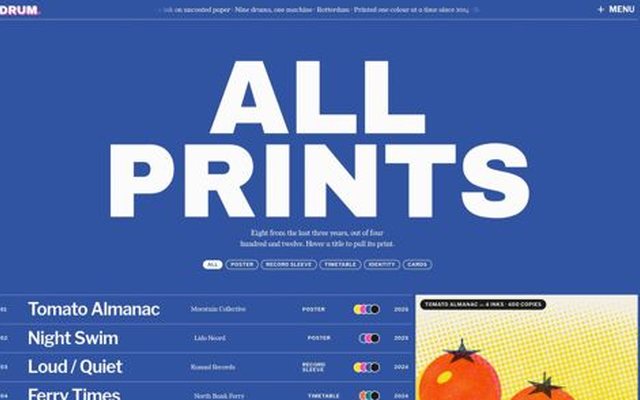
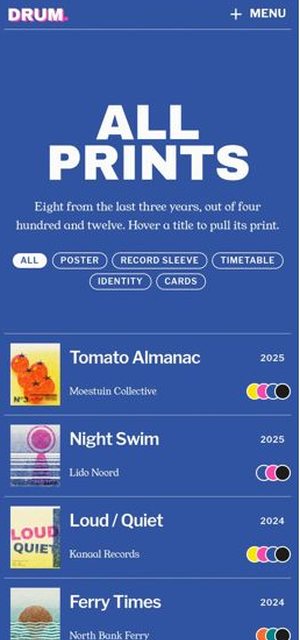
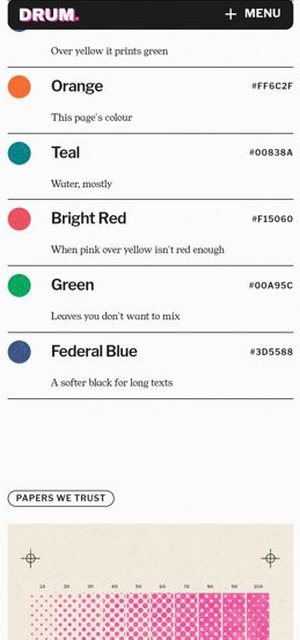
DRUM takes Shed's structure and uses it well: page-wide heavy caps, one saturated colour per page, a blue index page with a preview panel, and a giant "SEE PRINTS" footer. Its twist is that every image is drawn in code as a risograph print, which gives it its own voice. The halftone, overprint and misregistration look convincing, the pinned "how a print happens" scene and the ink-name scenes read clearly frame by frame, and the build is technically clean. It falls short of Shed because of weaker art direction in places: some pages have long flat white stretches with small text, the studio ink table is too faint, the headline sits over busy halftone art with less clarity than Shed's type over photography, and this round's owner request can't be confirmed from the screenshots.
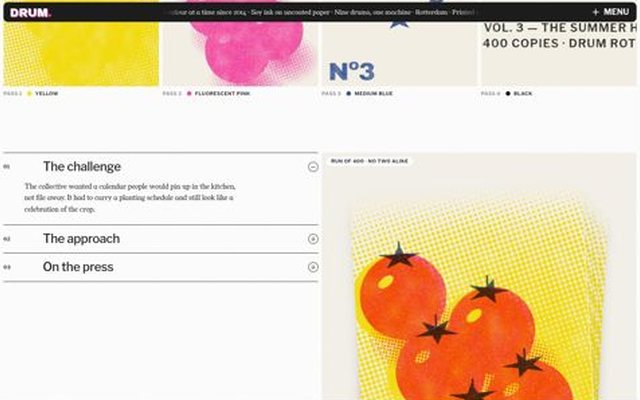
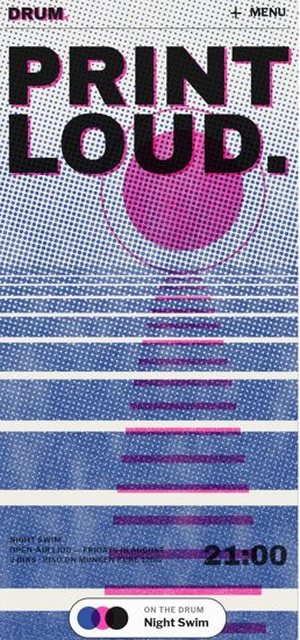
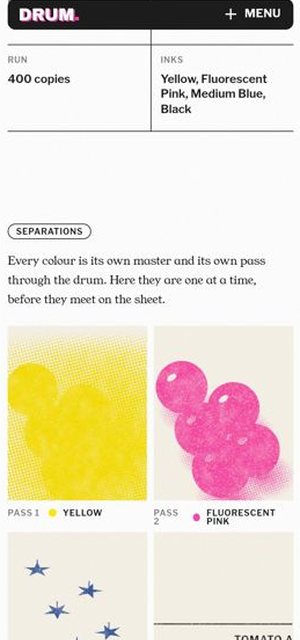
- The riso engine: real halftone, grain, multiply overprint and misregistration make every image look like one studio's printed work, not tinted boxes
- The loader prints DRUM in yellow, then blue, then the black key pass on pink paper, and hands straight off to the PRINT LOUD. hero. It's a clear signature moment and fits the subject
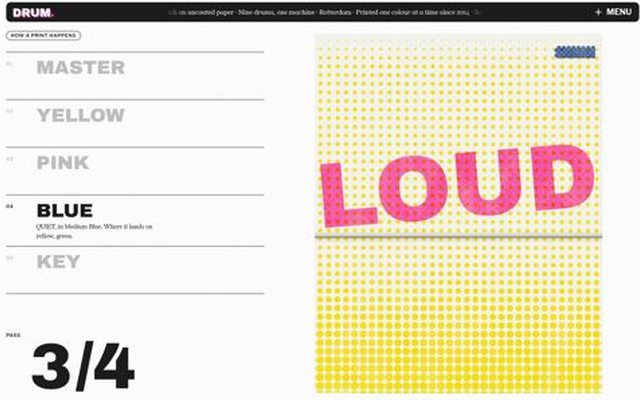
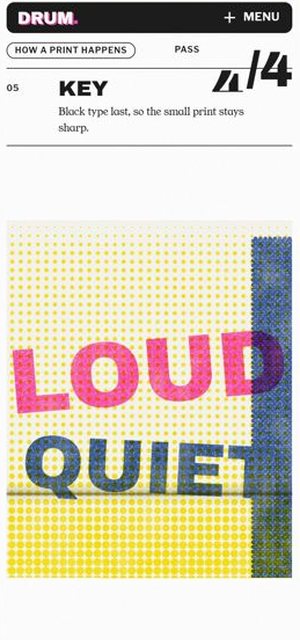
- The pinned 'how a print happens' scene: film master, then 1/4 through 4/4 passes with a large pass counter. It reads cleanly in the motion strips
How it was madefree-rein subject: a Rotterdam risograph studio; one canvas riso engine (ink per canvas, multiply overprints, halftone, speckle, misregistration) draws every image: hero cycle printed pass by pass (shed stacked wipe, .35s cascade), pinned pass-by-pass process scene ← stacked-image-wipe scroll aventura-dental-arts, separations on detail pages, draggable strip, 404 paper jam; pink sheet = loader (DRUM in 3 passes) + route curtain + menu colour; scroll-rolled ink list, halftone mosaic wipe; all wipes as transform mask pairs for software rendering; 15 recipes in full, 19 ref images
Next project SALLOW