Chapter III of VI · Opus vermiculatum: rows that follow the figure
Il Pavone
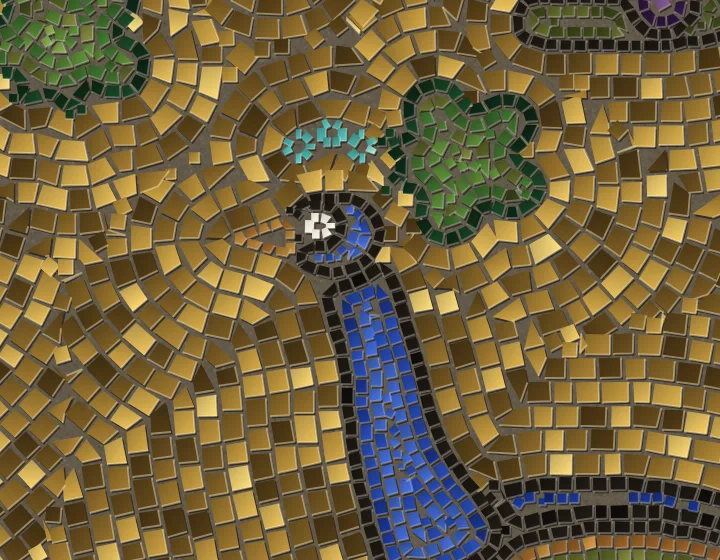
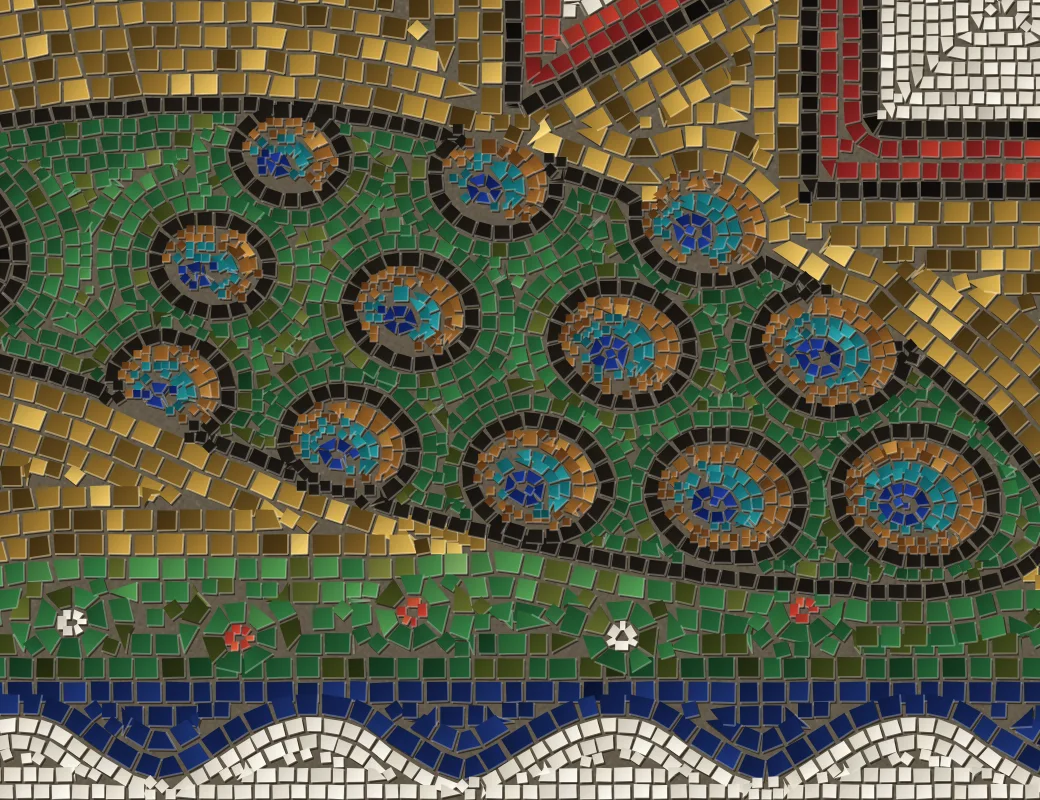
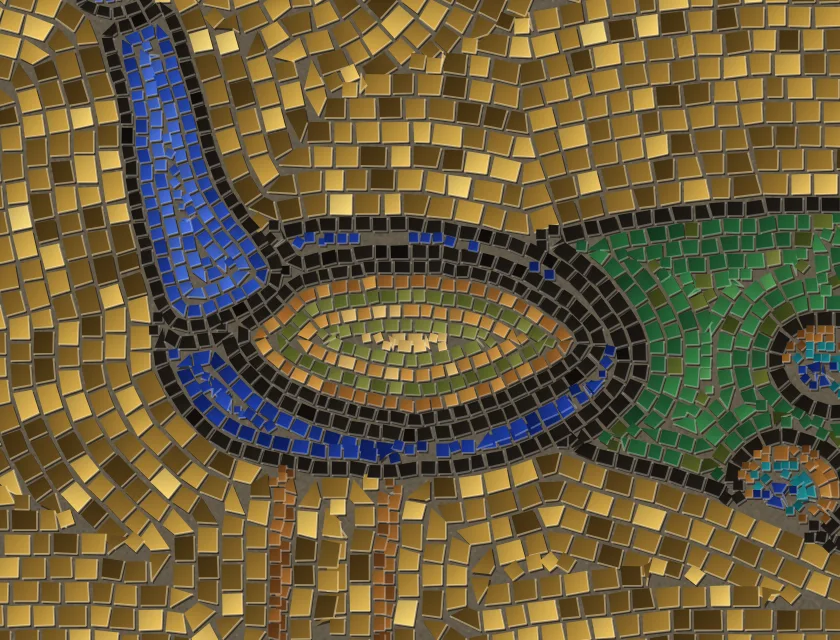
Two peacocks face the cup across the gold.Their bodies are cobalt with a black outline row;the eyes of the tail are nested rings — bronze,turquoise, cobalt — set in smaller pieces.
Scroll to discover
the eyes are the finest work on the wall
4,924 tesserae · The peacock
Every rowfollows thebird.
In early Christian art the peacock stood for eternity. Augustine, in The City of God (XXI.4), tells how he kept part of a roast peacock and found it still sound after a year — only a little drier. Ravenna’s mosaics are full of them.
We set our birds in opus vermiculatum: the rows run along the figure like the grain of wood, so the body reads as a rounded form before any shading is added. The ocelli are the finest work on the wall — pieces about seven millimetres across, three rings each, outlined in black and set against the green of the train.
- Tesserae in the two peacocks
- 4,924
- Eyes in the trains
- 24
- Finest pieces
- about 7 mm, in the eyes
From cartone to tessera
The same figure, three times