Workshop
Two perforators, a marking table and a player piano for proofing, on Buffalo's West Side.
The machines
- ( 01 )
Marking table
Masters are marked in pencil from the score, one track per note, against a ruler in ninths of an inch.
- ( 02 )
Master perforator
Cuts the master stencil one punch at a time. Long notes are punched as chains of overlapping holes.
- ( 03 )
Copy perforator
Follows the master and cuts five copies at once, so five rolls share every hole.
- ( 04 )
Spooling bench
Copies are trimmed to 11¼ inches, given a leader, a tab and a printed label, and wound on a spool.
- ( 05 )
Proofing piano
An 88-note player piano. Every roll plays through once before it ships; a wrong hole on a master is closed with paper tape.
Buffalo and the roll
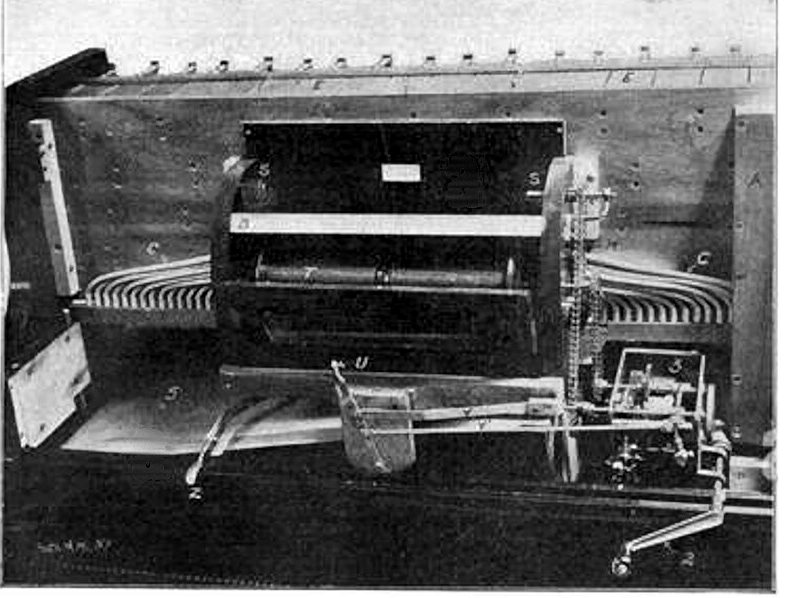
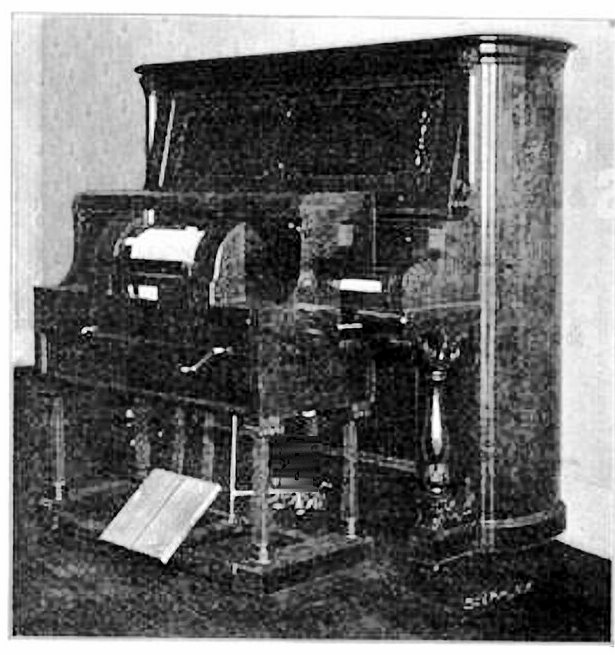
The same article notes that the rewind gearing spins the roll fast, "so that very little time is consumed in re-rolling the music at the end of a piece."
- 1908
10 December. Player-piano makers meet in Buffalo and agree the 88-note roll: 11¼ inches wide, nine holes to the inch.
- 1967
QRS, founded in Chicago in 1900, moves its headquarters to Buffalo.
- 2006
31 December. QRS punches its final piano roll in its Buffalo factory: Rodgers and Hart's "Spring Is Here", its 11,060th recording.
- Now
We cut rolls in the city where their size was agreed. We are not connected with QRS or any roll maker of the past.
Music no hands can play
( 03 ) Nancarrow
In 1947 Conlon Nancarrow bought a manual punching machine in New York and spent the next fifty years cutting studies for player piano, many of them canons whose voices run at different tempi.
“The greatest discovery since Webern and Ives.”György Ligeti, on the music of Conlon Nancarrow
Our Study No. 1, the whole roll: one line in four voices at 3 : 4 : 5 : 6. The low voice starts alone; the others join faster and later, and all four land on the last D.
Recuts, new music, repairs and scans, with prices and turnaround.