The machine
Inside an M400.
The M400 of 1970 is the Mellotron most people have met: about 1,800 were made. Pick a part on the drawing or in the list.
In section
One key, cut through.
- Key and key-lever
- One long lever per note, rocking on a balance rail. The key is its front end.
- Pressure pad
- A felt pad on the lever's tail. It pushes the tape onto the playback head; pressing harder adds pressure, so the Mellotron responds to aftertouch.
- Capstan and pinch roller
- The capstan never stops turning. The pinch roller clamps the tape to it, and the tape is pulled past the head.
- Return spring
- Let go and a spring pulls the tape back to its start, ready for the next note.
The frame
Three sounds on one frame.
An M400 frame holds three sounds, and the A/B/C knob on the panel picks which one plays. The whole frame lifts out, so it can be swapped for a frame with other sounds.
- Every note was recorded on its own. Cellist Reginald Kilbey would not downtune, so the lowest "cello" notes are a double bass.
- One string note has a chair scraping in the background, according to the Mellotron author Nick Awde.
- The famous flute is two instruments, an alto and a soprano, which is why chords on it sound slightly out of tune.
- The choir was recorded in two halves: four men in one studio, four women in the room next door.
The real thing
What we drew it from.
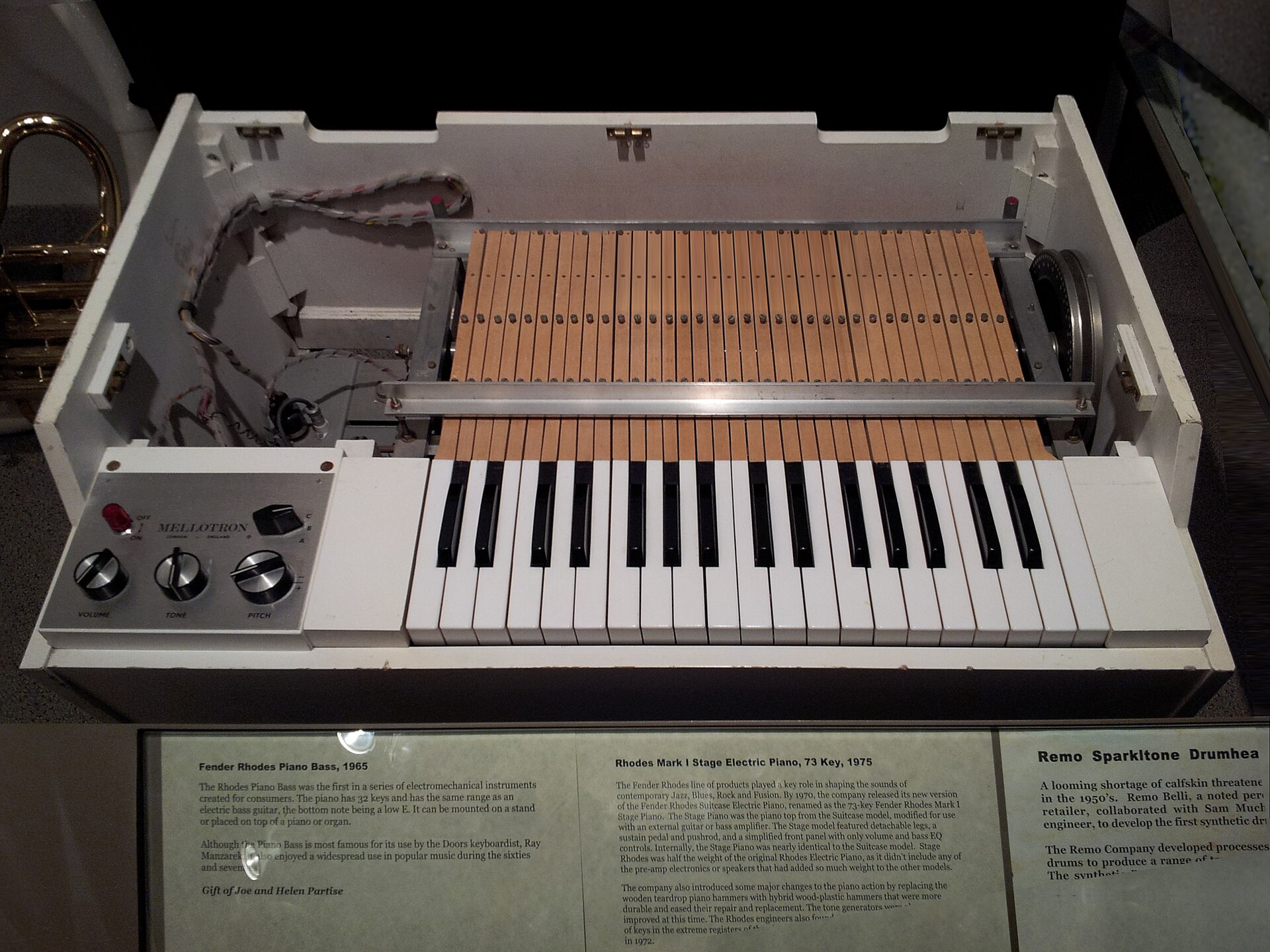
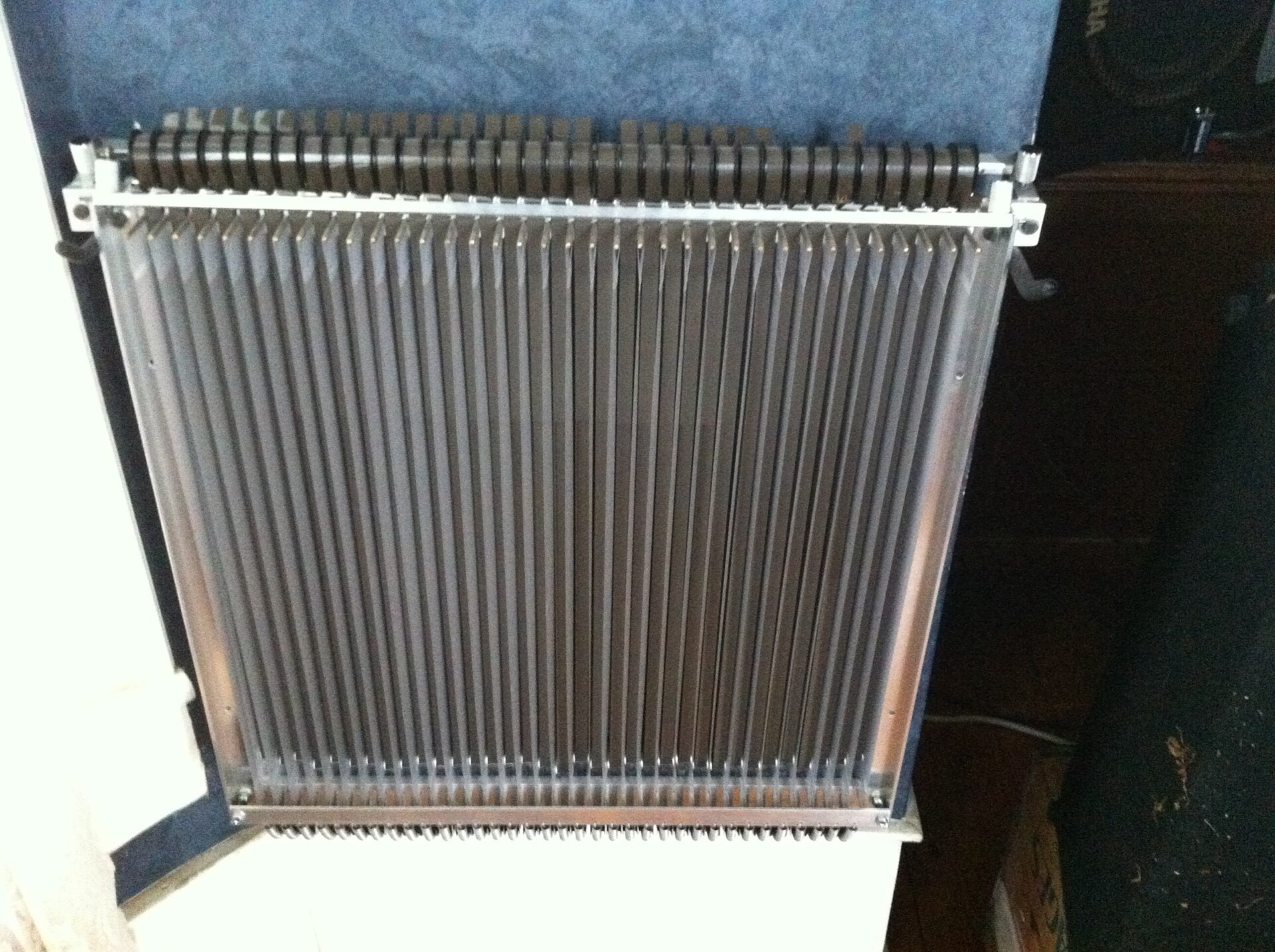
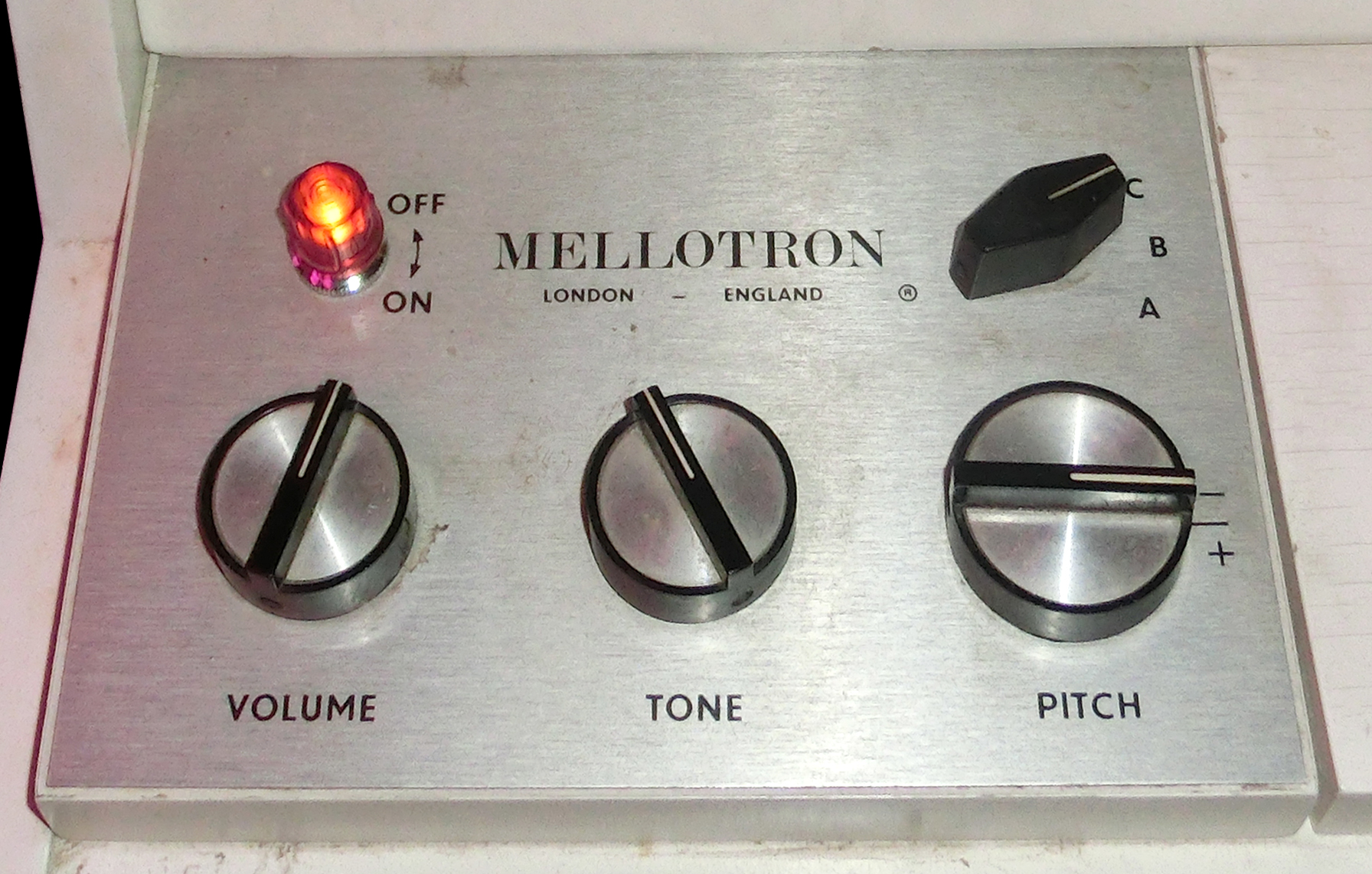
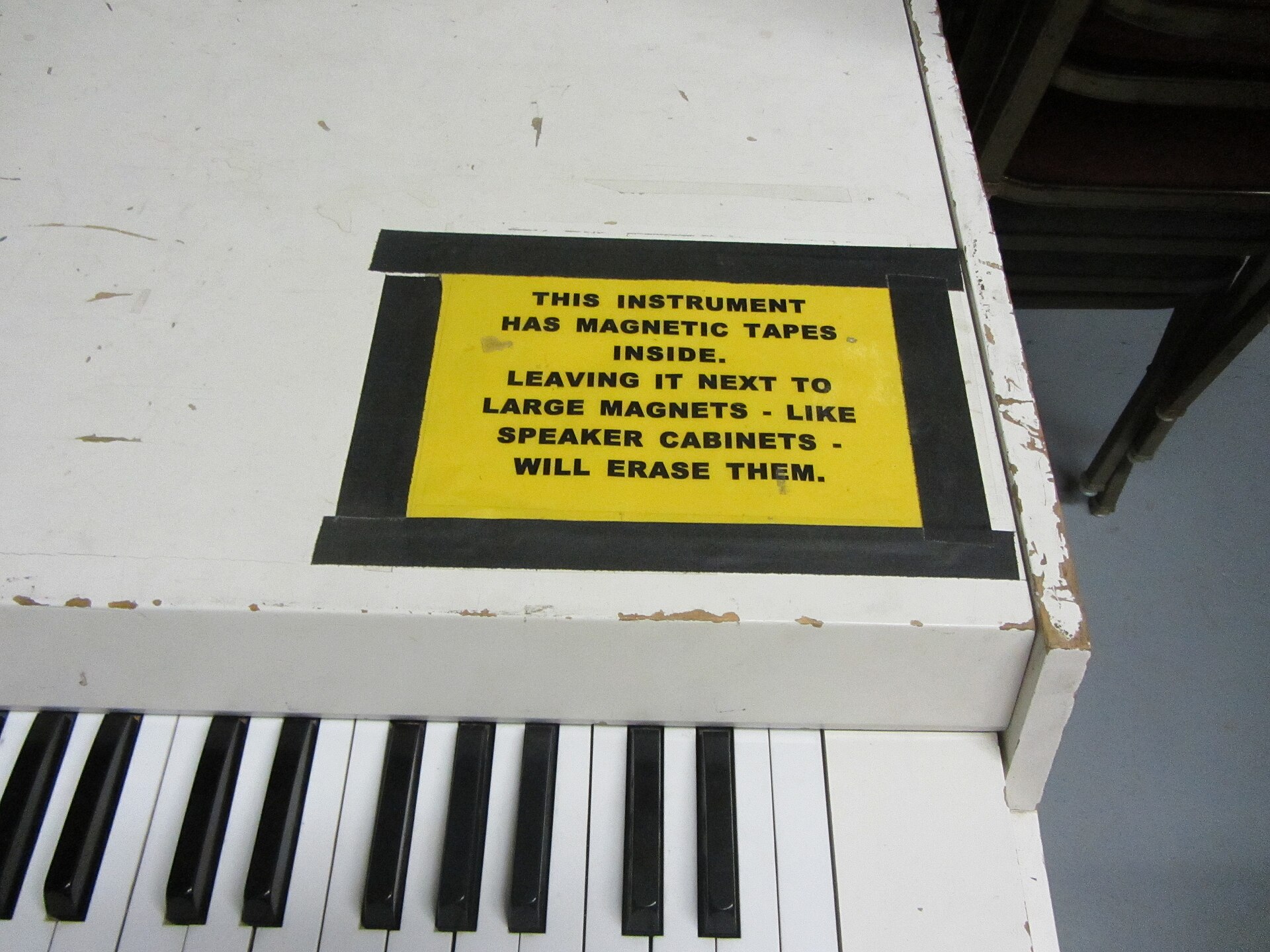
All photo credits and sources
- Mellotron.jpg, by Buzz Andersen, CC BY-SA 2.0, Wikimedia Commons
- Leppin Mellotron M4000D.jpg, by Littlevillagemf, CC BY-SA 4.0
- M400 Mellotron Tape Frame.jpg, by Walter Miles, CC BY-SA 4.0
- Mellotron (National Media Museum).jpg, by Frankie Roberto, CC BY 2.0
- MELLOTRON (panel).jpg, by Tobias Akerboom, CC BY 2.0
- Mellotron, Museum of Making Music.jpg, by doryfour, CC BY-SA 2.0; edit1 by Clusternote, CC BY-SA 3.0
- Mellotron (1972).jpg and Mellotron (1972) playing.jpg, by andrew garton, CC BY-SA 2.0
- Mellotron M400S panel 1566.jpg, by Gunnar Creutz, CC BY-SA 4.0
- Mellotron (panel).jpg, by Ville Hyvönen, CC BY-SA 2.0
- Mellotron 400 caution, Ardent Studios.jpg, by Katie from Memphis, CC BY-SA 2.0
- Facts: Wikipedia, “Mellotron” and “Chamberlin” (CC BY-SA). Quotes: Wikiquote, “Mellotron”.
- Drawings on this site are made in code by the site itself. CAPSTAN is a fictional workshop.